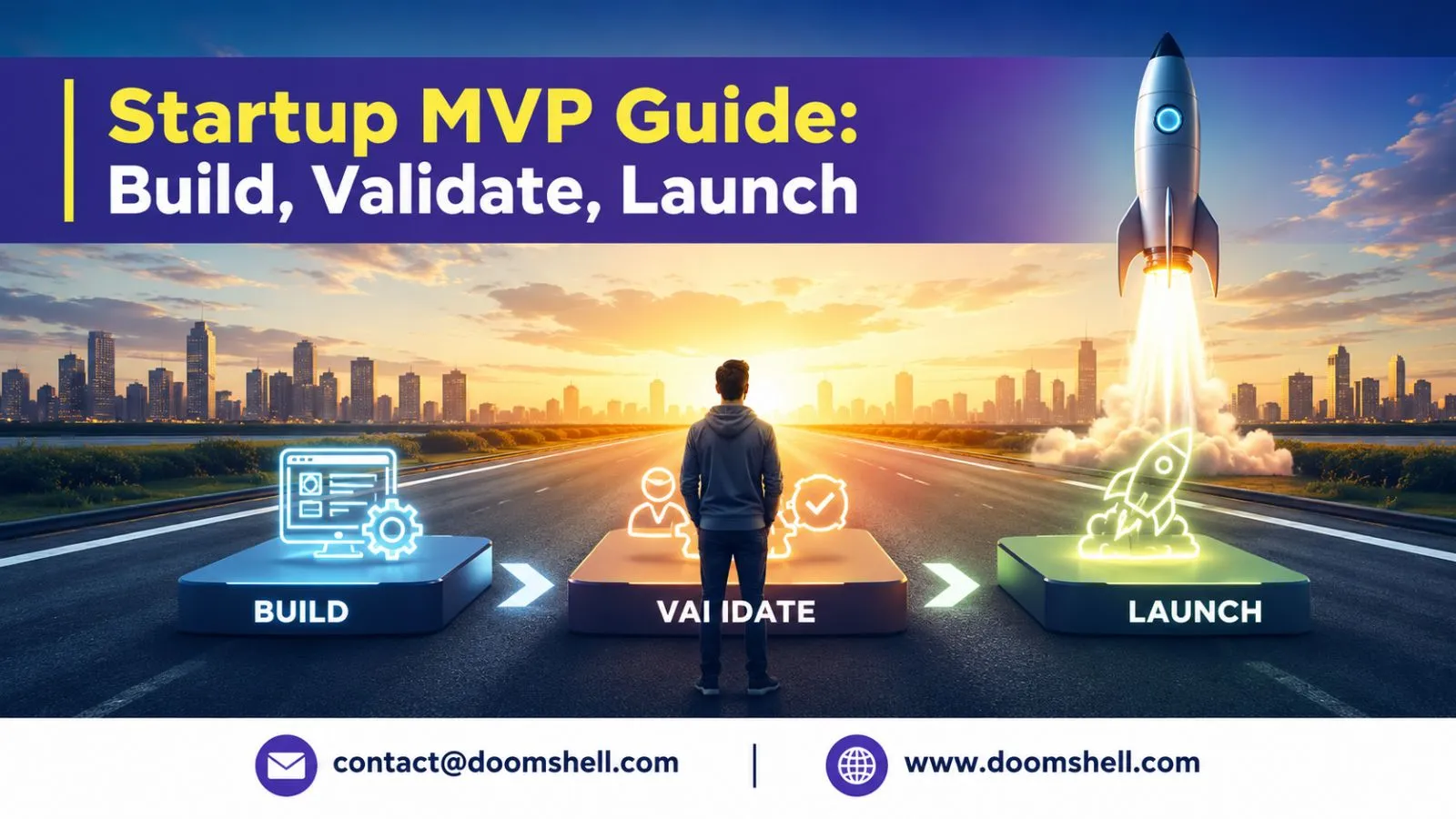
Launching a startup is exciting, but building a product without validating customer demand can lead to costly mistakes. Many founders spend months developing feature-rich applications only to discover that their target audience does not need most of those features. This is why an MVP for Startups has become the preferred approach for entrepreneurs looking to reduce risks and validate ideas quickly.
A Minimum Viable Product (MVP) is not an incomplete product. Instead, it is the simplest version that solves a real customer problem while allowing founders to collect valuable user feedback. Rather than guessing what customers want, startups can make decisions based on real usage data.
Companies like Airbnb, Dropbox, and Uber all started with simple MVPs. They focused on solving one core problem, gathered customer insights, and continuously improved their products. Their journey proves that validating an idea early can significantly increase the chances of building a successful business.
What Is a Minimum Viable Product?
A Minimum Viable Product is the first working version of a product that includes only the essential features required to solve a specific customer problem. The objective is to launch quickly, validate assumptions, and learn from real users before investing in advanced functionality.
Unlike a fully featured product, an MVP focuses on delivering value with minimal complexity. This allows startups to enter the market faster while keeping development costs under control.
Key Characteristics of a Successful MVP
-
Solves one primary customer problem
-
Includes only essential features
-
Enables rapid product launch
-
Collects real customer feedback
-
Supports future product improvements
-
Reduces development costs and risks
A structured development process helps founders avoid unnecessary expenses while creating products that align with actual market demand.
Why MVP Development Is Essential for Startups
Many startups fail because they spend too much time building products before validating whether customers actually need them. An MVP helps founders test business ideas with real users instead of relying on assumptions.
Launching early allows businesses to understand customer behavior, identify improvement opportunities, and make smarter product decisions.
Major Benefits of MVP Development
-
Faster product validation
-
Lower development costs
-
Reduced business risk
-
Better customer understanding
-
Faster time-to-market
-
Improved investment efficiency
For example, Dropbox initially validated its product using a simple explainer video instead of building the complete platform. After confirming strong user interest, the company invested in full-scale development, saving both time and resources.
Current Market Trends Driving MVP Adoption
Modern startups are increasingly adopting lean product development methodologies. Investors also encourage founders to validate business ideas before raising larger funding rounds.
Several technology trends have accelerated MVP adoption:
-
Artificial Intelligence integration
-
SaaS product growth
-
Cloud-native application development
-
No-code and low-code platforms
-
Agile software development
-
Customer-driven product design
According to startup industry reports, businesses that validate ideas early often reach product-market fit faster than companies developing complete products before launch.
As competition continues to increase, founders are prioritizing speed, customer feedback, and continuous improvement instead of lengthy development cycles.
Common Mistakes Startups Make During MVP Development
Although the concept appears straightforward, many startups struggle during implementation because they misunderstand the purpose of an MVP.
Building Too Many Features
One of the biggest mistakes is attempting to include every planned feature in the first release. This increases development time, raises costs, and delays market validation.
Successful startups focus only on features that solve the primary customer problem.
Ignoring Market Research
Developing a product without understanding customer pain points often results in low adoption. Conducting interviews, surveys, and competitor analysis helps validate market demand before development begins.
Delaying Product Launch
Waiting for perfection often delays valuable learning opportunities. Early releases provide real customer insights that no amount of internal planning can replace.
Failing to Act on User Feedback
Customer feedback is the foundation of MVP success. Businesses that continuously improve their product based on user behavior are more likely to achieve sustainable growth.
Step-by-Step MVP Development Process
Building a successful MVP requires a structured roadmap rather than rushing directly into development.
Step 1: Identify the Core Problem
Every successful product begins by solving a meaningful problem. Before writing code, founders should clearly define the challenge they want to address.
Ask questions such as:
-
What problem does the customer face?
-
How frequently does this problem occur?
-
Are existing solutions insufficient?
-
Why would customers choose your product?
Strong problem validation creates the foundation for long-term product success.
Step 2: Understand Your Target Audience
Knowing your audience helps prioritize features and design a product that delivers real value.
Research areas should include:
-
Customer demographics
-
Industry segment
-
Buying behavior
-
Pain points
-
Existing alternatives
-
User expectations
The better you understand your audience, the easier it becomes to build a product that people actually want to use.
Step 3: Prioritize Essential Features
Feature prioritization is one of the most important stages of MVP development. The goal is to launch quickly with only the functionality required to solve the customer’s primary problem. Every additional feature increases development time, cost, and complexity.
Start by listing all planned features and categorizing them into Must Have, Should Have, and Future Enhancements. Focus only on the “Must Have” features for the first release.
Examples of essential MVP features include:
-
User registration and login
-
Core product functionality
-
Basic dashboard
-
Secure payment integration (if required)
-
Customer support or contact option
Advanced analytics, AI recommendations, or loyalty programs can be added after validating the core product.
Step 4: Build and Launch the MVP
Once the feature list is finalized, development begins using agile methodologies. Agile development allows teams to release updates frequently, fix issues quickly, and respond to customer feedback without rebuilding the entire product.
Instead of waiting several months for a perfect product, launch your MVP as soon as it delivers value. Early adopters are often willing to test new solutions and provide valuable insights that shape future versions.
A successful launch should include:
-
Beta testing with a small audience
-
Landing page for lead generation
-
Product demonstration
-
Email onboarding
-
Feedback collection forms
-
Performance tracking tools
Launching early helps startups validate demand before investing heavily in additional features.
Step 5: Measure Performance and Improve
The launch is only the beginning. The real value of an MVP comes from learning how users interact with the product. Every customer action provides data that helps improve usability and feature development.
Track important performance indicators such as:
-
User acquisition
-
Active users
-
Customer retention
-
Feature usage
-
Conversion rate
-
Customer satisfaction
Regular analysis helps founders identify which features create value and which ones need improvement or removal.
MVP vs Full Product
Understanding the difference between an MVP and a complete product helps founders make better investment decisions.
| Feature | MVP | Full Product |
|---|---|---|
| Primary Goal | Validate business idea | Scale the business |
| Features | Essential only | Complete feature set |
| Development Time | Short | Long |
| Development Cost | Lower | Higher |
| Risk Level | Lower | Higher |
| User Feedback | Early-stage | Continuous |
| Flexibility | High | Moderate |
An MVP focuses on learning, while a full product focuses on growth and expansion.
Best Practices for Building a Successful MVP
Launching an MVP successfully requires discipline and a customer-first mindset. Instead of trying to impress users with dozens of features, focus on solving one problem exceptionally well.
Follow these best practices:
-
Validate the problem before development.
-
Keep the product simple and easy to use.
-
Prioritize customer feedback over assumptions.
-
Use agile development for faster improvements.
-
Track key performance metrics regularly.
-
Improve the product through continuous iterations.
Companies like Instagram initially launched with limited functionality before expanding into the comprehensive platform millions use today. Their success demonstrates the power of starting small and improving continuously.
How Doomshell Helps Startups Build Successful MVPs
Developing an MVP requires technical expertise, strategic planning, and a clear understanding of market validation. Doomshell helps startups transform ideas into scalable digital products while reducing development risks.
Our services include:
-
Product discovery and idea validation
-
UI/UX design for intuitive user experiences
-
Agile MVP development
-
Feature prioritization
-
Web and mobile application development
-
API integration
-
Cloud deployment
-
Ongoing product optimization
Our experienced development team works closely with founders to build scalable MVPs that are ready for market testing and future growth.
Conclusion
Building an MVP is one of the smartest decisions a startup can make before investing in full-scale product development. By focusing on essential features, validating ideas with real users, and continuously improving based on feedback, startups can reduce costs, minimize risks, and achieve product-market fit more efficiently.
In today’s competitive startup ecosystem, speed and adaptability are critical. An MVP allows businesses to launch faster, gather actionable insights, and make informed product decisions backed by real customer data. With the right strategy and an experienced technology partner like Doomshell, startups can confidently transform innovative ideas into successful digital products with long-term growth potential.
Frequently Asked Questions
1. What is an MVP in startup development?
A Minimum Viable Product (MVP) is the first functional version of a product that includes only the essential features required to validate a business idea and gather customer feedback.
2. Why is an MVP important for startups?
An MVP helps startups reduce development costs, validate market demand, collect user insights, and improve the product before making significant investments in full-scale development.
3. How do I decide which features to include in my MVP?
Prioritize only the features that directly solve the primary customer problem. Additional functionality can be introduced after receiving feedback from early users.
4. How long does it take to build an MVP?
The timeline depends on project complexity, but most MVPs can be developed within 6 to 12 weeks using agile development practices.
5. Can an MVP be converted into a full-scale product?
Yes. Once the MVP validates customer demand and identifies improvement opportunities, it can be expanded gradually by adding advanced features and scaling the platform based on user needs.