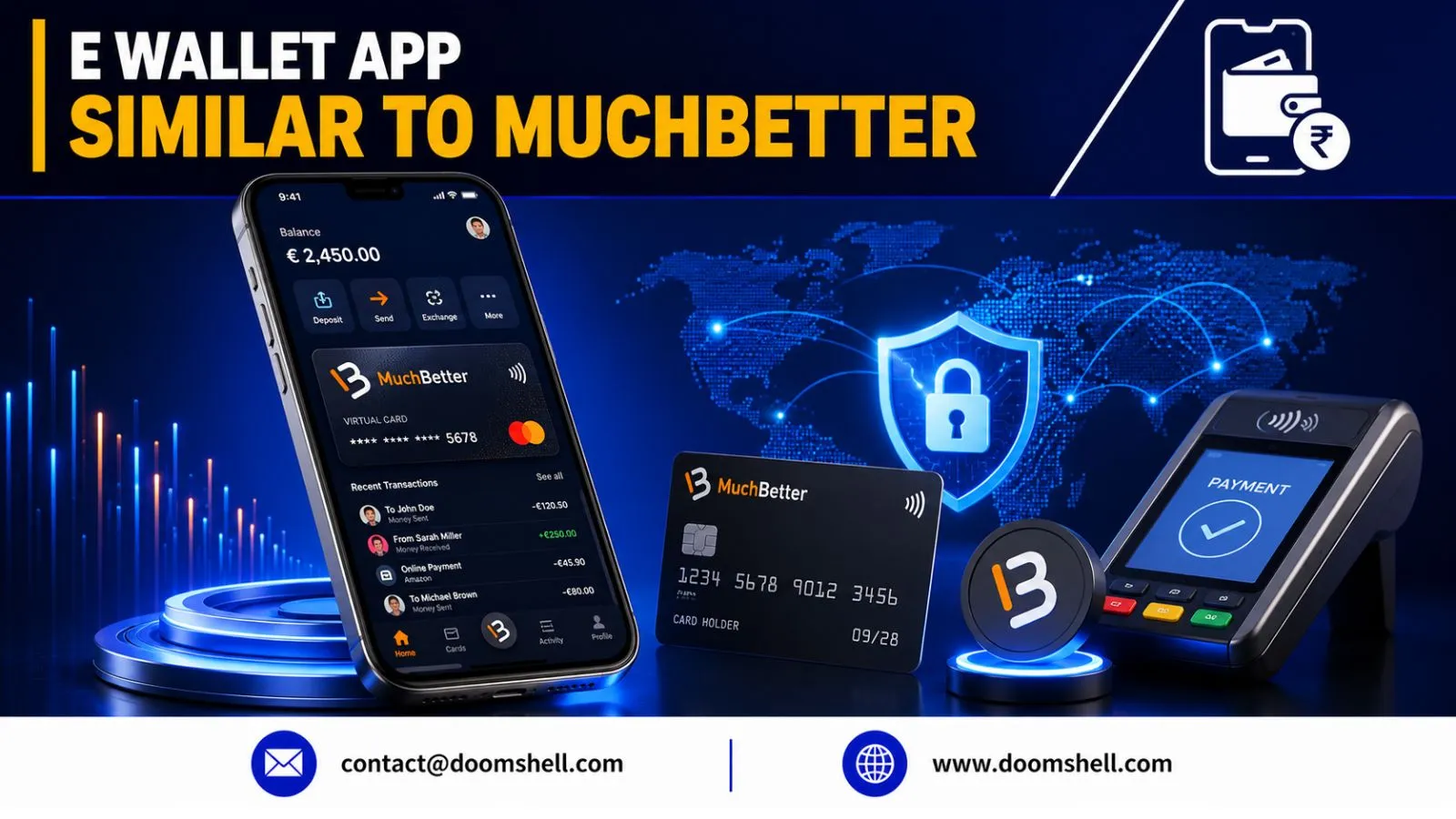
The demand for digital payment solutions continues to grow as consumers increasingly prefer fast, convenient, and secure transactions. E-wallet app development enables businesses to create digital payment platforms for money transfers, online shopping, merchant payments, and other financial services. Apps like MuchBetter demonstrate how a simple user experience, convenient payment options, and strong security can support a digital wallet business.
For startups and established businesses, building an e-wallet app presents opportunities in the fintech industry. However, success depends on more than attractive design. Businesses must consider payment integrations, identity verification, regulatory requirements, fraud prevention, and long-term operating costs before launching.
What Is MuchBetter and Why Invest in E-Wallet App Development?
Understanding MuchBetter and Digital Wallet Applications
MuchBetter is a digital wallet service designed to facilitate online payments and other financial transactions. It provides an example of how digital wallets can simplify payment experiences through mobile access, transaction management, and security features.
A similar application can allow users to create accounts, verify their identities, manage wallet balances, transfer funds, and make payments through supported channels. Depending on the business model and financial partners, the app may also support multiple currencies, prepaid cards, merchant payments, or international transfers.
The exact functionality depends on the target market, available payment infrastructure, and applicable regulations. Businesses should develop their own product strategy rather than simply copying another wallet's interface or features.
Business Opportunities in Digital Wallet Applications
Digital wallets can serve several customer segments, including online shoppers, retail customers, businesses, gaming platforms, and international users. Selecting a focused audience helps startups define the right features and avoid unnecessary development expenses.
Potential benefits include:
-
Convenient and faster digital transactions.
-
Better visibility into payment history and account activity.
-
Customer loyalty through eligible rewards and offers.
-
Revenue opportunities through merchant services and subscriptions.
-
Potential expansion into additional payment methods and markets.
An experienced IT Company can help businesses assess technical requirements, plan the application architecture, and develop a product roadmap that aligns with their business objectives.
However, profitability is not guaranteed. Payment processing charges, fraud losses, compliance expenses, customer acquisition, and support operations all influence the financial viability of a wallet business.
Essential Features and Security Requirements for an E-Wallet App
Core Digital Wallet App Features
The features of an e-wallet should reflect how customers will use the application. A minimum viable product (MVP) should prioritize reliable payments and essential account management before adding advanced functionality.
Important features include:
-
User registration and login: Secure account creation, authentication, and recovery.
-
Identity verification: Customer identification and verification workflows where required.
-
Wallet balance and transaction history: Clear records of deposits, payments, transfers, and refunds.
-
Money transfers: Transfers between supported users or accounts.
-
Payment integration: Connections with authorized payment providers and supported funding methods.
-
QR code payments: Convenient payments at compatible merchants.
-
Notifications: Updates about transactions, account changes, and security events.
-
Biometric authentication: Supported fingerprint or facial authentication for convenient access.
-
Customer support: Help with payment disputes, failed transactions, and account issues.
-
Admin dashboard: Tools for authorized staff to monitor transactions, manage users, and review suspicious activity.
Additional features may include multi-currency balances, spending insights, virtual cards, recurring payments, loyalty rewards, and merchant dashboards. These should be introduced when they serve a clear customer need and are supported by the business's payment arrangements.
AI Fraud Detection, Data Protection, and Compliance
Security is fundamental to digital wallet development because the application handles sensitive identity information and financial activity. Protection should be built into the architecture rather than added at the end of development.
Essential safeguards include encryption, secure authentication, role-based access, transaction monitoring, audit logs, protected API connections, and tested backup and recovery procedures. Payment flows should also use appropriate transaction authorization, duplicate-request protection, and reconciliation processes.
Artificial intelligence can support fraud detection by identifying unusual transaction patterns, suspicious account activity, and deviations from typical customer behaviour. Risk models should be tested carefully to reduce false alerts and avoid unnecessarily blocking legitimate users. Automated decisions should have appropriate review and escalation mechanisms.
Compliance depends on where the wallet operates and how it handles funds. Requirements may involve customer due diligence, anti-money-laundering controls, data protection, transaction monitoring, and licensing or authorization. In India, businesses must assess applicable RBI requirements and the rules governing their chosen payment model. Working with an authorized financial institution or payment provider may be necessary, but a partnership does not automatically remove every compliance obligation.
Steps and Technology Stack to Build an E-Wallet App Like MuchBetter
Step-by-Step E-Wallet App Development Process
A structured development process helps control costs and reduces the risk of expensive changes after launch.
-
Conduct market research: Identify the target audience, competitors, payment habits, and unmet customer needs.
-
Define the business model: Decide whether the product will support peer-to-peer transfers, merchant payments, prepaid services, or another permitted payment model.
-
Confirm regulatory requirements: Identify applicable licenses, financial partners, verification procedures, and compliance responsibilities before finalizing the architecture.
-
Prepare the feature scope: Separate essential MVP features from advanced functions planned for later releases.
-
Design the UI/UX: Create a clear user journey for registration, verification, funding, payments, and transaction tracking.
-
Develop the application: Build the mobile interface, backend services, transaction processing workflows, and administrative tools.
-
Integrate payment services: Connect suitable providers for supported payment methods, verification, notifications, and other required services.
-
Test and deploy: Conduct functional, security, performance, integration, and usability testing before a controlled launch.
-
Monitor and improve: Track application performance, payment failures, support requests, and suspicious activity. Release updates based on real usage and emerging risks.
Choosing the Right Technology Stack
The technology stack depends on the required functionality, expected transaction volume, team expertise, and integration needs.
For mobile development, Flutter and React Native can support cross-platform applications, while native Android and iOS development may be suitable when platform-specific requirements justify separate implementations.
Backend services can be built with technologies such as Node.js or Laravel. PostgreSQL or MySQL can support structured transaction records, while carefully selected caching and messaging systems can help manage performance and asynchronous processing.
Cloud infrastructure can provide scalable computing, monitoring, backup, and deployment capabilities. However, cloud hosting alone does not make a wallet secure or compliant.
Financial applications need reliable transaction records and consistent balance calculations. A well-designed ledger should record financial movements accurately, support reconciliation, and preserve an auditable history. Developers should also consider idempotent transaction processing, access controls, incident monitoring, and disaster recovery.
Third-party integrations should be selected according to verified capabilities, geographic availability, contractual terms, and regulatory suitability. These decisions are often more important than choosing a particular programming language.
E-Wallet App Development Cost, Monetization, and Launch Strategy
How Much Does It Cost to Build an E-Wallet App?
The cost of building an e-wallet app like MuchBetter depends on its features, payment integrations, compliance requirements, security controls, supported platforms, and development team's location. The following figures are indicative planning estimates, not fixed market prices or provider quotations.
| Application scope | Estimated development cost |
|---|---|
| Basic prototype or limited MVP | $15,000–$30,000 |
| Standard wallet with payment integrations | $30,000–$70,000 |
| Advanced wallet with additional controls and integrations | $70,000–$150,000+ |
| Large-scale, multi-market fintech platform | $150,000+ |
These estimates cover broad software development scopes. They may not include licensing, legal advice, financial institution onboarding, payment provider fees, independent security audits, regulatory capital requirements, or ongoing operations. A production-ready financial platform can cost considerably more depending on its operating model.
Development timelines also vary. A limited MVP may take approximately three to five months, while a complex application can require six to twelve months or longer. Regulatory approvals and financial partner integrations may extend the overall launch schedule.
Key cost factors include:
-
Number and complexity of features.
-
Android, iOS, and web requirements.
-
Backend architecture and transaction processing.
-
Payment gateway and banking integrations.
-
Identity verification and fraud prevention.
-
Security testing and compliance requirements.
-
Maintenance, hosting, and customer support.
Starting with a clearly scoped MVP helps businesses validate demand before committing to a broader platform.
Monetization Strategies and Long-Term Growth
An e-wallet business can generate revenue through several models, depending on local regulations, provider agreements, and customer expectations.
Potential revenue streams include transaction fees where permitted, merchant service arrangements, premium subscriptions, business payment services, and white-label software licensing. Partnerships may also create opportunities to offer additional financial services where the business has the required authorization.
Fees should be transparent, competitive, and consistent with applicable rules. Businesses should avoid relying on revenue streams that have not been validated with payment partners or assessed for regulatory suitability.
For long-term growth, monitor active users, transaction success rates, customer retention, payment processing costs, fraud losses, and support resolution times. These metrics help identify whether the product is delivering value and whether expansion is commercially sustainable.
A specialized app development company in India can help businesses translate their requirements into a practical roadmap, design secure payment workflows, integrate third-party services, and plan ongoing maintenance.
The best approach is to launch with essential features, validate the customer experience, and expand gradually as demand and operational readiness improve. A successful wallet depends on trust, reliable transactions, clear communication, and strong risk management as much as it depends on technology.
Building an application like MuchBetter can create a meaningful fintech opportunity, but careful planning is essential. Businesses that prioritize security, regulatory readiness, usability, and realistic budgeting will be better positioned to develop a reliable digital wallet and support its growth over time.