
 sales@doomshell.com
 +91 8005523567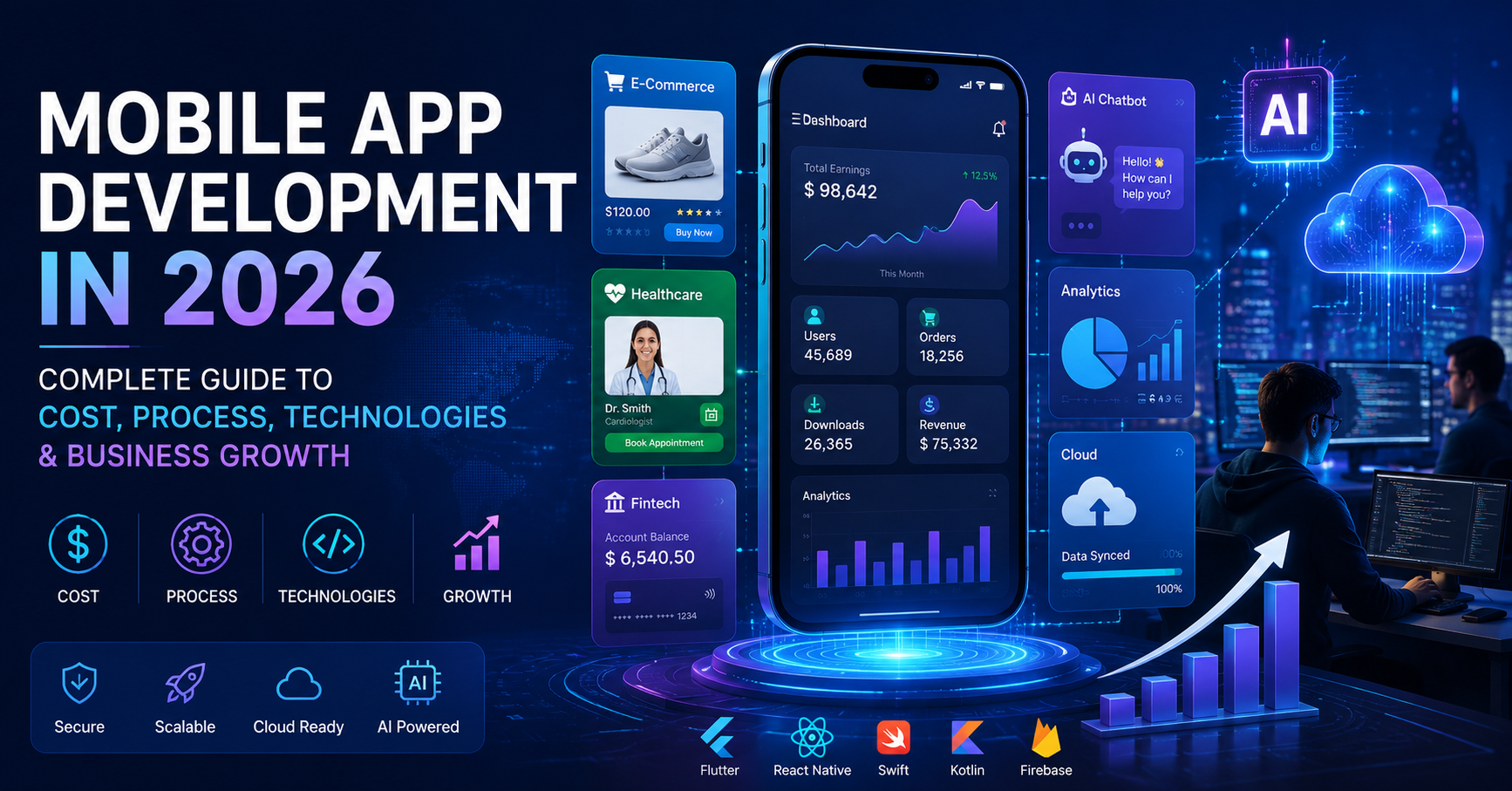
In 2026, mobile applications have become one of the most important digital assets for businesses. From retail and healthcare to finance and logistics, organizations are investing heavily in apps that improve customer engagement, automate operations, and generate new revenue streams. With smartphone usage continuing to grow across global markets, companies that provide seamless mobile experiences are often better positioned to compete.
This guide explains the major aspects of app creation, including planning, technology selection, budgeting, and vendor evaluation. It also highlights current trends, practical examples, and business considerations that help decision-makers make informed investments.
What is Mobile App Development and Why Does It Matter in 2026?
Definition of Mobile App Development
Many business owners still ask, what is mobile app development. In simple terms, it is the process of creating software applications that run on smartphones, tablets, and other mobile devices. These applications are designed to perform specific functions, such as online shopping, appointment booking, communication, banking, fitness tracking, or business management.
Modern apps are no longer limited to basic functionality. Companies now integrate artificial intelligence, cloud computing, advanced security features, and real-time analytics to improve user experiences. As customer expectations continue to rise, businesses increasingly depend on digital products that provide convenience, speed, and personalization.
Types of Mobile Applications
Businesses can choose from different application categories depending on their objectives:
- Native applications built specifically for a single operating system.
- Cross-platform applications that work across multiple devices.
- Progressive web applications that combine web and mobile experiences.
- Enterprise applications designed for internal business operations.
A food delivery platform, for example, requires customer apps, delivery partner apps, and administrative dashboards. Each serves a unique purpose while contributing to the overall business ecosystem.
Why Businesses Need Mobile Apps Today
Consumer behavior has shifted significantly toward mobile-first interactions. Customers prefer ordering products, booking services, tracking deliveries, and accessing support directly from their phones. Businesses that fail to provide convenient mobile experiences often lose opportunities to competitors.
Companies offering professional mobile app development services help organizations create solutions that improve customer retention and operational efficiency. Real-world examples include banking applications that reduce branch visits and retail apps that increase repeat purchases through personalized recommendations.
Mobile App Development Process Explained Step-by-Step
A successful mobile app development process follows a structured approach rather than jumping directly into coding. Proper planning reduces risks, prevents unnecessary expenses, and ensures the final product aligns with business goals.
Research and Requirement Analysis
The first stage focuses on understanding business objectives, customer needs, and market opportunities. Organizations conduct competitor analysis, identify target audiences, and define essential features.
For example, a healthcare startup may discover that patients value appointment scheduling and teleconsultation more than complex social features. Such insights help prioritize development efforts and allocate budgets efficiently.
A detailed requirement document also reduces misunderstandings between stakeholders and development teams.
UI/UX Design and Prototyping
Design plays a major role in application success. Users often abandon apps that are difficult to navigate, regardless of functionality. Designers create wireframes and interactive prototypes before development begins.
Good design focuses on:
- Clear navigation
- Fast access to important features
- Consistent visual elements
- Accessibility considerations
- Reduced user friction
Leading brands regularly test prototypes with real users before moving forward. This approach helps identify usability issues early and improves overall customer satisfaction.
Development, Testing & Deployment
The second phase of the mobile app development process involves coding, testing, and launching the application. Developers build front-end interfaces, back-end systems, APIs, and database structures.
Testing typically includes:
- Functional testing
- Security testing
- Performance testing
- Device compatibility testing
- User acceptance testing
After successful validation, the application is published on app stores and monitored for performance. Continuous updates remain important because user expectations and technology standards evolve rapidly.
Top Mobile App Development Technologies and Frameworks
The selection of mobile app development technologies directly influences performance, scalability, maintenance requirements, and long-term business value. Choosing the right technology stack requires evaluating project goals, target platforms, and future expansion plans.
Native App Development Technologies
Native development remains a preferred choice for organizations requiring maximum performance and device-specific functionality.
Popular technologies include:
- Swift for iOS applications
- Kotlin for Android applications
- Xcode development environment
- Android Studio development tools
Companies in gaming, finance, and healthcare often prefer native solutions because they provide strong performance, security, and user experience. Applications that handle intensive graphics or sensitive transactions typically benefit from this approach.
Cross-Platform Development Tools
Cross-platform frameworks allow developers to create applications for multiple operating systems using a shared codebase. This reduces development time and improves efficiency.
Widely adopted options include:
- Flutter
- React Native
- .NET MAUI
Businesses seeking faster market entry often select these frameworks. Startups especially benefit because they can launch on both Android and iOS without maintaining separate development teams.
AI-Powered Mobile App Development
Artificial intelligence is transforming how applications operate. Modern mobile app development technologies increasingly include AI-powered features that enhance personalization and automation.
Examples include:
- Intelligent chatbots
- Recommendation engines
- Predictive analytics
- Voice assistants
- Automated customer support
Retail platforms use AI to recommend products based on browsing behavior, while healthcare applications analyze patient data to provide personalized insights. These capabilities create better experiences and stronger customer engagement.
Mobile App Development Cost Breakdown
Understanding mobile app development cost is essential before starting any project. Budgets vary significantly depending on requirements, technology choices, design complexity, integrations, and ongoing maintenance needs.
Factors Affecting Development Cost
Several elements influence overall project expenses:
- Feature complexity
- Platform selection
- Design requirements
- Third-party integrations
- Security standards
- Development team location
- Testing requirements
An application with advanced payment processing, real-time tracking, and AI functionality will generally require more resources than a basic informational app.
Cost by App Complexity
Projects are commonly divided into three categories:
Basic Applications
These include simple features and limited integrations. They are suitable for informational services and small businesses entering the mobile market.
Medium Complexity Applications
Such projects often include user accounts, notifications, payment gateways, and administrative controls.
Advanced Applications
Enterprise systems, large marketplaces, fintech platforms, and healthcare ecosystems typically fall into this category. Development timelines and investment requirements are considerably higher.
When planning budgets, businesses should evaluate expected returns rather than focusing solely on initial expenses.
Hidden Costs Businesses Often Ignore
Beyond initial development, organizations frequently overlook recurring expenses.
Common examples include:
- Cloud hosting
- App store fees
- Security monitoring
- Technical support
- Performance optimization
- Feature enhancements
The actual mobile app development cost should always include long-term maintenance planning. Ignoring these factors often results in budget overruns after launch.
How to Choose the Right Mobile App Development Company
Selecting the right partner is one of the most important decisions during a technology initiative. While pricing matters, expertise, communication, and long-term support often have a greater impact on project success.
Technical Expertise to Evaluate
Businesses should assess development capabilities across platforms, architectures, integrations, and security practices.
Key evaluation areas include:
- Platform specialization
- API integration experience
- Security implementation
- Cloud infrastructure knowledge
- Quality assurance processes
Organizations seeking custom mobile app development should ensure the provider has experience building solutions tailored to unique business requirements rather than relying solely on prebuilt templates.
Portfolio and Industry Experience
Past projects often reveal a company’s strengths and capabilities. Reviewing case studies helps businesses understand whether a provider has solved similar challenges before.
A logistics company, for example, may prefer a partner with transportation experience, while a healthcare organization may prioritize regulatory compliance expertise.
Professional mobile app development services should include transparent communication, realistic timelines, and measurable business outcomes rather than generic promises.
Post-Launch Support and Maintenance
Launching an application is only the beginning. Ongoing monitoring, updates, and improvements remain critical for long-term success.
Important support areas include:
- Bug fixes
- Security updates
- Performance optimization
- Feature enhancements
- Operating system compatibility
Businesses investing in custom mobile app development should confirm that maintenance agreements are clearly defined before signing contracts. Reliable support reduces operational risks and helps applications remain competitive over time.
Conclusion
As digital transformation accelerates, mobile app development continues to be a powerful driver of business growth. Organizations that invest in thoughtful planning, modern technologies, user-focused design, and reliable implementation partners can create applications that deliver measurable value. Whether the goal is improving customer engagement, streamlining operations, or generating new revenue opportunities, a strategic approach to app creation remains essential in 2026.
FAQs
1. What is mobile app development and how does it help businesses?
What is mobile app development refers to creating software applications for smartphones and tablets. It helps businesses improve customer engagement, automate processes, and create new revenue channels.
2. How long does it take to build a business mobile application?
Timelines depend on complexity. Basic applications may take a few months, while advanced platforms with integrations and custom functionality can require significantly longer development cycles.
3. Should startups choose native or cross-platform development?
The choice depends on budget, performance requirements, and target audience. Cross-platform solutions often provide faster market entry, while native applications deliver maximum performance.
4. What are the biggest trends shaping app development in 2026?
Artificial intelligence, predictive analytics, cloud-native architectures, enhanced security, low-code integrations, and personalized user experiences are among the most influential trends.
5. How can businesses measure the success of a mobile application?
Common metrics include user retention, active users, conversion rates, customer satisfaction, revenue generation, engagement levels, and operational efficiency improvements.