
 sales@doomshell.com
 +91 8005523567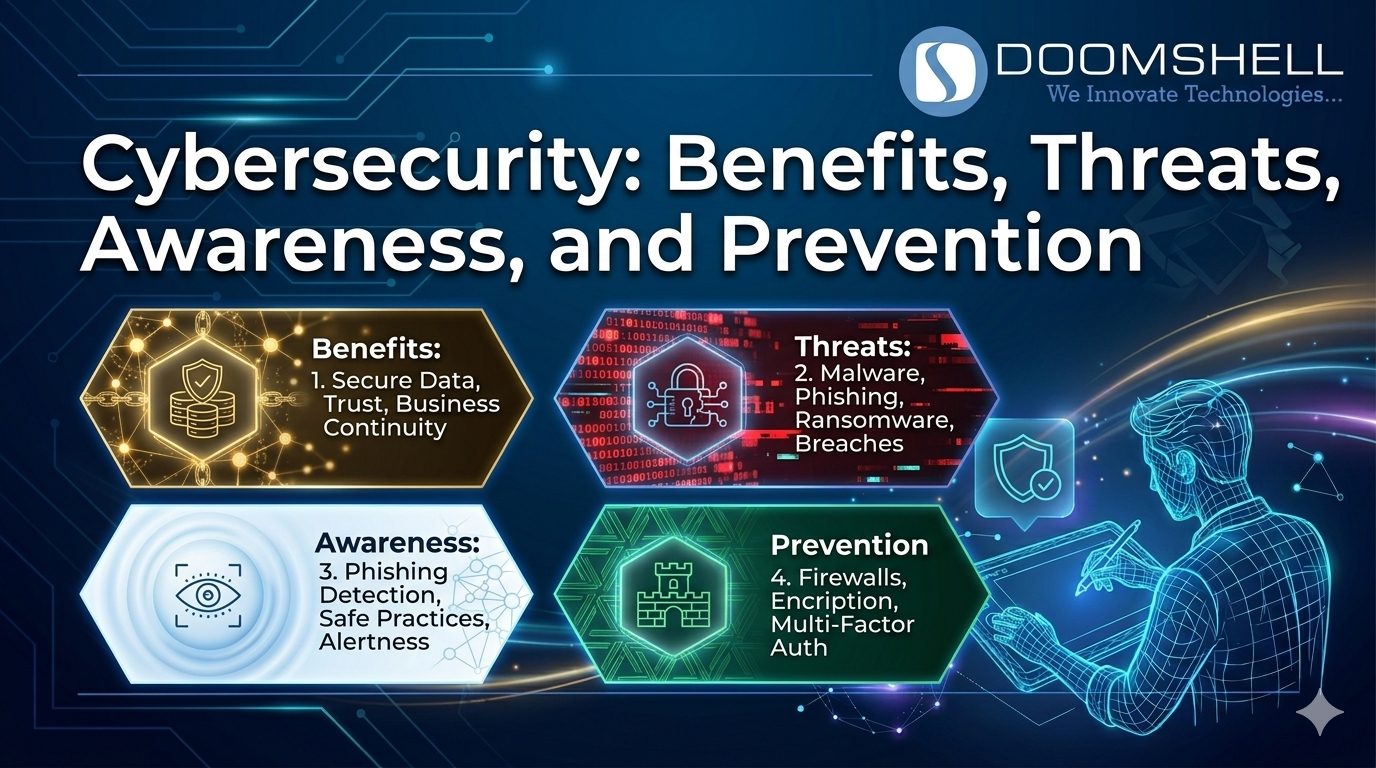
In today’s digital world, cybersecurity has become more important than ever. Businesses, governments, and individuals rely heavily on digital platforms for communication, banking, online shopping, cloud storage, and business operations. While technology has made life easier, it has also increased the risk of cyber threats such as hacking, ransomware, phishing, and data breaches.
Cybersecurity refers to the technologies, processes, and best practices used to protect computer systems, networks, and sensitive information from unauthorized access and cyber attacks. A strong cybersecurity strategy not only safeguards personal and business data but also ensures business continuity, customer trust, and regulatory compliance.
In this article, we’ll explore the importance of cybersecurity, its major benefits, common cyber threats, and practical steps to protect your digital assets.
Table of Contents
ToggleWhat is Cybersecurity?
Cybersecurity is the practice of protecting computers, mobile devices, networks, applications, and digital data from cybercriminals. It involves implementing security technologies, policies, and procedures that help prevent unauthorized access, data theft, malware infections, and online fraud.
Whether you’re an individual protecting personal information or an organization managing confidential customer data, cybersecurity is essential for maintaining digital safety.
Why is Cybersecurity Important?
Cyber attacks are becoming more frequent and sophisticated every year. A single security breach can lead to financial losses, reputational damage, legal penalties, and operational disruptions.
Cybersecurity helps organizations:
- Protect confidential information
- Prevent financial fraud
- Ensure business continuity
- Build customer trust
- Meet regulatory requirements
- Reduce the risk of cyber attacks
Without proper cybersecurity measures, businesses and individuals become easy targets for hackers and cybercriminals.
Benefits of Cybersecurity
Implementing strong cybersecurity practices offers several important advantages.
1. Protects Sensitive Data
Cybersecurity safeguards confidential information such as customer records, financial data, business documents, and intellectual property from unauthorized access.
2. Prevents Financial Losses
Cyber attacks often result in expensive recovery costs, legal expenses, and business interruptions. Effective cybersecurity minimizes these financial risks.
3. Builds Customer Trust
Customers are more likely to do business with organizations that prioritize data security and protect their personal information.
4. Supports Business Continuity
Security solutions help prevent downtime caused by malware, ransomware, or other cyber incidents, ensuring smooth business operations.
5. Ensures Regulatory Compliance
Many industries must comply with data protection regulations such as GDPR, HIPAA, PCI DSS, and ISO security standards. Cybersecurity helps businesses meet these legal requirements and avoid penalties.
6. Protects Brand Reputation
A data breach can significantly damage a company’s reputation. Strong cybersecurity measures demonstrate professionalism and commitment to customer privacy.
Common Cybersecurity Threats
Organizations face a wide range of cyber threats that continue to evolve.
Malware
Malware includes viruses, worms, spyware, trojans, and ransomware designed to steal, damage, or disrupt systems.
Phishing Attacks
Cybercriminals use fake emails, websites, or messages to trick users into revealing passwords, banking information, or personal data.
Ransomware
Ransomware encrypts important files and demands payment before restoring access.
Insider Threats
Employees or contractors with authorized access may intentionally or accidentally compromise sensitive business information.
Advanced Persistent Threats (APTs)
APTs are long-term, targeted attacks where cybercriminals infiltrate networks and remain undetected while stealing valuable data.
Distributed Denial-of-Service (DDoS) Attacks
DDoS attacks overwhelm servers with massive traffic, making websites and online services unavailable.
Importance of Cybersecurity Awareness
Technology alone cannot prevent cyber attacks. Human awareness plays an equally important role.
Organizations should educate employees about:
- Recognizing phishing emails
- Creating strong passwords
- Safe internet browsing
- Secure file sharing
- Reporting suspicious activities
- Protecting confidential information
Regular cybersecurity training significantly reduces human errors that often lead to security breaches.
Best Practices to Prevent Cybersecurity Threats
Following cybersecurity best practices helps reduce the risk of attacks.
Use Strong PasswordsCreate unique passwords containing uppercase letters, lowercase letters, numbers, and special characters. Avoid reusing passwords across multiple accounts.
Enable Multi-Factor Authentication (MFA)
Adding an extra layer of authentication makes it much harder for attackers to access your accounts.
Keep Software Updated
Regularly update operating systems, applications, browsers, and security software to patch known vulnerabilities.
Install Antivirus and Firewalls
Reliable antivirus software and firewalls provide protection against malware and unauthorized access attempts.
Backup Important Data
Maintain regular backups of critical files to ensure quick recovery after ransomware attacks or system failures.
Monitor Network Activity
Continuous monitoring helps detect unusual activities before they become major security incidents.
Limit User Access
Grant employees access only to the information necessary for their roles using the principle of least privilege.
Develop an Incident Response Plan
Prepare a clear response strategy for handling cyber attacks to minimize downtime and financial losses.
Future of Cybersecurity
As technologies such as Artificial Intelligence (AI), cloud computing, the Internet of Things (IoT), and blockchain continue to evolve, cyber threats are becoming increasingly sophisticated. Future cybersecurity solutions will rely more on AI-powered threat detection, zero-trust security models, behavioral analytics, and automated incident response systems to combat modern cyber attacks.
Organizations that invest in advanced cybersecurity technologies today will be better prepared for tomorrow’s digital challenges.
Conclusion
Cybersecurity has become a fundamental requirement for individuals and businesses operating in today’s digital landscape. As cyber threats continue to evolve, protecting sensitive information, maintaining customer trust, and ensuring uninterrupted business operations have become top priorities.
By understanding common cyber threats, promoting cybersecurity awareness, implementing strong security measures, and continuously updating defense strategies, organizations can significantly reduce their risk of cyber attacks. Investing in cybersecurity is not just about protecting data—it’s about ensuring long-term business success, regulatory compliance, and a safer digital future.
Frequently Asked Questions (FAQs)
1. What is cybersecurity?
Cybersecurity is the practice of protecting computers, networks, applications, and digital information from cyber threats, unauthorized access, and data breaches.
2. Why is cybersecurity important for businesses?
Cybersecurity protects sensitive business information, prevents financial losses, ensures regulatory compliance, and builds customer trust.
3. What are the most common cyber threats?
Common cyber threats include malware, ransomware, phishing attacks, insider threats, DDoS attacks, and Advanced Persistent Threats (APTs).
4. How can businesses improve cybersecurity?
Businesses can improve cybersecurity by using strong passwords, enabling multi-factor authentication, updating software regularly, installing antivirus software, backing up data, monitoring networks, and providing employee security training.
5. What are the benefits of cybersecurity awareness?
Cybersecurity awareness helps users recognize online threats, avoid phishing scams, protect sensitive information, and reduce the risk of successful cyber attacks.