 sales@doomshell.com
 +91 8005523567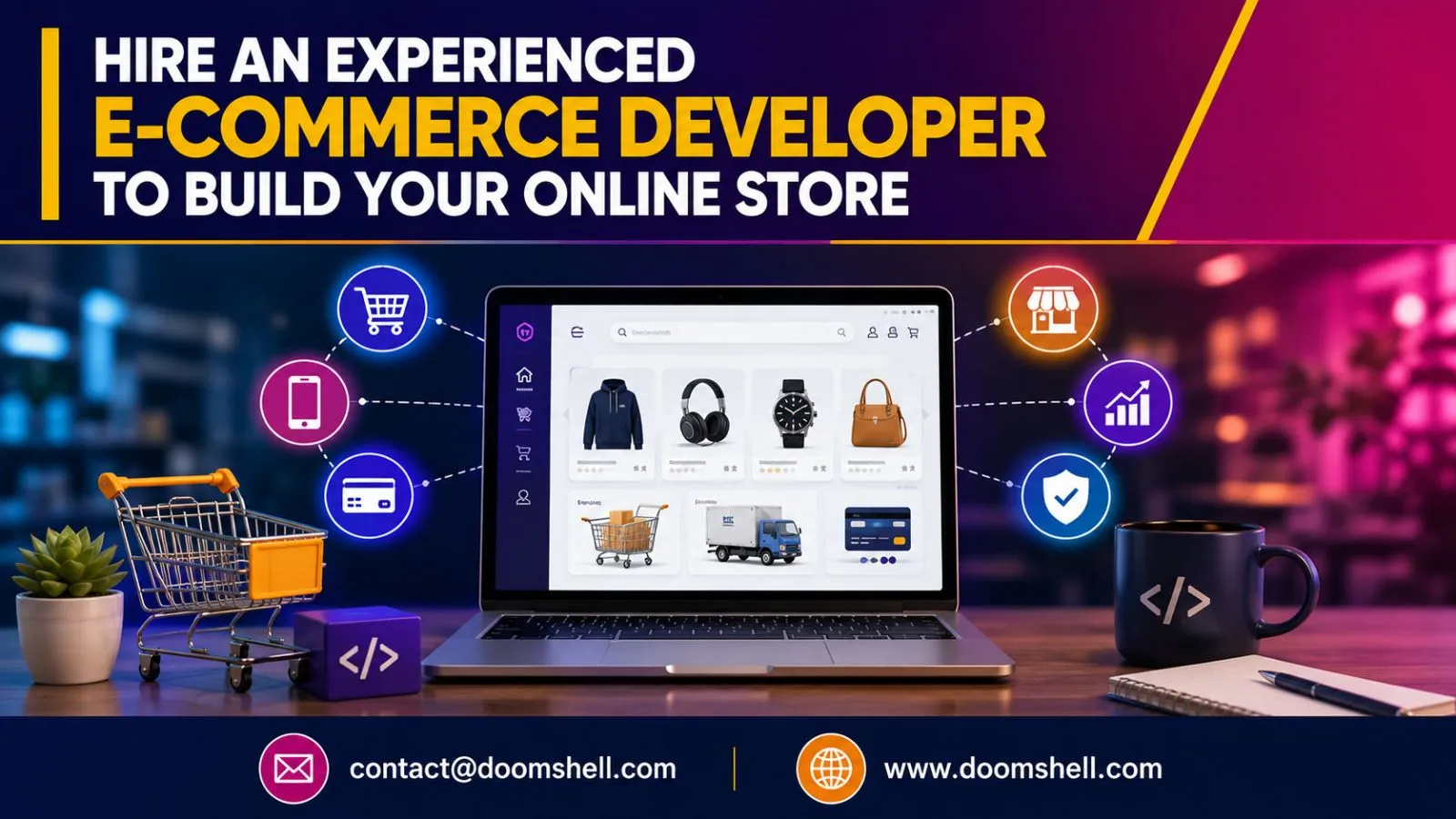
The rapid growth of digital technology has transformed the way businesses sell products and services. Today, customers prefer shopping online because it is fast, convenient, and accessible from anywhere. Whether purchasing clothing, electronics, groceries, or booking services, eCommerce has become an essential part of modern business.
As online competition continues to increase, businesses require powerful eCommerce websites and mobile applications to provide a seamless shopping experience. Hiring an experienced eCommerce app developer ensures your online store is secure, scalable, user-friendly, and optimized for growth.
This guide explains everything you need to know before hiring an eCommerce developer for your business.
Why Hire an Experienced eCommerce App Developer?
An experienced eCommerce developer understands both technology and customer behavior. They build online stores that not only look attractive but also deliver excellent performance and security.
A professional developer can help you:
-
Build a responsive eCommerce website
-
Develop Android and iOS shopping applications
-
Integrate secure payment gateways
-
Improve website speed
-
Optimize user experience (UX)
-
Enhance website security
-
Increase conversions and online sales
-
Provide long-term maintenance and support
Hiring the right developer helps businesses launch successful digital commerce platforms that can scale with future growth.
Steps to Hire the Right eCommerce Developer
1. Define Your Business Requirements
Before searching for a developer, clearly identify your project goals.
Consider questions such as:
-
Do you need a website, mobile app, or both?
-
Which platform do you want to use?
-
What features are essential?
-
Who is your target audience?
-
What is your expected launch date?
Having clear requirements makes the hiring process much easier.
2. Set a Realistic Budget
Every business operates within financial constraints.
Create a budget based on:
-
Project complexity
-
Number of features
-
Platform requirements
-
Design customization
-
Third-party integrations
-
Future maintenance costs
Choosing a developer based solely on the lowest price may affect the overall quality of your application.
3. Evaluate Technical Expertise
An experienced developer should possess strong technical knowledge of modern eCommerce technologies.
Look for expertise in:
-
Shopify
-
Magento
-
WooCommerce
-
React
-
Node.js
-
PHP
-
Flutter
-
React Native
-
API integrations
-
Cloud hosting
The right technology stack depends on your business objectives.
4. Review Previous Projects
Always review the developer’s portfolio before making a decision.
Evaluate:
-
Website design quality
-
Mobile application performance
-
Industry experience
-
User interface (UI)
-
User experience (UX)
-
Loading speed
-
Overall functionality
A strong portfolio demonstrates practical experience and problem-solving abilities.
5. Choose the Right Hiring Model
Businesses can hire developers through different engagement models.
Popular hiring options include:
-
Dedicated developer
-
Fixed-price project
-
Hourly development
-
Remote development team
-
Full-service development agency
Choose the model that aligns with your project size and long-term business goals.
6. Ensure Clear Communication
Successful projects require effective communication.
Choose developers who provide:
-
Regular progress reports
-
Weekly meetings
-
Transparent project tracking
-
Fast response times
-
Clear documentation
Good communication minimizes misunderstandings and keeps projects on schedule.
Features of a Successful eCommerce Application
Modern eCommerce applications should include essential features that improve customer experience.
User Registration
Simple account creation and secure login options improve customer convenience.
Product Management
Customers should easily browse products using categories, filters, and search functionality.
Secure Payment Gateway
Support multiple payment options including:
-
Credit Cards
-
Debit Cards
-
UPI
-
Digital Wallets
-
Net Banking
Security should always be a top priority.
Shopping Cart
An intuitive shopping cart allows customers to review products before completing purchases.
Order Tracking
Real-time order tracking improves customer satisfaction and reduces support requests.
Push Notifications
Notifications help businesses promote:
-
Discounts
-
New arrivals
-
Flash sales
-
Order updates
-
Promotional campaigns
Customer Reviews
Product ratings and reviews increase trust and encourage purchasing decisions.
Industries Using eCommerce Applications
Custom eCommerce applications serve businesses across multiple industries.
Retail
Retail businesses sell products online through websites and mobile applications while managing inventory and customer orders efficiently.
Wholesale
Wholesale businesses use eCommerce platforms to manage bulk purchasing and B2B transactions.
Fashion
Fashion brands use online stores to showcase collections, improve customer engagement, and increase sales.
Healthcare
Online pharmacies and healthcare providers offer medicine ordering, appointment booking, and health products through eCommerce platforms.
Grocery Delivery
Online grocery applications enable customers to purchase daily essentials with home delivery services.
Electronics
Electronics retailers use eCommerce platforms to manage large product catalogs, warranties, and secure payments.
Benefits of Custom eCommerce App Development
Custom-built eCommerce applications offer several business advantages.
Some major benefits include:
-
Personalized shopping experience
-
Better performance
-
High scalability
-
Enhanced security
-
Faster loading speed
-
Mobile-friendly design
-
Improved customer engagement
-
Easy inventory management
-
Advanced analytics
-
Higher conversion rates
Custom solutions provide greater flexibility than ready-made platforms.
Why Businesses Invest in eCommerce Development
Businesses continue investing in eCommerce because online shopping is growing rapidly across the world.
Key reasons include:
-
Increasing smartphone usage
-
Digital payment adoption
-
Global customer reach
-
Lower operational costs
-
24/7 product availability
-
Better customer convenience
-
Increased revenue opportunities
A professionally developed eCommerce application enables businesses to compete effectively in today’s digital marketplace.
Conclusion
Hiring an experienced eCommerce app developer is one of the most important decisions for any online business. A skilled developer can create a secure, scalable, and user-friendly platform that delivers exceptional customer experiences while supporting long-term business growth.
From selecting the right technology stack to implementing secure payment systems and optimizing website performance, professional eCommerce development helps businesses maximize sales and stay ahead of the competition. Investing in custom eCommerce solutions ensures your business is ready for the future of online commerce.
FAQs
1. What does an eCommerce app developer do?
An eCommerce app developer designs, develops, and maintains online shopping websites and mobile applications with secure payment, inventory, and order management features.
2. Which platform is best for eCommerce development?
Popular platforms include Shopify, Magento, WooCommerce, Laravel, and custom-built solutions depending on business requirements.
3. How much does eCommerce app development cost?
Development costs depend on project complexity, features, technology stack, integrations, and development time.
4. Why should businesses invest in custom eCommerce applications?
Custom applications provide better performance, enhanced security, scalability, personalized customer experiences, and greater flexibility than generic solutions.
5. What features should an eCommerce app include?
Essential features include product catalog, secure payments, shopping cart, order tracking, user accounts, push notifications, customer reviews, and analytics.