
 sales@doomshell.com
 +91 8005523567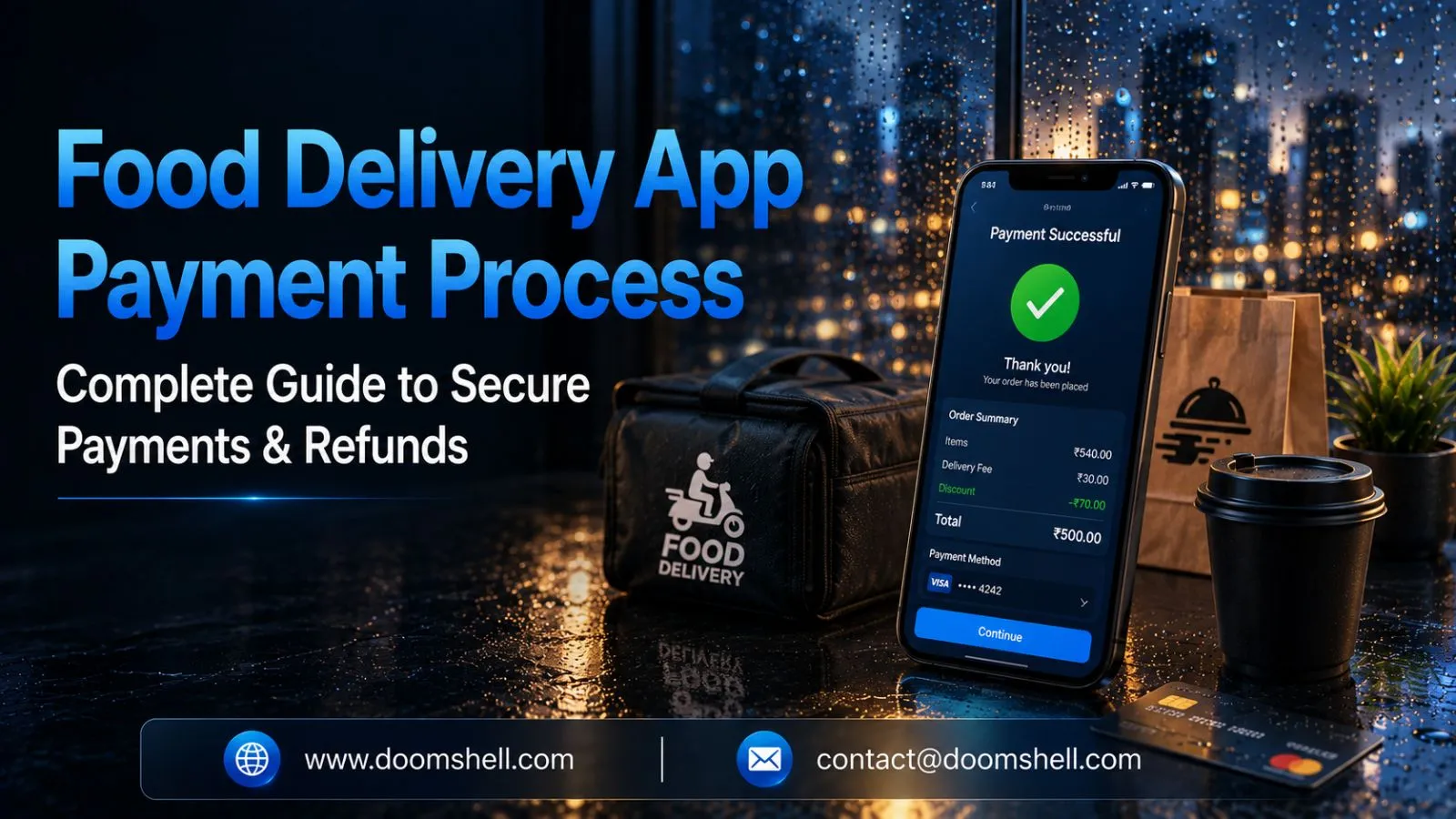
Food delivery apps have transformed how people order meals, making it easier than ever to enjoy restaurant-quality food without leaving home. Whether you’re paying through a credit card, digital wallet, UPI, or cash on delivery, understanding the payment process helps ensure every transaction is fast, secure, and hassle-free.
Modern food delivery platforms invest heavily in secure payment technologies, fraud prevention systems, and multiple payment options to provide users with a seamless ordering experience. However, knowing how these payment methods work, how refunds are processed, and what security measures protect your financial information can help you avoid common issues.
In this guide, we’ll explain everything you need to know about the food delivery app payment process, including payment methods, transaction security, payment confirmations, refund procedures, and best practices for safe online food ordering.
Market Overview: Food Delivery App Payments in 2026
The online food delivery industry continues to experience rapid growth as digital payment adoption increases worldwide. Consumers now expect instant, secure, and flexible payment options when ordering food online.
Current industry trends include:
-
Growing adoption of digital wallets and UPI payments.
-
Increasing use of AI-powered fraud detection systems.
-
Contactless payments becoming the preferred payment method.
-
Rising demand for one-click checkout experiences.
-
Enhanced payment security through biometric authentication.
As competition grows among food delivery platforms, payment convenience and transaction security have become major factors influencing customer satisfaction and retention.
Understanding the Food Delivery App Payment Process
The payment process in a food delivery app begins when a customer places an order and selects a preferred payment method. The app securely processes the transaction through a payment gateway, verifies the payment, confirms the order with the restaurant, and generates a payment receipt.
The typical payment workflow includes:
-
Select food items and proceed to checkout.
-
Choose a payment method.
-
Complete payment authentication.
-
Payment gateway verifies the transaction.
-
Order confirmation is sent.
-
Restaurant prepares the order.
-
Delivery partner completes the delivery.
-
Payment confirmation and receipt are generated.
Payment Options Available in Food Delivery Apps
Credit and Debit Card Payments
Credit and debit cards remain one of the most widely used payment methods across food delivery platforms.
Benefits of Card Payments
-
Fast checkout process
-
Secure encrypted transactions
-
Cashback and reward points
-
Automatic payment records
-
Easy refund processing
How to Add Your Card
Most apps allow users to securely save card information using PCI DSS-compliant payment gateways, reducing the need to enter card details for every purchase.
Mobile Wallet Payments
Digital wallets such as Apple Pay, Google Pay, Paytm, PhonePe, and similar services offer a quick and secure payment experience.
Advantages of Mobile Wallets
-
One-tap payments
-
Contactless transactions
-
Enhanced security
-
Tokenized payment credentials
-
Faster checkout
Mobile wallets reduce the need to repeatedly enter payment information while offering additional fraud protection.
UPI Payments
UPI has become one of the fastest-growing payment methods, especially in India.
Benefits include:
-
Instant bank transfers
-
Zero or minimal transaction fees
-
QR code support
-
Secure authentication
-
Real-time payment confirmation
UPI combines convenience with strong security, making it a preferred option for many users.
Cash on Delivery (COD)
Although digital payments dominate the market, Cash on Delivery remains available in many locations.
How COD Works
Customers place an order online but pay the delivery executive upon receiving the food.
When COD Makes Sense
-
Limited access to online payment methods
-
First-time orders
-
Areas with low digital payment adoption
-
Preference for cash transactions
However, many platforms now encourage prepaid orders due to faster processing and reduced cancellations.
Payment Security Measures
Secure payment processing is one of the highest priorities for food delivery platforms. Multiple technologies work together to protect customer information.
Data Encryption
Payment information is encrypted before being transmitted, ensuring sensitive data cannot be intercepted during the transaction.
Benefits include:
-
Protection against cyber attacks
-
Secure communication
-
Reduced fraud risks
-
Safe storage of payment credentials
Secure Payment Gateways
Trusted payment gateways verify every transaction while ensuring compliance with global security standards.
These gateways provide:
-
Secure authentication
-
Fraud monitoring
-
Transaction verification
-
Payment authorization
-
Compliance with PCI DSS standards
Two-Factor Authentication (2FA)
Many payment providers require users to verify transactions using an additional authentication method such as:
-
OTP verification
-
Banking authentication
-
Biometric verification
-
Authentication apps
This significantly reduces unauthorized access to customer accounts.
Fraud Detection Systems
Modern food delivery platforms use AI-driven fraud detection tools that monitor unusual payment behavior.
Common fraud prevention techniques include:
-
Suspicious transaction monitoring
-
Device verification
-
Risk scoring
-
Payment behavior analysis
-
Automated fraud alerts
These systems help prevent unauthorized transactions before they occur.
Payment Confirmation Process
Once your payment is successfully processed, the food delivery app verifies the transaction and confirms your order with the restaurant. This confirmation assures both the customer and the restaurant that the payment has been received and the order is ready for preparation.
A typical payment confirmation process includes:
-
Payment authorization from the bank or payment gateway
-
Order confirmation by the restaurant
-
Estimated delivery time generation
-
Payment receipt creation
-
Order tracking activation
Most food delivery apps complete this process within a few seconds.
Order Receipts
Order receipts act as proof of payment and help users verify their purchases. Every successful transaction generates a digital receipt that can be accessed anytime through the app or email.
A typical receipt contains:
-
Order ID
-
Restaurant name
-
Ordered items
-
Quantity and pricing
-
Taxes and delivery charges
-
Discounts applied
-
Payment method
-
Transaction ID
-
Order date and time
-
Total amount paid
Keeping receipts is useful when requesting refunds or resolving payment disputes.
In-App Notifications
Food delivery apps provide real-time notifications to keep customers informed throughout the ordering process.
Common notifications include:
-
Payment successful
-
Restaurant accepted your order
-
Food preparation started
-
Delivery partner assigned
-
Order picked up
-
Delivery arriving soon
-
Order delivered
These updates improve transparency and help users track their orders efficiently.
Email Confirmations
Most food delivery platforms also send confirmation emails after every successful transaction.
Email confirmations generally include:
-
Payment receipt
-
Complete order summary
-
Restaurant information
-
Delivery address
-
Estimated delivery time
-
Customer support details
These emails serve as an additional record in case users need payment verification later.
Refund Process in Food Delivery Apps
Refunds may be initiated for several reasons, including order cancellations, payment failures, incorrect deliveries, or poor food quality.
Common Reasons for Refunds
-
Order cancelled by the restaurant
-
Failed payment with amount deducted
-
Incorrect food delivered
-
Missing items
-
Damaged or poor-quality food
-
Duplicate payment
-
Delivery delays beyond policy limits
The refund process usually depends on the platform’s refund policy and the payment method used.
How to Request a Refund
Most food delivery apps provide a simple refund process:
-
Open the order history.
-
Select the affected order.
-
Choose Report an Issue or Request Refund.
-
Describe the problem.
-
Upload photos if required.
-
Submit the request.
The customer support team reviews the request before approving or rejecting the refund.
Refund Timelines
Refund processing time varies depending on the payment method.
| Payment Method | Typical Refund Time |
|---|---|
| Credit Card | 5–10 Business Days |
| Debit Card | 3–7 Business Days |
| UPI | Instant to 3 Days |
| Mobile Wallet | Within 24 Hours |
| Cash on Delivery | Wallet Credit or Bank Transfer |
Handling Payment Disputes
Sometimes payments may fail or customers may notice unauthorized charges. Most food delivery platforms have dedicated support teams to resolve such issues.
To resolve a payment dispute:
-
Keep your transaction ID.
-
Save payment receipts.
-
Contact customer support immediately.
-
Provide screenshots if necessary.
-
Monitor refund status through the app.
If the issue remains unresolved, customers can also contact their bank or payment provider.
Best Practices for Safe Food Delivery Payments
Following a few simple precautions can help protect your money and personal information.
Use Trusted Payment Methods
Always pay using secure payment options offered within the official application.
Avoid transferring money directly to unknown bank accounts.
Enable Two-Factor Authentication
Enable OTP verification or biometric authentication whenever available.
This adds an extra layer of protection against unauthorized access.
Avoid Public Wi-Fi
Public Wi-Fi networks can expose sensitive payment information.
Whenever possible, use:
-
Mobile data
-
Trusted home Wi-Fi
-
VPN services
for secure transactions.
Monitor Payment History
Regularly review your:
-
Bank statements
-
Wallet transactions
-
Order history
to identify any suspicious activity quickly.
Update the App Regularly
App updates frequently include:
-
Security improvements
-
Bug fixes
-
Faster payment processing
-
Fraud prevention enhancements
Keeping the app updated ensures a safer payment experience.
Common Payment Problems and Solutions
| Problem | Possible Solution |
|---|---|
| Payment Failed | Retry after checking internet connection or bank balance |
| Amount Debited but Order Not Confirmed | Wait a few minutes and contact customer support if necessary |
| Duplicate Payment | Share both transaction IDs with support for refund processing |
| Refund Delayed | Check expected refund timeline and contact support if delayed |
| Card Declined | Verify card details, expiry date, or contact your bank |
| UPI Payment Pending | Wait for payment status update or verify through your UPI app |
Future of Food Delivery Payments
The payment experience in food delivery apps is expected to become even smarter in the coming years. Emerging technologies are making transactions faster, more secure, and highly personalized.
Key trends shaping the future include:
-
AI-powered fraud detection
-
Biometric payment authentication
-
One-click checkout experiences
-
Voice-enabled payments
-
Digital wallet expansion
-
Cryptocurrency payment support (where regulations permit)
-
Personalized payment offers based on user behavior
These innovations aim to improve customer convenience while maintaining high security standards.
Conclusion
Food delivery apps have revolutionized the way people order meals, and secure payment systems are at the heart of this convenience. Whether you choose to pay through credit cards, UPI, mobile wallets, or cash on delivery, understanding the payment process helps ensure every transaction is smooth and reliable.
By using secure payment methods, enabling two-factor authentication, monitoring your transactions, and understanding refund policies, you can enjoy a safer online food ordering experience. As payment technologies continue to evolve, food delivery platforms will offer even faster, more secure, and user-friendly payment solutions that enhance customer satisfaction.
Frequently Asked Questions (FAQs)
1. How do I add a payment method to a food delivery app?
Go to the app’s payment settings, select Add Payment Method, enter your card, UPI, or wallet details, and complete the verification process.
2. Are my payment details safe in food delivery apps?
Yes. Reputable food delivery apps use encrypted payment gateways, secure authentication, and PCI DSS-compliant systems to protect customer information.
3. What should I do if my payment is deducted but my order isn’t confirmed?
Wait a few minutes to see if the order updates automatically. If it doesn’t, contact customer support with your transaction ID for assistance.
4. Can I change my payment method after placing an order?
Most food delivery apps do not allow payment method changes after an order is confirmed. However, policies may vary depending on the platform.
5. How long does it take to receive a refund?
Refund timelines depend on the payment method. Wallet refunds are usually the fastest, while bank and card refunds may take several business days.
6. Is Cash on Delivery available for every order?
Not always. Availability depends on the restaurant, delivery location, and the food delivery platform’s policies.