 sales@doomshell.com
 +91 8005523567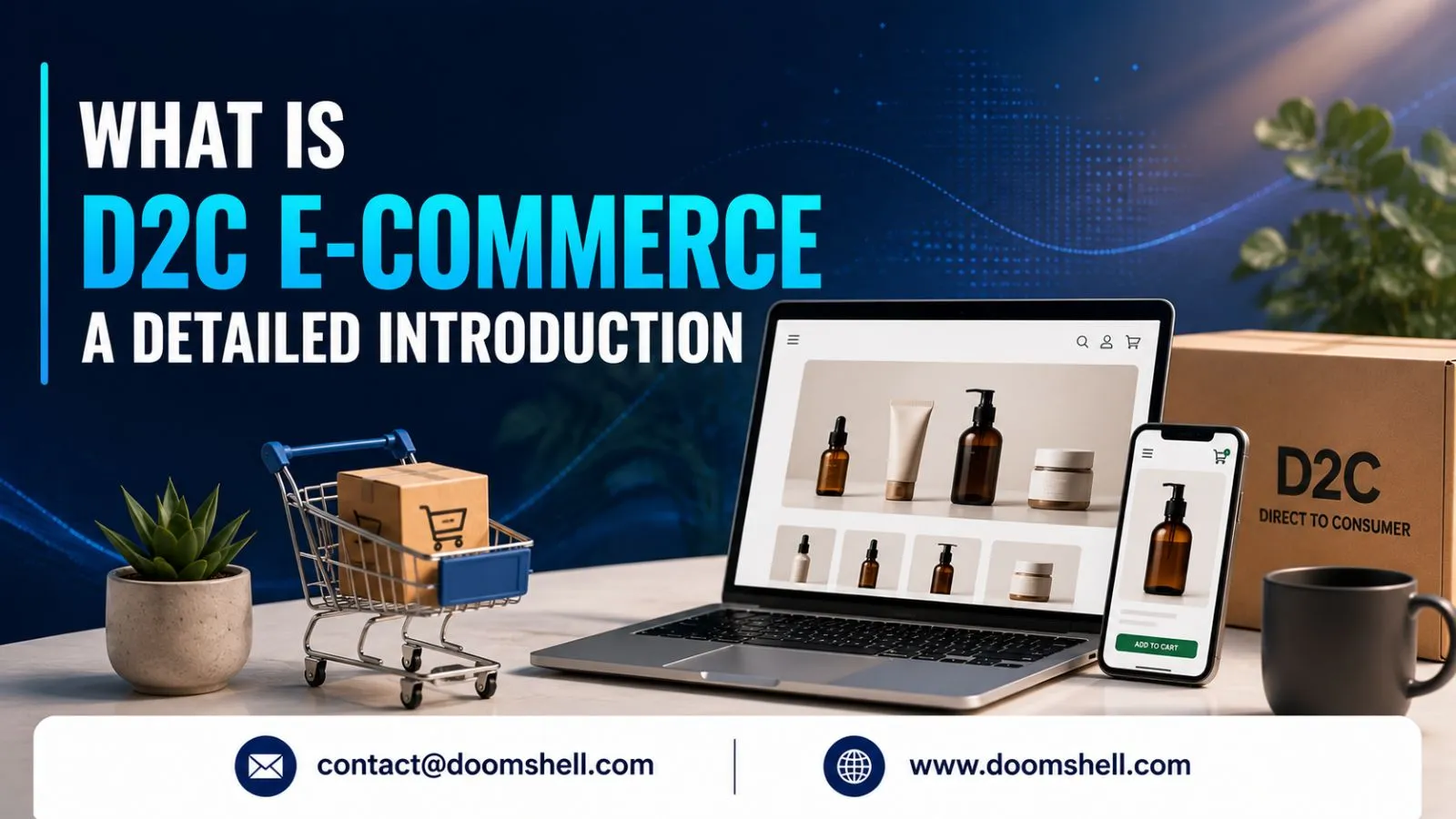
The eCommerce industry has transformed dramatically over the past decade, changing the way businesses sell products and interact with customers. Instead of relying solely on distributors, wholesalers, or retail stores, many brands now sell directly to consumers through their own websites and digital platforms. This business approach is known as Direct-to-Consumer (D2C) eCommerce, and it has become one of the fastest-growing retail models worldwide.
The rise of online shopping, mobile commerce, social media, and digital payment systems has made it easier than ever for businesses to build their own online stores and establish direct relationships with customers. From startups to global brands, companies are embracing D2C strategies to improve profitability, enhance customer experiences, and gain complete control over their brand.
In this comprehensive guide, you’ll learn what D2C eCommerce is, how it works, its benefits, challenges, successful examples, and the best practices for building a successful D2C business in 2026.
What is D2C eCommerce?
Direct-to-Consumer (D2C) eCommerce is a business model in which manufacturers or brands sell their products directly to customers without involving traditional intermediaries such as wholesalers, distributors, or retail stores.
Instead of depending on third-party marketplaces or physical outlets, businesses use their own eCommerce websites, mobile applications, and digital channels to market, sell, and deliver products directly to consumers.
This model allows businesses to control every stage of the customer journey—from product presentation and pricing to customer service and post-purchase support.
How Does the D2C Business Model Work?
In a D2C model, businesses manage the complete sales process themselves. Customers discover products through digital marketing channels, visit the brand’s website or app, place orders online, and receive products directly from the company.
The typical D2C process includes:
- Product development.
- Digital marketing.
- Website or mobile app sales.
- Secure online payments.
- Inventory management.
- Order fulfillment.
- Shipping and delivery.
- Customer support.
- Loyalty and retention programs.
Because brands own the entire customer relationship, they can continuously improve their products and services based on customer feedback and purchasing behavior.
Advantages of D2C eCommerce
The growing popularity of D2C eCommerce is driven by several significant business advantages.
Stronger Customer Relationships
Selling directly enables businesses to communicate with customers without intermediaries. Brands can understand customer preferences, collect feedback, and deliver personalized experiences that improve satisfaction and loyalty.
Complete Control Over Branding
With D2C eCommerce, companies have full control over their:
- Brand identity.
- Website design.
- Product presentation.
- Customer experience.
- Marketing campaigns.
- Customer communication.
This consistency strengthens brand recognition and builds long-term customer trust.
Better Profit Margins
Traditional retail involves distributors, wholesalers, and retailers, each adding their own profit margin.
By eliminating these intermediaries, D2C businesses can:
- Increase profit margins.
- Offer competitive pricing.
- Launch exclusive products.
- Invest more in customer experience.
This financial flexibility helps businesses grow faster while maintaining profitability.
Personalized Customer Experiences
One of the biggest strengths of D2C eCommerce is personalization.
Using customer data and analytics, businesses can offer:
- Personalized product recommendations.
- Targeted email campaigns.
- Customized promotions.
- Loyalty rewards.
- Personalized shopping experiences.
Personalization improves customer engagement and increases repeat purchases.
Better Access to Customer Data
Unlike traditional retail channels, D2C businesses own valuable customer information, including:
- Purchase history.
- Browsing behavior.
- Product preferences.
- Demographic insights.
- Customer feedback.
This data helps businesses improve marketing strategies, optimize inventory, and develop products that better meet customer needs.
Challenges of D2C eCommerce
Although D2C offers many advantages, businesses must also overcome several challenges.
Technical Infrastructure
Running an online business requires reliable technology, including:
- Secure websites.
- Mobile applications.
- Payment gateways.
- Hosting infrastructure.
- Inventory management systems.
- CRM software.
- Marketing automation tools.
Maintaining this infrastructure requires continuous investment and technical expertise.
Fast Order Fulfillment
Today’s customers expect quick delivery and real-time order tracking.
Businesses must establish efficient logistics processes for:
- Inventory management.
- Warehousing.
- Shipping.
- Returns management.
- Last-mile delivery.
Poor fulfillment experiences can negatively impact customer satisfaction and brand reputation.
Customer Acquisition Costs
As online competition increases, acquiring new customers has become more expensive.
Successful D2C brands invest heavily in:
- SEO.
- Content marketing.
- Social media advertising.
- Email marketing.
- Influencer partnerships.
- Paid search campaigns.
Balancing customer acquisition costs with long-term profitability is essential.
Essential Technologies for D2C eCommerce
Modern D2C businesses rely on multiple technologies to operate efficiently.
These include:
- eCommerce platforms.
- CRM software.
- Marketing automation.
- AI-powered recommendations.
- Analytics tools.
- Inventory management systems.
- Secure payment gateways.
- Customer support software.
- Mobile applications.
- ERP integration.
Technology enables businesses to deliver seamless customer experiences while managing operations efficiently.
Successful D2C Brand Examples
Many global brands have achieved remarkable success using the D2C model.
Tesla
Tesla transformed the automotive industry by selling electric vehicles directly through its website and company-owned stores. This approach allowed Tesla to control pricing, customer experience, and brand positioning while building a strong global community.
boAt
boAt has become one of India’s leading consumer electronics brands by selling headphones, earbuds, smartwatches, and accessories directly through its online platform and digital marketing campaigns. Its customer-focused strategy, influencer collaborations, and strong online presence have fueled rapid growth.
MVMT
MVMT disrupted the traditional watch industry by offering stylish, affordable watches directly to consumers through its online store. By eliminating intermediaries, the company delivered competitive pricing while maintaining strong brand identity and customer engagement.
Best Practices for Building a Successful D2C Business
To succeed in the competitive D2C market, businesses should focus on:
- Building a fast, mobile-friendly website.
- Delivering exceptional customer experiences.
- Investing in SEO and content marketing.
- Using data-driven personalization.
- Offering secure payment options.
- Providing fast shipping and easy returns.
- Creating loyalty and referral programs.
- Leveraging social media and influencer marketing.
- Monitoring customer feedback.
- Continuously optimizing digital marketing campaigns.
A customer-centric strategy is the foundation of long-term D2C success.
Future of D2C eCommerce in 2026
The future of D2C eCommerce will be driven by innovation and customer experience.
Emerging trends include:
- Artificial Intelligence for personalization.
- Voice commerce.
- Augmented Reality shopping.
- Predictive analytics.
- Subscription-based commerce.
- Omnichannel customer experiences.
- Sustainable packaging.
- Social commerce.
- Conversational AI.
- Headless commerce architecture.
Businesses that embrace these technologies will gain a competitive advantage in the evolving digital marketplace.
Conclusion
Direct-to-Consumer (D2C) eCommerce has transformed the retail industry by enabling brands to build stronger customer relationships, improve profitability, and gain complete control over their products, pricing, and customer experience. By removing intermediaries, businesses can create personalized shopping journeys, collect valuable customer insights, and respond quickly to changing market demands.
While D2C businesses face challenges such as technical infrastructure, logistics, and customer acquisition costs, these can be overcome with the right technology, marketing strategy, and operational processes. As digital commerce continues to evolve in 2026, investing in a robust D2C strategy will help businesses increase customer loyalty, drive sustainable growth, and remain competitive in the modern retail landscape.
Frequently Asked Questions
What is D2C eCommerce?
D2C (Direct-to-Consumer) eCommerce is a business model in which brands sell products directly to customers through their own websites or digital channels without relying on wholesalers or retail stores.
What are the advantages of D2C eCommerce?
D2C eCommerce offers stronger customer relationships, better profit margins, complete brand control, personalized shopping experiences, access to customer data, and greater flexibility in pricing and marketing.
What challenges do D2C businesses face?
Common challenges include maintaining technical infrastructure, managing logistics and order fulfillment, increasing customer acquisition costs, handling inventory efficiently, and delivering exceptional customer service.
Why is D2C becoming more popular?
D2C has gained popularity because it allows businesses to connect directly with customers, improve profitability, leverage digital marketing, collect valuable customer insights, and create personalized shopping experiences.
Which industries benefit the most from D2C eCommerce?
Industries such as fashion, electronics, beauty, health and wellness, food and beverages, home décor, consumer goods, fitness, and lifestyle brands have successfully adopted the D2C business model to grow their online presence and customer base.