
 sales@doomshell.com
 +91 8005523567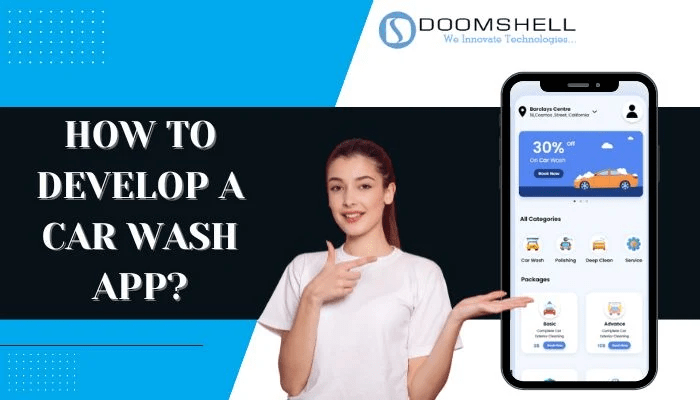
A car wash app is a mobile application that allows users to book car cleaning and vehicle care services directly from their smartphones. It connects customers with service providers, enabling on-demand or scheduled car wash services at home, office, or service stations.
These apps simplify the entire car care process by offering features like real-time booking, secure online payments, service tracking, and customer feedback. The goal is to make car maintenance faster, more convenient, and highly accessible.
With increasing vehicle ownership and growing demand for doorstep services, car wash apps are becoming a strong segment in the on-demand service industry.
Market Analysis of Car Wash Apps
The global car wash services market is rapidly expanding, valued at approximately USD 1.3 billion in 2024 and projected to reach nearly USD 5 billion by 2035.
This growth is driven by increasing vehicle ownership, urbanization, and rising demand for convenient mobile-based services. Consumers prefer doorstep services that save time and effort, boosting adoption of car wash applications.
The Asia-Pacific region, especially India, shows strong growth potential due to rising middle-class income, increasing number of vehicles, and digital adoption in Tier-2 and Tier-3 cities.
Eco-friendly and water-efficient car wash solutions are becoming key trends, as customers and regulators push for sustainable practices.
However, challenges such as high competition, seasonal demand fluctuations, and operational logistics still exist. Despite this, opportunities in subscription models, fleet partnerships, and AI-driven scheduling continue to expand.
Steps to Develop a Car Wash App
1. Market Research & Requirement Analysis
Understand customer expectations, competitor offerings, and market gaps. Define app goals, target audience, and service model (on-demand or aggregator).
2. Feature Planning & Technology Selection
Identify core features such as booking, tracking, payments, and reviews. Choose technologies like Node.js, React Native, and databases like MySQL or MongoDB.
3. UI/UX Design
Create a clean, intuitive interface that allows users to easily book services, track progress, and make payments with minimal steps.
4. Development & Testing
Develop front-end and back-end systems, integrate GPS tracking and payment gateways, and perform rigorous testing for performance, security, and usability.
5. Launch & Marketing
Deploy the app on app stores and promote it through digital marketing, partnerships, and promotions. Continuously update based on user feedback.
Features of Car Wash App
1. User Registration & Profile
Users can sign up, save vehicle details, and manage booking history for personalized service.
2. Booking & Service Scheduling
Users can schedule car wash appointments at their preferred time and location.
3. Real-Time Tracking
Customers can track service providers and monitor job progress in real time.
4. Secure Payments
Multiple payment options such as UPI, wallets, cards, and cash on delivery with secure gateways.
5. Ratings & Reviews
Users can rate services and provide feedback to improve quality and trust.
6. Notifications & Offers
Push notifications for promotions, service updates, and booking reminders.
7. Admin Dashboard
Admins can manage bookings, providers, payments, analytics, and app performance.
Estimated Development Cost
| Component | Estimated Cost |
|---|---|
| UI/UX Design | $3,000 – $8,000 |
| User Management | $1,000 – $3,000 |
| Booking System | $2,000 – $5,000 |
| Payment Integration | $1,000 – $2,500 |
| Admin Dashboard | $800 – $2,000 |
Total cost varies based on features, scalability, and design complexity.
Monetization Strategies
Car wash apps generate revenue through multiple models:
Service commissions per booking, subscription plans for premium users, in-app advertising for car product brands, and listing fees for service providers.
Some platforms also introduce loyalty programs and dynamic pricing to increase revenue and customer retention.
Challenges in Car Wash App Development
High competition in the on-demand service market makes user acquisition difficult.
Seasonal demand fluctuations can affect revenue consistency.
Managing field service providers and ensuring service quality is another operational challenge.
Why Car Wash Apps Are the Future
Car wash apps are becoming increasingly popular due to rising demand for convenience-based services.
They reduce effort for customers while providing flexible income opportunities for service providers.
With advancements in AI scheduling, GPS tracking, and automation, these apps are becoming more efficient and scalable.
Conclusion
Car wash app development is a promising business opportunity in the on-demand service industry. By combining user-friendly design, reliable technology, and efficient service delivery, businesses can build a scalable and profitable platform.
With growing market demand and increasing smartphone usage, car wash apps are expected to continue expanding in the coming years.
FAQs
1. How much does it cost to build a car wash app?
Typically between $8,000 and $25,000 depending on features and complexity.
2. What features are essential in a car wash app?
Booking, payments, tracking, reviews, notifications, and admin dashboard.
3. Which technologies are used?
React Native, Flutter, Node.js, Kotlin, and cloud databases.
4. How do car wash apps make money?
Through commissions, subscriptions, ads, and provider listing fees.
5. What are the challenges in car wash app development?
Competition, seasonal demand, and managing service quality and logistics.