 sales@doomshell.com
 +91 8005523567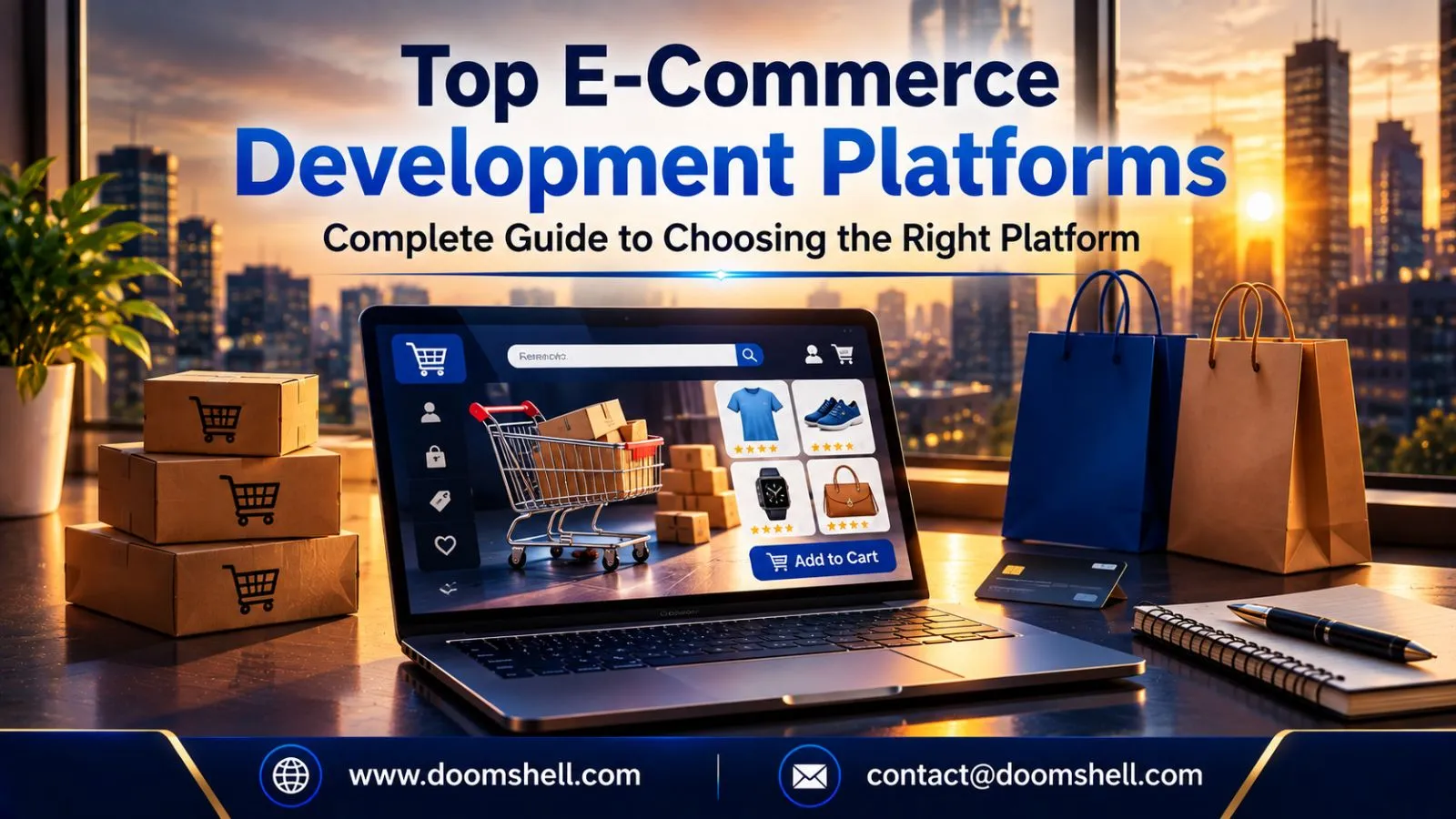
The e-commerce industry continues to grow at an unprecedented pace, making it essential for businesses to establish a strong online presence. With digital shopping becoming the preferred choice for consumers worldwide, selecting the right e-commerce platform has become one of the most important business decisions. Whether you are launching a new online store, migrating from another platform, or expanding your digital business, choosing the ideal platform directly impacts your website’s performance, customer experience, scalability, and long-term success.
Modern e-commerce platforms offer much more than just online selling. They include advanced features such as AI-powered product recommendations, secure payment gateways, inventory management, omnichannel selling, marketing automation, SEO optimization, analytics, and mobile-friendly shopping experiences. However, each platform is designed for different business requirements, budgets, and technical expertise.
In this comprehensive guide, we’ll explore the best e-commerce development platforms in 2026, their advantages, key features, and which businesses should choose them.
Why Choosing the Right E-Commerce Platform Matters
Your e-commerce platform serves as the backbone of your online business. A well-chosen platform helps you:
- Deliver a seamless shopping experience.
- Improve website speed and performance.
- Enhance search engine rankings with SEO-friendly features.
- Secure customer data and online transactions.
- Scale your business as sales increase.
- Integrate with third-party tools such as CRM, ERP, payment gateways, and marketing software.
Choosing the wrong platform can lead to slow performance, high maintenance costs, security issues, and limited growth opportunities.
Magento (Adobe Commerce)
Magento, now known as Adobe Commerce, is one of the most powerful open-source e-commerce platforms available. It is widely preferred by medium to large enterprises that require complete customization, advanced functionality, and enterprise-level scalability.
Key Benefits of Magento
- Highly customizable architecture.
- Excellent scalability for growing businesses.
- Thousands of extensions and plugins.
- Advanced product and inventory management.
- Strong SEO capabilities.
- Multi-store and multi-language support.
- Secure payment integrations.
- Large global developer community.
Magento is ideal for businesses that require complete control over their online store and have access to professional development resources.
Shopify
Shopify remains one of the world’s most popular hosted e-commerce platforms due to its ease of use and quick setup process. It enables businesses to launch an online store without worrying about hosting, maintenance, or security.
Key Benefits of Shopify
- Easy store setup with no coding required.
- Secure cloud hosting.
- Mobile-responsive themes.
- Hundreds of professional templates.
- Extensive App Store for additional functionality.
- Built-in SEO tools.
- Multi-channel selling on Facebook, Instagram, Amazon, and other marketplaces.
- 24/7 customer support.
Shopify is an excellent solution for startups, small businesses, and growing brands that want a hassle-free e-commerce platform.
WooCommerce
WooCommerce is the leading WordPress e-commerce plugin and is widely used by businesses that already operate WordPress websites. It combines flexibility with affordability while offering complete ownership of your online store.
Key Benefits of WooCommerce
- Free and open-source.
- Easy integration with WordPress.
- Thousands of plugins and themes.
- Complete customization.
- Strong blogging and content marketing capabilities.
- Affordable development costs.
- Excellent SEO performance.
- Large developer community.
WooCommerce is perfect for businesses looking to combine content marketing with online selling.
BigCommerce
BigCommerce is an enterprise-grade SaaS e-commerce platform designed for businesses with large product catalogs and high sales volumes. It offers advanced built-in features that reduce dependency on third-party applications.
Key Benefits of BigCommerce
- Enterprise-level scalability.
- Multi-channel commerce.
- Advanced SEO features.
- More than 65 payment gateway integrations.
- Excellent website performance.
- Mobile optimization.
- Powerful analytics and reporting.
- API-first architecture for custom development.
BigCommerce is an ideal choice for medium and large businesses seeking rapid growth and advanced functionality.
PrestaShop
PrestaShop is a free, open-source e-commerce platform known for its flexibility and ease of customization. It provides a user-friendly dashboard and extensive marketplace for themes and modules.
Key Benefits of PrestaShop
- Open-source platform.
- Easy customization.
- Large collection of themes and modules.
- Multi-language and multi-currency support.
- Advanced SEO settings.
- User-friendly administration panel.
- Strong community support.
- Cost-effective development.
PrestaShop is well suited for small and medium-sized businesses looking for a customizable and budget-friendly solution.
OpenCart
OpenCart is another lightweight open-source e-commerce platform that enables businesses to quickly build and manage online stores. Its simple administration interface makes it easy for beginners to operate.
Key Benefits of OpenCart
- Free and lightweight.
- Quick installation.
- Multi-store management.
- Extensive extension marketplace.
- Multiple payment and shipping integrations.
- User-friendly dashboard.
- Low server requirements.
- Easy maintenance.
OpenCart is an excellent option for startups and businesses looking for a straightforward and affordable e-commerce solution.
Comparison of Popular E-Commerce Platforms
| Platform | Best For | Hosting | Customization | SEO | Scalability |
|---|---|---|---|---|---|
| Magento | Large Enterprises | Self Hosted | Excellent | Excellent | Very High |
| Shopify | Startups & SMEs | Hosted | High | Excellent | High |
| WooCommerce | WordPress Users | Self Hosted | Excellent | Excellent | High |
| BigCommerce | Enterprise Businesses | Hosted | High | Excellent | Very High |
| PrestaShop | Small & Medium Businesses | Self Hosted | High | Good | Medium |
| OpenCart | Startups | Self Hosted | Medium | Good | Medium |
Factors to Consider Before Choosing an E-Commerce Platform
Before making your decision, evaluate the following:
- Business size and future growth plans.
- Budget for development and maintenance.
- Required customization level.
- SEO capabilities.
- Mobile responsiveness.
- Payment gateway compatibility.
- Security features.
- Third-party integrations.
- Inventory management.
- Technical support.
- Ease of use.
Selecting the right platform ensures better customer satisfaction, improved conversions, and long-term business growth.
Conclusion
Choosing the best e-commerce development platform depends entirely on your business goals, technical requirements, and budget. Magento offers unmatched customization for enterprise businesses, Shopify provides simplicity and speed, WooCommerce is ideal for WordPress users, BigCommerce excels in scalability, while PrestaShop and OpenCart deliver flexible and cost-effective solutions for growing businesses.
As online shopping continues to evolve in 2026, investing in the right e-commerce platform is essential for delivering outstanding customer experiences and staying competitive. If your business requires unique functionality, custom integrations, or enterprise-grade features, partnering with an experienced e-commerce development company can help you build a secure, scalable, and future-ready online store.
Frequently Asked Questions
Which is the best e-commerce platform in 2026?
The best platform depends on your business needs. Shopify is ideal for beginners, WooCommerce works well for WordPress websites, Magento is best for enterprise businesses, and BigCommerce is suitable for rapidly growing online stores.
Is Shopify better than WooCommerce?
Shopify offers a fully hosted solution with easy setup and maintenance, while WooCommerce provides greater flexibility, ownership, and customization for businesses already using WordPress.
Which e-commerce platform is best for SEO?
Magento, WooCommerce, Shopify, and BigCommerce all offer strong SEO features. WooCommerce and Magento provide greater control over advanced SEO optimization.
What is the most affordable e-commerce platform?
OpenCart, WooCommerce, and PrestaShop are among the most affordable options because they are open-source. However, businesses should also consider hosting, extensions, and maintenance costs.
Can I migrate my existing website to another e-commerce platform?
Yes. Most modern e-commerce platforms provide migration tools or support services that allow businesses to transfer products, customer data, orders, and website content with minimal disruption.