







 sales@doomshell.com
 +91 8005523567
Key Takeaways
2026 AI trends point to a move away from experimentation towards enterprise impact, as companies will be looking for real value from their AI investments.
To actually see measurable results from artificial intelligence, firms will have to concentrate on real, world AI use cases for businesses.
To roll, out AI at scale, companies will need a clearly defined enterprise AI strategy, strong governance and a well thought out implementation framework.
Generative AI in the enterprise environment is becoming a widely used tool, changing the way people work, produce content and make decisions.
Those businesses that carefully plan their AI transformation journey and use an enterprise AI maturity model, stand the best chance of winning.
Market Overview: AI Trends 2026
Enterprise AI Adoption: More than 80% of enterprises have started looking into AI projects, some of them have already moved from conducting pilot testing to implementation phase.
Operational Impact: Only approximately 35% of companies are able to get a significant business impact from AI. This conveys difficulties in AI expansion.
Focus Areas: More and more, AI is being used for customer experience improvement (65%), customer profiling and prediction (55%) and intelligent automation (60%).
Strategic Alignment: A large part (70%) of successful AI cases are tied to well, established strategies that ensure proper alignment of AI to the firm’s overall goals.
Investment Trends: Businesses are focusing more on AI capabilities that have clear returns on investment. Half of them are planning to increase their expenditures on AI technologies within the next two years.
Skill Gap: Nearly 60% of companies indicate a lack of well, trained AI professionals, making this shortage their major challenge in making AI a part of their operations.
Understanding Enterprise AI Transformation
Making AI work in big companies now means using it daily. It helps teams grow and brings real results. Growth happens across departments if done right. Without clear plans and rules, companies miss out. They probably won’t get the value AI offers.
Major AI Trends for Enterprise Impact in 2026
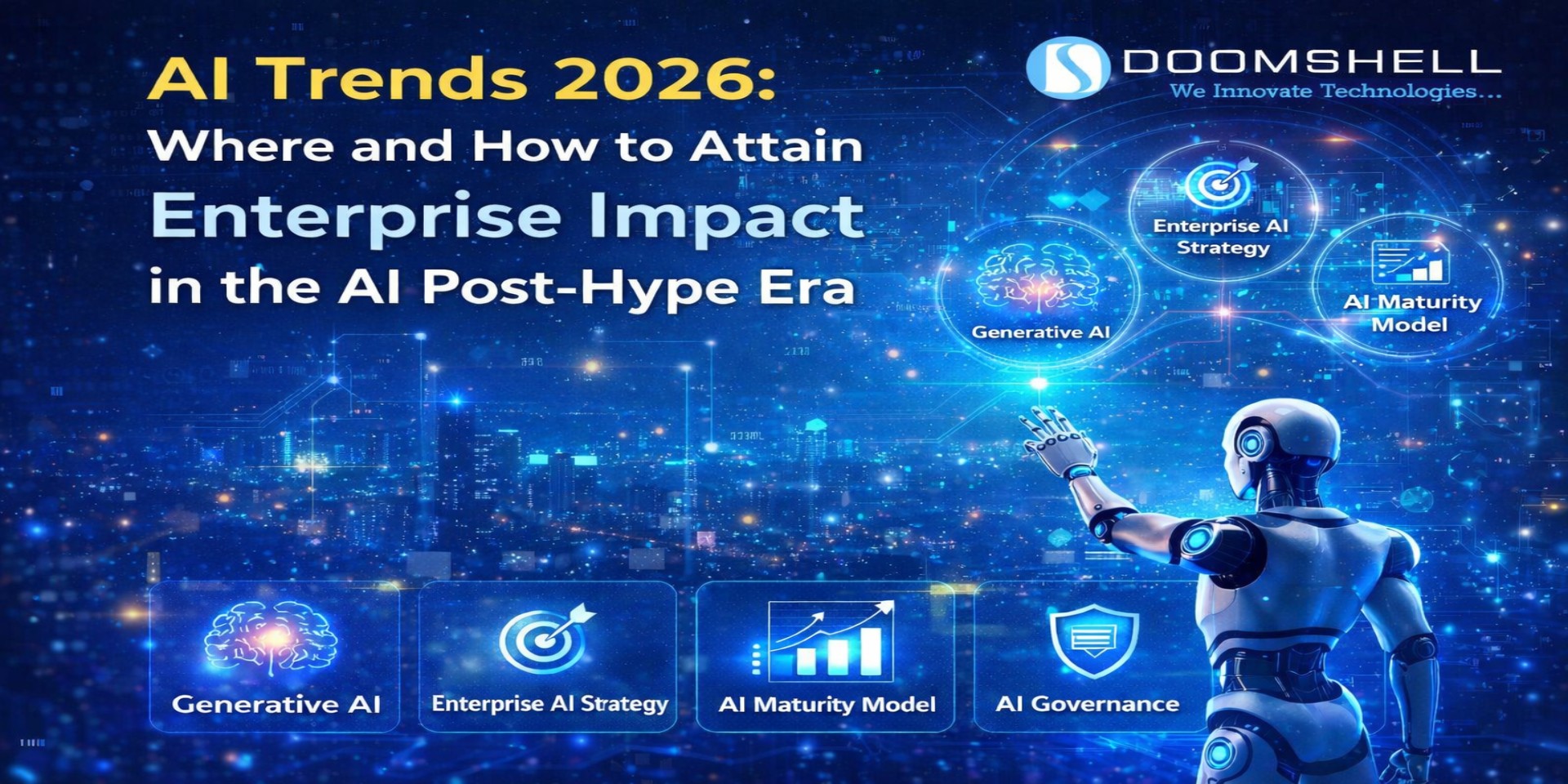
1. Generative AI in Enterprise
Generative AI’s role in the enterprise is no longer confined to just creative departments but is being integrated deeply into operational processes. Besides creating marketing content, code automation, and product design, companies using generative AI are realizing a quicker return on their AI investments. Identifying the right AI use cases that can have substantial and immediate benefits in the business is an important takeaway from this trend.
2. AI Strategy for Enterprises
Having a solid AI strategy is essentials for enterprises if they want to scale AI within their organizations. Set objectives clearly, decide on how to measure success and ensure that the initiatives align with business goals these are the main factors that will make AI deliver measurable outcomes. Enterprises that lack a strong AI strategy tend to see a unsatisfactory return on their AI investments and also fail to achieve a level of enterprise, wide impact.
3. Enterprise AI Maturity Model
More and more companies are resorting to the enterprise AI maturity model as a tool to evaluate their current capabilities, measure their performance against others and decide on priority for various AI initiatives.
4. AI Governance and Compliance
As enterprises gradually introduce AI in sensitive business areas, AI governance and compliance are becoming indispensable. Having well, defined policies, rules for ethical AI and frameworks for regulatory compliance will not only help in making sure that the AI implementation framework abides by organizational standards but also that it stays within legal requirements.
Best Practices to Achieve Enterprise Impact
Think about AI use that really helps your business rather than just trying out new things for the sake of being innovative. Using AI in a practical way in business yields real return on investment (ROI) of artificial intelligence.
Having a direct AI plan for enterprises that is linked to the business objectives, makes the scaling and effectiveness of AI much easier. It also involves defining business outcomes through key performance indicators, prioritization of investment, and setting levels of achievement.
Use an enterprise AI maturity model to assess your organization’s preparedness and capability. This will help in identifying the gaps, resource allocation, and effectively handling the expansion of AI in the organizations.
Make sure the use of AI is morally right, follows the rules, and is transparent. A strong AI governance and compliance framework not only minimizes the risks but also increases the level of trust among different stakeholders.
The Future of AI in Enterprises
AI trends for 2026 points out that companies that are able to operationalize AI at scale will be the ones to drive the post, hype era. Companies that incorporate generative AI in their enterprise processes, follow a well, structured AI implementation framework, and give priority to the ROI of artificial intelligence will be able to make a sustainable business impact.
Companies that follow an all, encompassing AI transformation roadmap, directed by an enterprise AI maturity model, are the ones who will lead the industry and show the real business impact of AI beyond pilot projects.
How Doomshell Helps Businesses Implement AI Successfully
At Doomshell, we help organizations turn artificial intelligence into real business impact. Our team specializes in building scalable enterprise AI solutions that align with business objectives and drive measurable results.
From AI strategy development to enterprise AI implementation, Doomshell supports businesses at every stage of their AI transformation journey. Our experts help companies identify the right AI use cases, design an enterprise AI maturity roadmap, and implement AI technologies such as machine learning, generative AI, and intelligent automation.
Through our AI consulting and development services, organizations can build scalable AI systems, automate knowledge processes, and unlock new business opportunities.
Conclusion
Artificial intelligence has moved beyond just being a buzzword, it is a revolutionary tool for business transformation. For companies to make a significant impact with AI in their enterprise, especially in the next era after the initial excitement, they need to concentrate on the real, world applications of AI in business, build a firm AI strategy for their enterprises, use an AI infrastructure that can be scaled, and adhere to governance and compliance. Companies that implement these steps and expand their use of AI can get the most from their investment in artificial intelligence and create value for their business over the long term.
FAQs
1. What’s hot in AI for companies in 2026?
Ans: Generative AI, strong tech systems, rules for using AI safely, and making AI actually work in daily business.
2.How do firms grow AI across teams?
Ans: They need a solid plan, real, world problems, a clear stage of growth, and an adaptable way to roll out AI.
3.How much does AI actually bring in value?
Ans: It brings measurable gains, lower costs, more sales, faster operations, and better customer service. Plus, and it tends to help soon. Some companies see big changes. But others dont move fast. Still, results seem real.