
 sales@doomshell.com
 +91 8005523567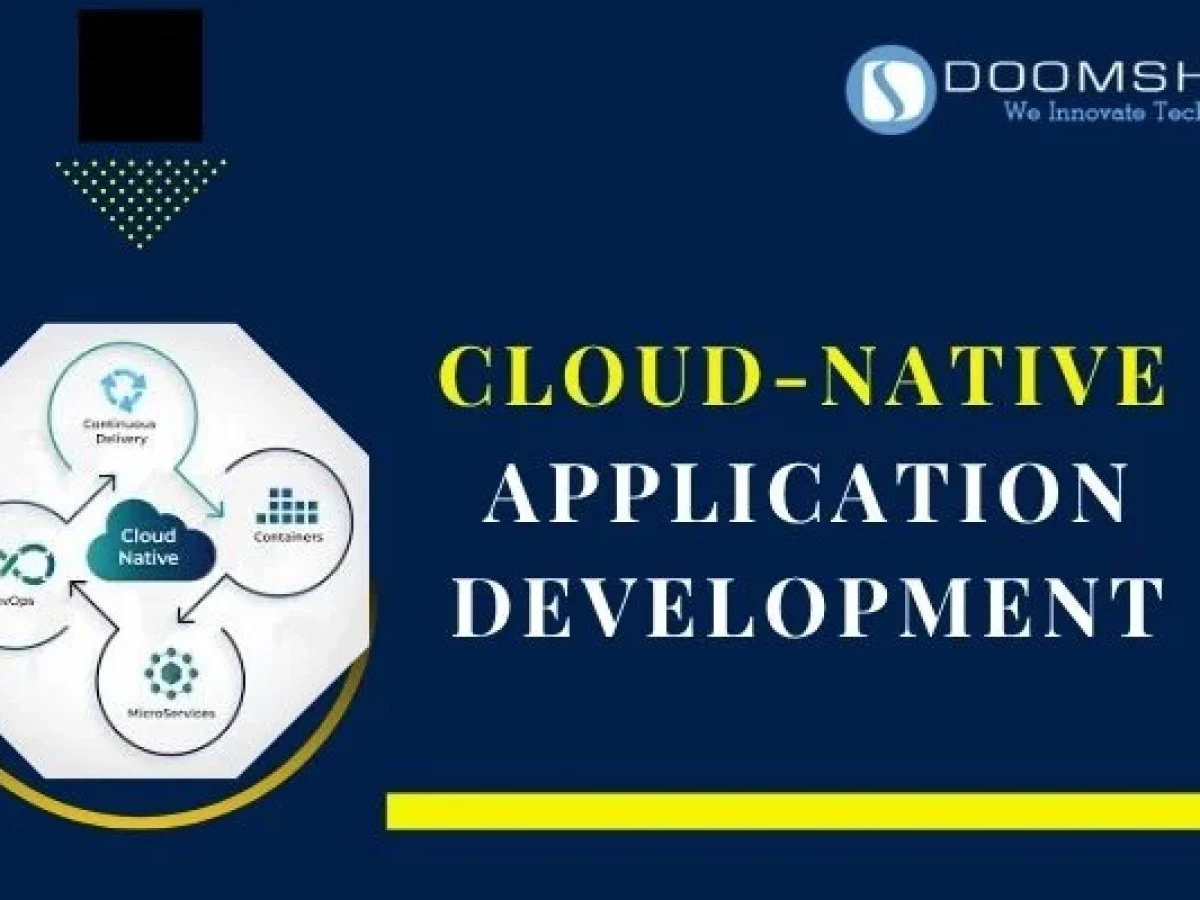
Introduction
Cloud-native application development is a modern approach to building and running software that fully leverages cloud computing environments. Unlike traditional applications that are simply hosted on the cloud, cloud-native applications are designed specifically to operate in distributed, dynamic, and scalable environments. This approach enables organizations to build systems that are more resilient, flexible, and efficient in handling changing workloads.
With increasing digital transformation across industries, cloud-native development has become the foundation of modern software engineering. It integrates automation, microservices, and containerization to ensure faster development cycles and continuous delivery of features. Businesses today adopt cloud-native strategies to improve performance, reduce operational costs, and accelerate innovation in competitive markets.
Key Benefits of Cloud-Native Applications
Cloud-native applications provide several advantages that make them highly suitable for modern enterprises.
Scalability ensures that applications can automatically adjust resources based on demand. This helps maintain performance during peak traffic without overprovisioning infrastructure.
Agility and flexibility allow development teams to release updates quickly and respond to market changes faster.
Cost efficiency is achieved through pay-as-you-go cloud models, reducing upfront infrastructure investments and ongoing maintenance costs.
Resilience and reliability are built into cloud-native systems, enabling automatic recovery from failures and minimizing downtime.
Improved security and performance come from automated patching, secure APIs, and optimized cloud infrastructure.
Together, these benefits make cloud-native applications ideal for businesses aiming to scale efficiently while maintaining high availability.
Core Principles of Cloud-Native Development
Cloud-native development is built on several foundational principles that define its architecture and functionality.
Microservices Architecture breaks applications into smaller independent services. Each service can be developed, deployed, and scaled separately, improving agility and fault isolation.
Containerization using tools like Docker ensures that applications run consistently across environments by packaging code and dependencies into containers.
Dynamic orchestration is managed using Kubernetes, which automates deployment, scaling, and self-healing of containerized applications.
API-first design enables communication between services through well-defined APIs, ensuring smooth integration across distributed systems.
Continuous Integration and Continuous Deployment (CI/CD) pipelines automate testing and deployment, allowing rapid and reliable software delivery.
These principles collectively ensure that cloud-native systems are modular, scalable, and highly maintainable.
How to Develop a Cloud-Native Application
Building a cloud-native application requires a structured approach that aligns architecture with business needs.
The first step is to define requirements, including performance expectations, scalability goals, and security needs. This helps determine the right architecture and tools.
Next, the system should be designed using a microservices approach, where each function is developed as an independent module.
Selecting a cloud provider is also critical. Leading providers include Amazon Web Services, Microsoft Azure, and Google Cloud, each offering robust infrastructure and managed services.
After choosing infrastructure, teams implement CI/CD pipelines to automate testing and deployment, ensuring continuous improvement and faster release cycles.
Finally, applications are deployed using orchestration tools like Kubernetes, followed by continuous monitoring and optimization to ensure performance, security, and cost efficiency.
This structured lifecycle ensures that cloud-native applications remain scalable, reliable, and easy to manage.
Market Analysis of Cloud-Native Applications
The global cloud-native application development market is experiencing rapid growth, driven by digital transformation and increasing cloud adoption. The market is projected to reach approximately USD 30.24 billion by 2030, growing at a CAGR of 23.8% from 2024 to 2030.
North America currently holds a significant market share due to strong adoption in the United States, while the fastest-growing region is Australia, expected to reach USD 919.4 million by 2030.
Key growth drivers include platform engineering, Kubernetes-native data services, and the rise of generative AI workloads requiring scalable infrastructure.
In terms of cloud infrastructure dominance, AWS leads the IaaS market with a 37.7% share, followed by Microsoft and Google with 23.9% and 9% respectively.
Additionally, services are becoming the fastest-growing segment, while platforms continue to generate substantial revenue, reflecting increasing enterprise demand for managed cloud-native solutions.
Why Cloud-Native is the Future of Development
Cloud-native architecture is becoming the foundation of modern software systems due to its ability to support rapid innovation and scalability.
It enables organizations to deploy new features faster, respond to market demands in real time, and maintain high system availability.
Cloud-native systems are inherently scalable, allowing businesses to handle sudden spikes in traffic without performance degradation.
They also offer cost efficiency through flexible resource consumption models, ensuring organizations only pay for what they use.
Additionally, cloud-native applications are well-suited for emerging technologies such as artificial intelligence, machine learning, and IoT, making them future-ready and highly adaptable.
Conclusion
Cloud-native application development is transforming how software is designed, built, and deployed. By leveraging microservices, containerization, and automation tools like Kubernetes, organizations can build scalable, resilient, and efficient systems.
Despite challenges such as complexity, security concerns, and monitoring distributed systems, the benefits far outweigh the drawbacks when best practices are followed.
As cloud adoption continues to grow, cloud-native development will remain a key driver of innovation, enabling businesses to stay competitive in a rapidly evolving digital landscape.
FAQs
1. What is a cloud-native application?
A cloud-native application is built specifically for cloud environments using microservices, containers, and orchestration tools for scalability and flexibility.
2. Why is cloud-native better than traditional applications?
It offers faster deployment, automatic scaling, cost efficiency, and higher reliability compared to monolithic systems.
3. What technologies are used in cloud-native development?
Common technologies include Docker, Kubernetes, CI/CD pipelines, and cloud platforms like AWS, Azure, and Google Cloud.
4. Is cloud-native suitable for small businesses?
Yes, small businesses benefit from lower infrastructure costs, scalability, and faster feature deployment.
5. What are the main challenges of cloud-native development?
Challenges include system complexity, security management, distributed monitoring, and skill requirements.