 sales@doomshell.com
 +91 8005523567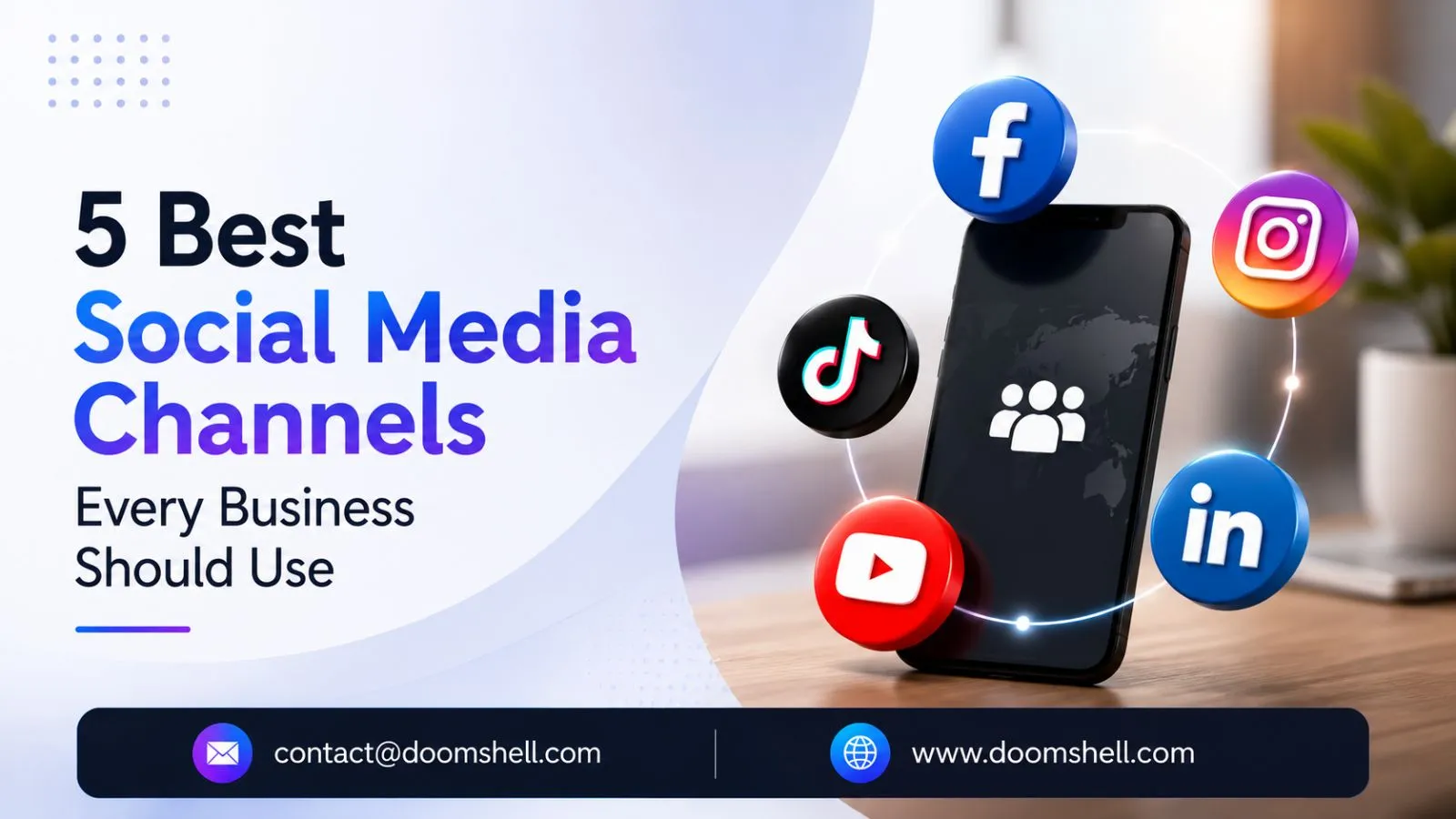
In 2026, social media has evolved far beyond a platform for sharing updates and connecting with friends. It has become one of the most powerful digital marketing channels for businesses to build brand awareness, engage customers, generate leads, and increase revenue.
Whether you’re a startup, small business, enterprise, or eCommerce brand, choosing the right social media platforms can significantly impact your marketing success. With AI-driven content recommendations, changing algorithms, and evolving user behavior, businesses need a strategic approach to social media marketing.
This guide explores the five best social media channels every business should use in 2026 and explains how each platform supports different marketing goals.
Market Analysis of Social Media in 2026
The social media landscape continues to evolve as businesses increase investment in digital marketing.
- AI-powered content recommendations have transformed content discovery across major platforms.
- Short-form video continues to generate the highest engagement rates.
- Video marketing now accounts for a significant share of social media interactions.
- Businesses increasingly combine organic content with paid advertising to maximize reach.
- Social commerce continues to grow as users purchase products directly through social platforms.
These trends make choosing the right social media channels more important than ever.
Why Social Media Matters for Businesses in 2026
Today’s consumers discover brands, compare products, and make purchasing decisions directly through social media.
A well-planned social media strategy helps businesses:
- Increase brand awareness
- Build trust and credibility
- Generate qualified leads
- Drive website traffic
- Improve customer engagement
- Support customer service
- Increase conversions and sales
Rather than trying to be active everywhere, businesses should focus on platforms where their target audience spends the most time.
1. LinkedIn – The Leading Platform for B2B Growth
LinkedIn continues to dominate professional networking and remains the most valuable platform for B2B marketing.
Why LinkedIn Works
- Highly targeted professional audience
- Excellent organic reach for thought leadership
- Advanced advertising capabilities
- Strong lead-generation opportunities
Best Use Cases
- B2B lead generation
- Employer branding
- Industry insights
- Company updates
- Professional networking
- Educational content
LinkedIn is particularly valuable for SaaS companies, consultants, agencies, technology firms, and service-based businesses.
2. Instagram – Visual Marketing That Drives Engagement
Instagram remains one of the most influential social media platforms for consumer brands.
Its combination of Reels, Stories, shopping features, and creator partnerships makes it ideal for visual storytelling.
Why Instagram Works
- High engagement rates
- Strong creator ecosystem
- Excellent visual branding opportunities
- Built-in shopping features
- Large active user base
Best Use Cases
- Product launches
- Brand storytelling
- Lifestyle marketing
- Influencer collaborations
- Community building
- eCommerce marketing
Industries such as fashion, beauty, travel, fitness, food, and retail continue to benefit significantly from Instagram marketing.
3. YouTube – The Largest Video Search Platform
YouTube remains one of the most valuable long-term marketing channels because its content continues generating traffic long after publication.
Unlike many social platforms, YouTube videos can rank in both YouTube Search and Google Search.
Why YouTube Works
- Evergreen content lifespan
- Strong search visibility
- High trust-building potential
- Excellent educational platform
- Supports long-form content
Best Use Cases
- Tutorials
- Product demonstrations
- Educational videos
- Customer success stories
- Webinars
- Industry insights
Businesses investing in high-quality video content often see long-term returns through continuous organic traffic.
4. TikTok – The Discovery Platform
TikTok has transformed social media by prioritizing content quality over follower count.
Its recommendation algorithm allows businesses of every size to achieve significant organic reach.
Why TikTok Works
- Exceptional organic visibility
- Highly engaging short-form videos
- Fast audience growth
- Strong Gen Z and Millennial presence
- Creative storytelling opportunities
Best Use Cases
- Brand awareness
- Behind-the-scenes content
- Product showcases
- Industry trends
- User-generated content
- Small business promotion
For startups and growing businesses, TikTok provides one of the fastest ways to increase brand visibility without large advertising budgets.
5. Facebook – Still a Powerful Advertising Platform
Although newer platforms continue to grow, Facebook remains an essential marketing channel for businesses.
Its advertising capabilities, community groups, and integration with Instagram continue to deliver strong marketing results.
Why Facebook Works
- Advanced audience targeting
- Powerful advertising platform
- Large user base
- Active community groups
- Local business visibility
Best Use Cases
- Paid advertising
- Local business marketing
- Event promotion
- Customer communities
- Retargeting campaigns
- Brand awareness
Facebook remains especially effective for businesses targeting local markets and mature customer segments.
How to Choose the Right Social Media Channels for Your Business
Not every social media platform is suitable for every business. The right choice depends on your audience, industry, marketing objectives, and available resources. Instead of trying to maintain a presence on every platform, focus on the channels where your target customers are most active.
Consider These Factors
- Target Audience: Identify where your ideal customers spend their time online.
- Business Type: B2B companies often perform better on LinkedIn, while B2C brands typically see higher engagement on Instagram and TikTok.
- Content Format: Choose platforms that align with your content strategy, whether it’s videos, images, blogs, or live sessions.
- Marketing Goals: Select channels based on objectives such as brand awareness, lead generation, customer engagement, or sales.
- Budget: Determine how much you can invest in organic content and paid advertising.
A focused strategy across two or three relevant platforms often delivers better results than spreading resources too thin.
Tips for Building a Successful Social Media Strategy
A strong social media presence requires more than regular posting. Businesses should focus on delivering value, maintaining consistency, and engaging with their audience.
Best Practices
- Develop a consistent posting schedule.
- Create high-quality, audience-focused content.
- Use short-form videos to increase engagement.
- Encourage user-generated content and customer testimonials.
- Respond promptly to comments and messages.
- Monitor analytics to measure performance.
- Stay updated with platform algorithm changes.
- Combine organic content with targeted advertising for maximum reach.
Common Mistakes to Avoid
Many businesses struggle with social media because they overlook strategic planning. Avoid these common mistakes:
- Trying to be active on every platform.
- Posting inconsistent or low-quality content.
- Ignoring audience engagement.
- Focusing only on promotions instead of providing value.
- Neglecting analytics and performance tracking.
- Failing to adapt content for different platforms.
Consistency, authenticity, and understanding your audience are key to long-term success.
Future Trends in Social Media Marketing
As social media continues to evolve, businesses should prepare for emerging trends that will shape digital marketing in the coming years.
Key Trends for 2026
- Greater use of AI-generated and AI-assisted content.
- Increased personalization through AI-powered algorithms.
- Continued growth of short-form video content.
- Expansion of social commerce and in-app purchasing.
- Stronger emphasis on authentic creator partnerships.
- More interactive content, including live streams and community-driven experiences.
- Increased integration of augmented reality (AR) and virtual experiences.
Businesses that embrace these trends early will be better positioned to engage audiences and remain competitive.
Conclusion
Social media continues to be one of the most effective tools for building brand awareness, generating leads, and driving business growth. However, success depends on selecting the right platforms and creating content that resonates with your target audience.
LinkedIn remains the leading platform for B2B networking and professional branding, while Instagram and TikTok excel at visual storytelling and audience engagement. YouTube provides long-term value through searchable video content, and Facebook continues to deliver powerful advertising and community-building opportunities.
Rather than attempting to establish a presence on every platform, businesses should focus on the channels that align with their audience, objectives, and content strategy.
At Doomshell Software Pvt. Ltd., we help businesses create data-driven social media strategies that increase visibility, strengthen customer relationships, and drive sustainable business growth across today’s most influential digital platforms.
Frequently Asked Questions (FAQs)
1. What are the best social media channels for businesses in 2026?
The five most effective social media platforms for businesses in 2026 are LinkedIn, Instagram, YouTube, TikTok, and Facebook, each serving different marketing goals and audiences.
2. Which social media platform is best for B2B marketing?
LinkedIn remains the top platform for B2B marketing due to its professional audience, advanced targeting capabilities, and strong lead-generation features.
3. Which platforms are best for small businesses?
Small businesses often achieve the best results with Instagram and TikTok because of their high organic reach, engaging content formats, and relatively low entry costs.
4. Is paid social media advertising still effective in 2026?
Yes. Platforms like Facebook, Instagram, LinkedIn, and TikTok continue to offer highly targeted advertising solutions powered by AI, making paid campaigns an effective way to reach qualified audiences.
5. How many social media platforms should a business focus on?
Most businesses benefit from concentrating on two or three platforms that best match their audience, marketing goals, and available resources rather than trying to maintain a presence on every network.