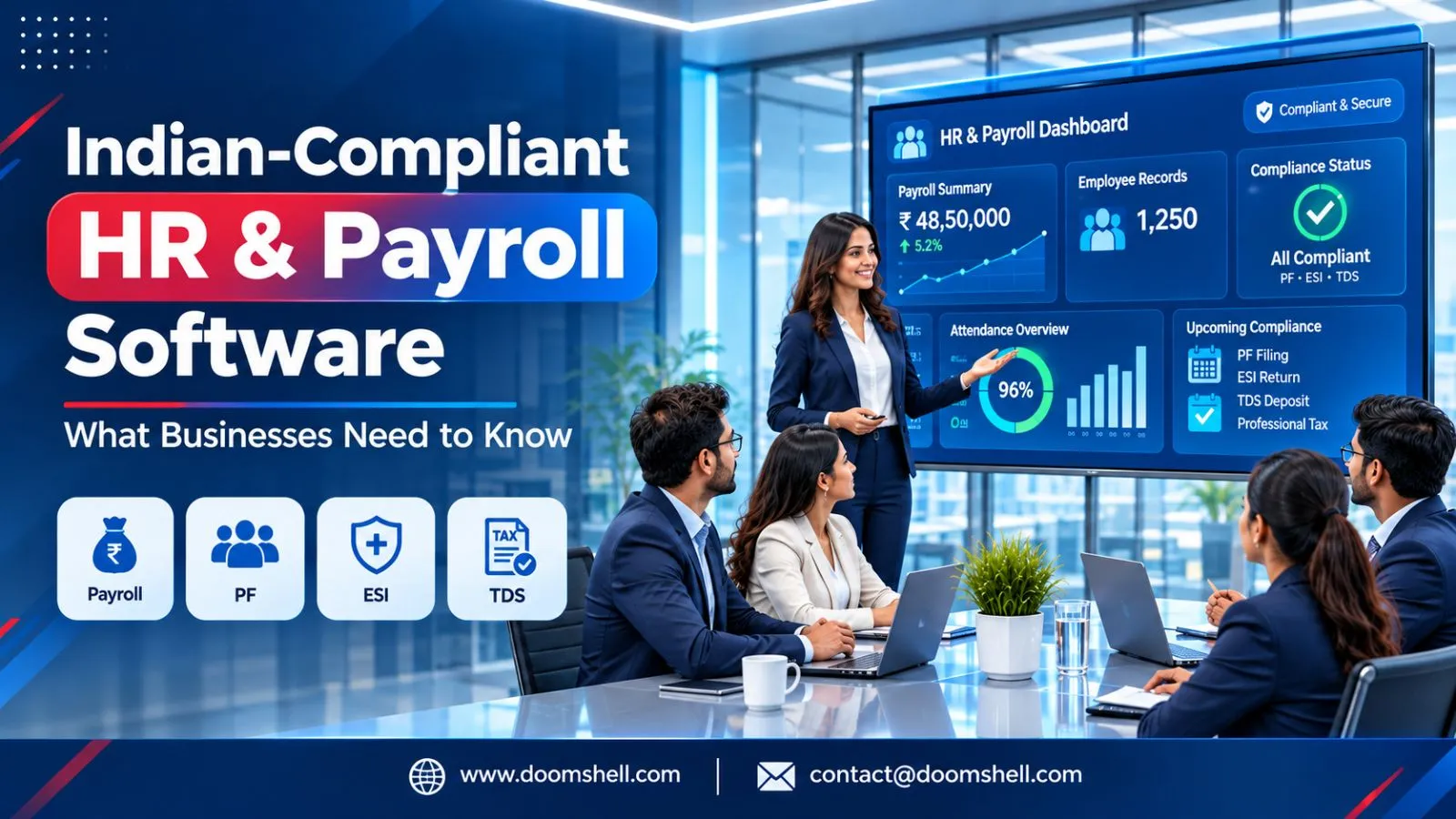
Indian businesses need reliable systems to manage salaries, employee information, attendance, leave, and statutory deductions. HR and Payroll Software in India helps organizations bring these activities together, reduce repetitive work, and maintain more consistent payroll records. With employment and tax requirements evolving, businesses should choose software that supports configurable payroll rules, secure employee data, and accurate reporting. The right system can also help HR teams spend less time on spreadsheets and more time supporting employees and business operations.
Understanding Payroll Compliance in India
Why Payroll Compliance Matters
Payroll compliance means paying employees correctly and on time while following applicable employment, wage, tax, and social security requirements. It includes maintaining accurate salary records, applying eligible deductions, issuing payslips, and completing required filings within prescribed timelines.
Compliance is important because payroll errors can lead to employee dissatisfaction, financial penalties, disputes, and additional administrative work. Incorrect salary calculations may also affect provident fund contributions, tax deductions, overtime payments, and other employee benefits.
For growing organizations, payroll compliance becomes more complex as employee numbers, locations, salary structures, and employment categories increase. A consistent payroll process helps businesses maintain transparency and build employee confidence.
Indian Payroll and Employment Requirements
Indian payroll administration involves several central and state-level requirements. Depending on the organization, employee category, location, and applicable thresholds, businesses may need to manage:
-
Provident Fund (PF): Eligible employer and employee contributions must be calculated and administered according to applicable social security provisions.
-
Employees’ State Insurance (ESI): Applicable contributions and employee coverage requirements must be monitored.
-
Tax Deducted at Source (TDS): Salary tax calculations and deductions must follow the applicable income-tax framework.
-
Professional Tax: Businesses must check state-specific applicability, rates, and payment requirements.
-
Labour welfare and employment records: Applicable state requirements, wage records, leave information, and other employment documentation must be maintained.
-
Minimum wages and timely payment: Employers must follow applicable wage rates and payment obligations.
India's four Labour Codes took effect on 21 November 2025. They consolidate important provisions relating to wages, industrial relations, social security, and occupational safety. The Ministry of Labour and Employment has also clarified provisions concerning wage calculations, overtime, and gratuity.
Tax administration has also changed. The Income-tax Act, 2025 applies from 1 April 2026, and the Income Tax Department has instructed organizations to update systems for new section references, terminology, and reporting requirements.
Common Payroll Compliance Challenges
Businesses often face compliance difficulties because payroll information is spread across spreadsheets, attendance tools, accounting systems, and paper documents. HR teams may need to collect data from several departments before monthly salary processing can begin.
Other common challenges include changing statutory rules, incorrect employee classifications, outdated salary structures, missed submission dates, and inconsistent employee records. Organizations operating in multiple states may also need to account for different professional tax rules and other location-specific requirements.
A centralized payroll system can make these processes easier to monitor. However, software must be configured and reviewed correctly. Businesses should not assume that installing a payroll application automatically makes every calculation legally compliant.
Risks of Manual Payroll Processing
Manual payroll processing depends heavily on spreadsheets, repeated data entry, and individual checks. Even a small formula error can affect multiple employee salary records. Missing attendance adjustments or outdated deduction rates can create incorrect payments.
Manual processes also make it harder to track who changed a payroll entry, when an approval happened, or which salary information was used to prepare a report. This can slow down internal reviews and audits.
Automated calculations, approval workflows, and centralized records reduce many of these risks. HR and finance teams should still review payroll outputs before final approval and payment.
How HR & Payroll Software Supports Compliance
Accurate Salary and Payroll Calculations
A payroll system should calculate gross salary, deductions, allowances, overtime, reimbursements, and net pay using employee-specific salary structures. It should support configurable components rather than forcing every employee into one fixed template.
For Indian organizations, the system should allow authorized administrators to maintain relevant PF, ESI, professional tax, and TDS settings according to applicable rules. It should also support adjustments for unpaid leave, new joiners, resignations, bonuses, and salary revisions.
The updated wage definition under the Labour Codes makes salary-component configuration particularly important. The Ministry's guidance explains how specified components and allowances are treated when applying the 50% wage calculation rule. Businesses should have their payroll configuration reviewed by qualified professionals to ensure it reflects the rules applicable to them.
Employee Records and Documentation
Accurate employee records provide the foundation for reliable payroll. Software should maintain essential details such as employee identification, designation, department, joining date, employment status, salary structure, bank details, and statutory identifiers.
A digital document repository can also store appointment letters, identity documents, salary revisions, appraisal records, and other HR files. Centralized documentation helps authorized teams retrieve information without searching through multiple folders or email conversations.
Access permissions are important. Employees should only view their own permitted information, while HR, finance, and managers should receive access based on their responsibilities. This supports confidentiality and reduces unnecessary exposure of personal data.
Automated Payroll Processing
Automated payroll processing connects employee information, attendance, leave approvals, salary components, and deductions into a structured monthly workflow.
A typical process includes importing or collecting attendance data, checking approved leave, applying salary rules, reviewing payroll calculations, obtaining approval, and generating payslips. Automation reduces repetitive entry and helps teams follow the same steps every month.
It can also support off-cycle payments, salary revisions, final settlements, and adjustments when employees join or leave during a payroll period. Before releasing payments, organizations should use review and approval controls to verify exceptions and unusual salary changes.
Payroll Reports and Audit Records
Payroll reports help HR and finance teams understand salary expenses, deductions, employee payments, and month-to-month changes. Useful reports include salary registers, payslip summaries, department-wise payroll costs, deduction statements, and employee payment records.
An audit trail should record important actions, including changes to employee details, salary components, approvals, and payroll processing. This helps organizations investigate discrepancies and understand how a particular payroll result was generated.
Businesses should also check whether reports can be exported in formats required by their finance, accounting, and compliance workflows. Consistent reporting makes internal reviews more organized and reduces dependence on manually prepared spreadsheets.
Essential HR Features for Indian Businesses
Employee Information Management
An employee information management system creates a central record for each person working in an organization. It should maintain personal details, job information, department, reporting manager, joining date, salary structure, and employment status.
A well-organized employee database reduces duplicate records and makes it easier to update information when an employee changes roles, receives a salary revision, or moves to another department.
Businesses should look for configurable employee fields and document management capabilities. These features help HR teams maintain records that match their internal processes while keeping sensitive information appropriately protected.
Attendance and Leave Management
Attendance and leave data directly influence payroll calculations. A suitable HR system should help record working days, shifts, check-ins, absences, overtime, holidays, and approved leave.
Managers should be able to review and approve leave requests, while HR teams should have visibility into employee attendance and leave balances. Where required, the software can connect attendance records with payroll so that approved adjustments are reflected during salary processing.
Organizations with multiple locations or shift-based teams should evaluate support for different work schedules and attendance policies. Clear records help reduce disputes about working days, leave deductions, and overtime calculations.
Employee Self-Service
An employee self-service portal allows staff members to access routine HR information without contacting the HR department for every request. Depending on the system, employees may be able to view payslips, check salary details, submit leave applications, access documents, and update permitted personal information.
Mobile access can make these services more convenient for employees who work outside the main office. It can also reduce repetitive administrative queries and help HR teams focus on more complex responsibilities.
Self-service features should include appropriate authentication and access controls. Employees must only be able to view or update information they are authorized to access.
HR and Payroll Integration
HR and payroll processes are closely connected. When employee records, attendance, leave, reimbursements, and salary information are maintained in separate systems, teams may need to enter the same information more than once.
Integrated HR and payroll software creates a more connected workflow. For example, an approved leave request can update attendance records, while an employee's salary revision can flow into the next payroll cycle after authorization.
Integration with accounting and finance applications can also simplify salary expense reconciliation. Businesses should evaluate whether the system supports suitable APIs, data exports, and secure connections with their existing tools.
Choosing an Indian-Compliant Payroll Solution
Compliance Features to Evaluate
Businesses should begin by identifying the compliance requirements relevant to their workforce and locations. The software should support configurable salary structures, statutory deduction settings, payroll reports, digital payslips, and employee documentation.
It is also important to understand how the provider handles regulatory updates. Ask whether administrators can update payroll rules, whether changes are documented, and how the system handles different employee categories or state-specific requirements.
Do not select software based only on a claim that it is “compliant.” Ask for demonstrations of the actual calculations and reports your organization needs. Have complex or uncertain compliance scenarios reviewed by a qualified payroll or legal professional.
Data Security and Access Controls
Payroll systems store sensitive information, including employee identity details, bank information, salary records, and tax-related data. Security should therefore be a central selection criterion.
Look for role-based permissions, secure authentication, encrypted data transmission, controlled document access, regular backups, and audit logs. The provider should explain how data is stored, who can access it, and what processes are available for account recovery and incident handling.
Businesses should also review data retention, export, and deletion policies before implementation. A secure system protects employee confidentiality and supports responsible information management.
Payroll Automation and Integrations
A useful payroll platform should reduce repetitive administration without making the process difficult to control. Evaluate whether it can import employee and attendance records, calculate salary components, generate payslips, manage approvals, and produce reports through a connected workflow.
Integration capabilities matter when a business already uses accounting, attendance, or other HR applications. Check whether the software supports reliable data exchange and whether integration errors can be identified and resolved.
Cloud access, mobile functionality, scalability, and support services are also worth considering. The right solution should accommodate business growth without requiring the organization to rebuild its payroll process every time its workforce expands.
Questions to Ask Before Selecting Payroll Software
Before making a decision, businesses should ask practical questions about functionality, compliance, security, and support:
-
Can the system manage the salary structures and employee categories used by our organization?
-
How are statutory settings and regulatory updates maintained?
-
Can payroll calculations be reviewed and approved before processing?
-
Does it support attendance, leave, reimbursements, and digital payslips?
-
Can employees access their own payroll information through a secure portal?
-
What reports, audit records, and data exports are available?
-
Can it integrate with our existing accounting or HR applications?
-
What onboarding, migration, training, and technical support are included?
A product demonstration using sample employee records can help decision-makers assess the actual workflow. Businesses should also test unusual cases, such as mid-month joining, unpaid leave, salary revisions, and employee exits, before moving live payroll operations to a new platform.
For Indian organizations, the best payroll solution is one that combines practical HR features, configurable calculations, reliable records, and clear administrative controls. Regular reviews are still necessary because software supports compliance management; it does not replace the employer's responsibility to apply current laws correctly.
Doomshell and EzyPayroll
Doomshell offers EzyPayroll, a cloud-based payroll and employee management platform designed for Indian businesses. It brings salary calculations, digital payslips, payroll reports, attendance, leave management, expense claims, employee documents, and self-service HR workflows into one system. Businesses can explore payroll software in India to understand how EzyPayroll can support their day-to-day HR and payroll processes. As an IT company, Doomshell focuses on practical digital solutions that help organizations streamline operations and manage business information more efficiently.