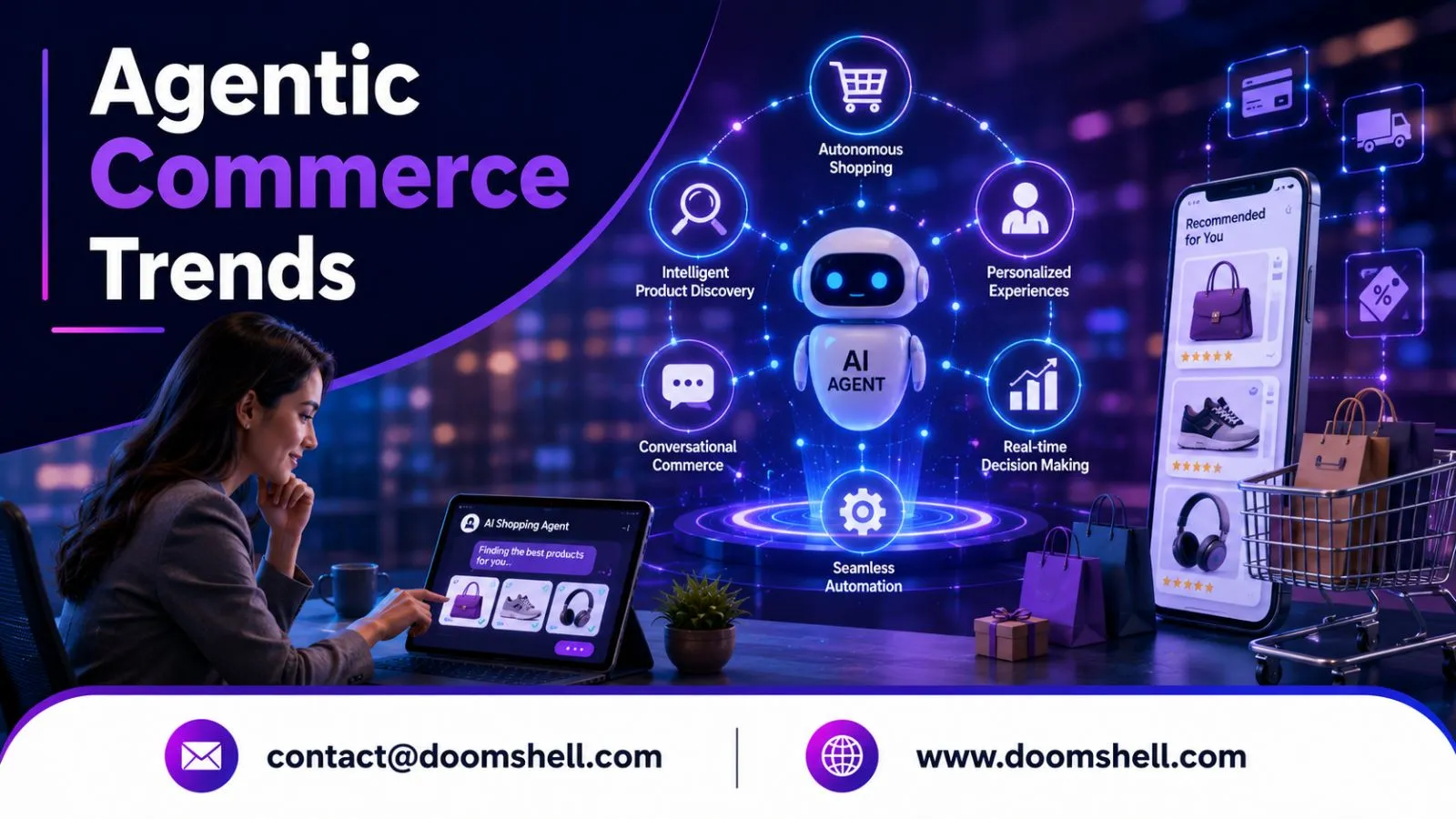
Online shopping is moving beyond traditional search, product listings, recommendations, and checkout pages. Agentic commerce is creating a new shopping model where AI systems can understand a consumer’s intent, research products, compare alternatives, evaluate reviews and prices, and increasingly help complete purchases with minimal manual effort.
Unlike conventional ecommerce, where shoppers move from search to product pages and then checkout themselves, AI shopping agents can handle multiple steps of the buying journey. They can understand natural-language requests such as “find the best laptop under ₹80,000 for video editing,” compare suitable options, explain trade-offs, and help the consumer reach a decision faster.
This shift is already visible in consumer behavior. NIQ’s 2026 India research found that 92% of consumers across the country’s top eight metros have used AI while shopping, while 96% are open to using AI-powered shopping tools.
The change is therefore not simply about adding AI to an ecommerce website. It is about changing how consumers discover products, evaluate brands, make decisions, and complete purchases.
What Is Agentic Commerce and Why Does It Matter?
How AI Shopping Agents Work
Agentic commerce refers to buying and selling experiences in which AI agents can act on behalf of consumers or businesses to research, compare, recommend, and potentially complete transactions. IBM describes the model as AI agents performing shopping-related tasks with limited or no direct human intervention.
A typical AI-assisted shopping journey may look like this:
-
The consumer explains what they need.
-
The AI interprets preferences, budget, requirements, and constraints.
-
The agent searches available products and information.
-
It compares price, features, reviews, availability, delivery, and policies.
-
It recommends suitable options.
-
The consumer approves an option or delegates the purchase.
-
The transaction can then be completed through an enabled commerce system.
This is different from a traditional recommendation engine. A recommendation engine might display “products you may like,” while an agent can potentially take action across several stages of the shopping journey.
McKinsey estimates that agentic commerce could mediate $3 trillion to $5 trillion of global consumer commerce by 2030 under moderate scenarios.
From Search-Based Shopping to Intent-Based Shopping
Traditional ecommerce largely depends on consumers knowing what they want to search for. Agentic shopping changes that interaction.
Instead of entering several searches, a shopper can describe a goal, preference, or problem in natural language. The AI then interprets the request and handles part of the research process.
This creates a shift from keyword-based product discovery to intent-based product discovery.
For brands, this means being visible in traditional search results may no longer be enough. Product information must also be understandable, accurate, structured, and trustworthy enough for AI systems to evaluate.
Shopify and Google have also been developing open commerce infrastructure designed to allow AI agents to interact with merchants and commerce systems, showing that agentic shopping is moving from concept toward practical infrastructure.
How AI Shopping Agents Are Changing Consumer Buying Behavior
Faster Product Discovery and Comparison
One of the biggest changes brought by AI in ecommerce is the reduction in research time.
Consumers traditionally open multiple websites, compare product specifications, read reviews, check prices, search for alternatives, and eventually decide which option appears best. An AI agent can potentially bring much of this information together in one interaction.
For example, instead of manually comparing ten smartphones, a shopper could provide a budget, camera requirements, preferred operating system, and battery expectations. The AI can then narrow down the options and explain why particular products match those requirements.
This reduces decision fatigue and makes comparison more convenient.
Research from NIQ shows that AI is already influencing how consumers evaluate products, compare options, find deals, and narrow their choices before purchasing.
Personalized and Autonomous Shopping
Personalization is another major component of agentic commerce trends.
AI systems can use information such as previous purchases, stated preferences, budgets, product requirements, and shopping context to create more relevant recommendations.
The experience can range from simple assistance to greater automation.
For example:
-
“Find running shoes suitable for long-distance training.”
-
“Compare these three laptops for programming.”
-
“Find a birthday gift under ₹3,000.”
-
“Reorder my usual office supplies.”
-
“Tell me if this product becomes available below my preferred price.”
This creates a spectrum of autonomous shopping, where consumers decide how much control they want to delegate.
However, autonomy does not necessarily mean consumers want AI to make every decision. McKinsey’s research highlights that different shopping tasks will require different levels of human involvement. Some purchases can be highly automated, while expensive, emotional, or complex decisions may still require human judgment.
This distinction is important because successful agentic commerce will need to balance convenience with consumer control.
Major Agentic Commerce Trends Businesses Need to Understand
Conversational Commerce Is Becoming a Shopping Interface
Consumers increasingly interact with AI using natural language instead of navigating through traditional menus and product categories.
This is accelerating conversational commerce, where customers can ask questions, compare products, receive recommendations, and sometimes complete shopping actions within a conversation.
The interface can be a retailer's own AI assistant or a broader AI platform.
Shopify reported in 2026 that merchants can reach shoppers through AI channels including ChatGPT, Microsoft Copilot, Google AI Mode, and Gemini through its agentic commerce infrastructure.
This creates a major change for ecommerce businesses: the product page may no longer be the first place where a potential customer interacts with the brand.
The first interaction could happen inside an AI conversation.
Trust, Product Data, and Brand Visibility Are Becoming Critical
As AI agents influence purchasing decisions, brands need to think beyond traditional rankings and advertising.
AI systems need reliable information to evaluate products. Product descriptions, specifications, pricing, reviews, shipping details, availability, return policies, and other structured information can influence whether a product is understood correctly.
NIQ's 2026 research highlights that AI-driven discovery is making relevance and discoverability increasingly important, while trust signals such as reviews and product attributes can influence AI recommendations.
Trust is equally important on the consumer side.
A shopper may allow an AI agent to recommend a product but still want control before money is spent. Recent developments in agentic commerce therefore increasingly focus on authorised transactions, security, identity, fraud prevention, and clear consumer permissions. Mastercard's 2026 Agent Connect initiative, for example, focuses on helping merchants support agent-powered shopping while maintaining business rules and trusted transactions.
For businesses, this means AI commerce strategy should include both discoverability and trust.
How Businesses Can Prepare for Agentic Commerce
Make Ecommerce Data AI-Ready
Businesses preparing for AI shopping should start with the fundamentals.
Product information needs to be complete, consistent, current, and easy for systems to interpret. Important attributes should not be hidden only inside images or vague marketing copy.
Businesses should strengthen:
-
Product titles and descriptions
-
Product specifications
-
Pricing and availability
-
Product categories
-
Reviews and ratings
-
Shipping information
-
Return policies
-
FAQs and supporting information
-
Structured product data
-
Inventory information
The goal is to make products understandable not only to human shoppers but also to the AI systems helping those shoppers make decisions.
This is where an experienced AI agent development company can help businesses design AI-powered shopping assistants, connect commerce data, automate workflows, and build controlled agentic experiences.
Prepare for an Agent-Mediated Customer Journey
The future customer journey may not always begin on Google or a retailer's homepage.
A consumer might start by asking an AI assistant for recommendations, compare several brands through an agent, receive a shortlist, and complete a transaction through an integrated checkout.
Salesforce reported in September 2026 that agentic search as the first step in the shopping journey had grown 200% year over year, while 86% of commerce leaders said AI was increasing customer expectations.
Businesses therefore need to prepare for a customer journey where AI becomes an additional discovery and transaction layer.
That means brands should focus on:
-
Accurate and structured product data
-
Strong reviews and trust signals
-
Clear pricing and policies
-
Fast and reliable digital experiences
-
AI-readable product information
-
Secure APIs and integrations
-
Controlled agent permissions
-
Human oversight for sensitive transactions
-
Consistent brand information across digital channels
The objective is not to remove humans from commerce. It is to make AI useful while keeping the consumer in control.
Conclusion: The Future of Shopping Will Be More Intent-Driven
Agentic commerce is changing ecommerce from a model where consumers manually search, compare, and purchase toward one where AI can increasingly understand intent and perform parts of the buying journey.
AI shopping agents are already influencing product discovery, comparison, personalization, and decision-making. In India, the adoption signals are particularly significant, with NIQ reporting widespread consumer use of AI for shopping across major metros.
For consumers, the biggest advantage is convenience. Instead of spending significant time researching products, they can explain what they need and allow AI to handle much of the comparison process.
For businesses, the opportunity is much broader. Brands need to become discoverable within AI-driven shopping environments, maintain accurate product information, build trustworthy digital experiences, and create infrastructure that allows authorised AI agents to interact with their commerce systems.
The winners in this next phase of ecommerce will not simply be the brands with the largest product catalogues. They will be the brands that provide reliable information, strong customer value, clear policies, trusted experiences, and data that AI systems can understand.
Agentic commerce is therefore not just another ecommerce trend. It represents a fundamental shift in how buying intent moves from search → comparison → decision → purchase, with AI increasingly becoming the layer connecting each stage.