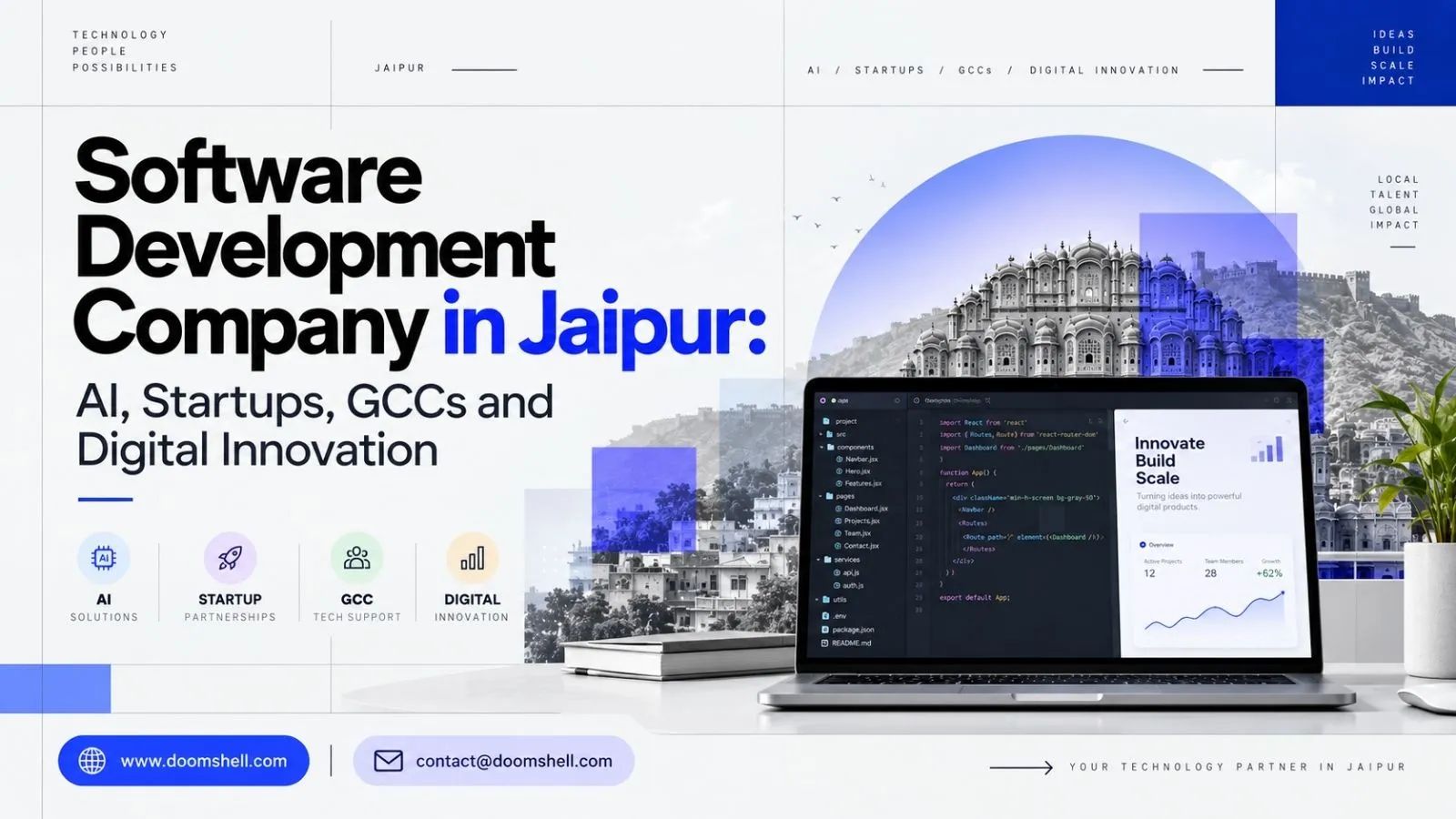
Jaipur is evolving from a tourism and heritage-led economy into a broader technology, startup, services, and innovation hub, creating growing opportunities for a software development company in Jaipur across SaaS, AI, healthcare, tourism, e-commerce, gems and jewellery, handicrafts, education, fintech, and enterprise technology. Rajasthan's current IT and ITeS ecosystem includes a Tier-4 state data centre in Jaipur, the iStart startup platform, Techno Hub, R-CAT, and infrastructure designed to attract technology businesses.
The city's software requirements are increasingly connected to real business operations. Companies are looking beyond basic websites toward cloud applications, AI-powered platforms, mobile apps, analytics dashboards, e-commerce systems, automation, secure enterprise software, APIs, and technology products that can serve customers across India and international markets.
Why Choose a Software Development Company in Jaipur?
Jaipur combines a large services economy, strong tourism and hospitality activity, established traditional industries, educational institutions, startups, and an expanding technology ecosystem. Rajasthan's IT and ITeS investment platform identifies Jaipur as a key technology location and highlights Mahindra World City, a state data centre, startup infrastructure, and advanced technology opportunities including AI/ML, cloud computing, cybersecurity, blockchain, robotics, and automation.
The state also operates iStart Rajasthan as a single-window startup platform. The current iStart programme supports startups across areas including information technology, IoT, SME manufacturing and services, clean technology, and disruptive technologies, with its platform last updated in September 2026.
This combination gives Jaipur a distinctive software market. A software development company in Jaipur can serve both technology-native businesses and traditional companies that are digitising established operations.
Industries Driving Software Development in Jaipur
1. IT, SaaS and Technology Businesses
IT and ITeS are becoming increasingly important to Jaipur's economic landscape. The Rajasthan government identifies the city as a major location for technology infrastructure and lists numerous established technology companies operating in the state, alongside startup and skill-development programmes.
For SaaS businesses, custom development can cover multi-tenant platforms, subscription management, customer portals, workflow automation, analytics, APIs, mobile applications, and cloud infrastructure. Product companies can also use modular architecture to release new features without repeatedly rebuilding the underlying platform.
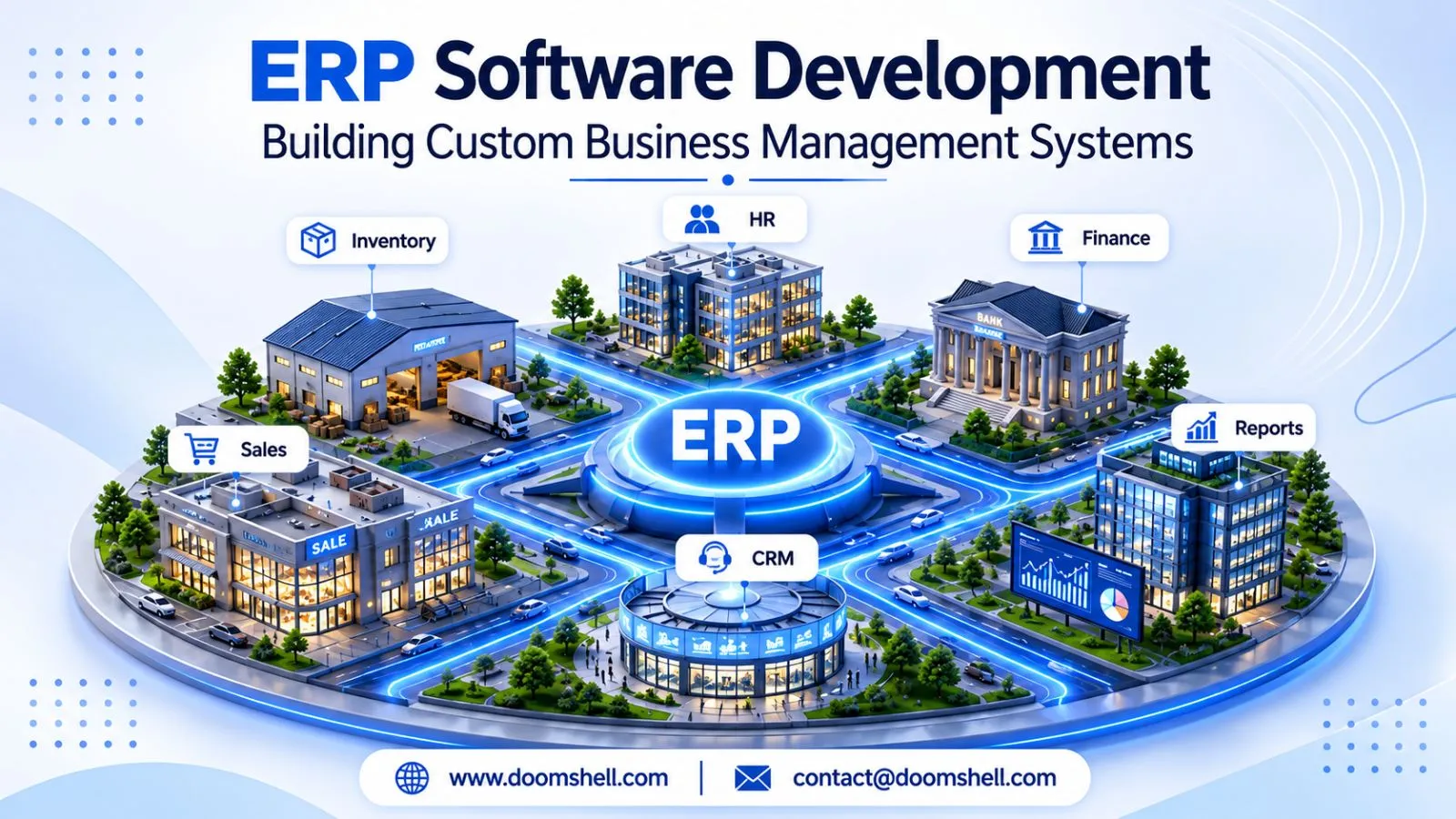
Enterprise businesses have different requirements. They may need ERP integrations, CRM systems, HR platforms, finance applications, document management, employee portals, business intelligence, and secure internal workflows.
The common requirement is integration. Software should connect business information instead of creating another isolated application that employees have to maintain manually.
2. Tourism, Hospitality and Travel Technology
Tourism remains central to Jaipur's identity and economy. Rajasthan Tourism describes Jaipur as a globally recognised destination and one of the three cities in India's Golden Triangle, while the state currently maintains a Tourism Policy 2025 alongside a Tourism Unit Policy 2024.
This creates a large opportunity for tourism technology. Hotels, travel operators, attractions, tour companies, restaurants, event businesses, and destination-management organisations can use software for reservations, customer relationship management, itinerary management, payments, loyalty programmes, inventory, reviews, and personalised recommendations.
Mobile applications can make these systems even more useful by giving travellers access to bookings, digital tickets, maps, notifications, recommendations, and customer support. AI can also assist with itinerary generation, multilingual support, customer-service automation, and demand forecasting.
3. Gems, Jewellery, Handicrafts and Export Businesses
Jaipur has a major connection with gems, jewellery, handicrafts, textiles, and traditional manufacturing. Rajasthan's 2025–26 Economic Review shows that engineering goods, gems and jewellery, metal, textiles, and handicrafts were the state's top five export categories, together accounting for more than 67% of state exports. Gems and jewellery exports alone reached ₹17,567.87 crore in 2024–25, while handicrafts reached ₹8,444.04 crore.
Software can help these industries modernise without losing their domain-specific workflows. Jewellery businesses can use inventory systems, product catalogues, B2B ordering platforms, customer-management applications, manufacturing tracking, and secure e-commerce solutions.
Handicraft and textile businesses can use digital catalogues, marketplace integrations, order management, inventory systems, export documentation, customer communication, and analytics. For businesses selling internationally, cloud-based software can connect suppliers, warehouses, sales channels, payment systems, and customers.
How a Software Development Agency in Jaipur Can Support Growth
A software development agency in Jaipur can help businesses translate operational challenges into practical digital products. The process should begin with business discovery rather than choosing a programming language or framework before understanding the actual problem.
For a traditional business, the project may involve digitising manual workflows, connecting inventory with sales, developing an internal ERP module, or building a customer portal. For a startup, the agency may instead focus on MVP development, product-market validation, scalable architecture, and rapid feature iteration.
The best approach depends on the organisation's stage, budget, users, existing technology, and growth plans. A small but well-designed first release can often provide more useful information than attempting to build every possible feature at once.
Custom Software Development Service in Jaipur
A modern software development service in Jaipur can cover individual applications as well as complete digital ecosystems. The appropriate technology depends on business processes, data requirements, expected traffic, security considerations, integrations, and future expansion.
Common solutions include:
-
Custom enterprise software
-
SaaS platforms
-
ERP and CRM applications
-
Tourism and hospitality software
-
E-commerce platforms
-
Gems and jewellery management systems
-
Inventory and order-management applications
-
Healthcare and hospital software
-
Education and EdTech platforms
-
AI-powered business applications
-
Data analytics dashboards
-
Mobile applications
-
IoT platforms
-
API development and integrations
-
Cloud migration and modernization
-
Workflow automation systems
-
Customer and employee portals
A strong software development service in Jaipur should ultimately solve a business problem. That could mean reducing manual work, improving inventory visibility, increasing direct bookings, automating customer support, strengthening data security, or helping management make faster decisions.
Artificial Intelligence Is Creating a New Software Opportunity in Jaipur
AI is now a specific part of Rajasthan's technology strategy rather than only a national technology trend. The Rajasthan AI/ML Policy 2026 is designed to support responsible AI adoption, startups, research, skilling, industry participation, AI cloud and compute access, and innovation.
The state's AI initiative identifies applications across governance, agriculture, healthcare, education, smart cities, and public safety while also supporting AI startups and industry collaboration.
For Jaipur businesses, this opens several practical software opportunities. AI can power customer-service assistants, document processing, enterprise search, demand forecasting, recommendation systems, fraud detection, predictive analytics, image recognition, and workflow automation.
However, AI should be selected because it solves a measurable problem. Businesses should evaluate data quality, privacy, model reliability, operating cost, human oversight, and integration requirements before embedding AI into a production application.
Jaipur's AI Startup Ecosystem
Jaipur is also developing a more visible AI startup ecosystem. The official AI Rajasthan platform currently showcases startups working in areas such as computer vision, conversational AI, productivity, data analytics, applied AI, responsible AI, product engineering, and deep-tech R&D.
This is important because AI adoption requires more than software developers. Businesses need data engineers, product teams, domain specialists, cloud infrastructure, model-development capabilities, cybersecurity, and people who understand how AI fits into existing workflows.
For startups, this ecosystem can support the transition from an idea to a working product. For established businesses, it can provide a pathway toward adopting AI without having to build every capability internally.
Cloud and Data Infrastructure in Jaipur
Cloud infrastructure is becoming increasingly important for Jaipur's digital economy. Rajasthan's IT and ITeS platform identifies a Tier-4 state data centre in Jaipur with 800 racks and describes it as the largest government-owned data centre in India. The state also has a Data Centre Policy 2025 focused on developing hyper-scale and edge-cloud infrastructure.
For software companies, stronger digital infrastructure can support cloud applications, AI workloads, analytics, government technology, enterprise systems, and data-intensive platforms. It also increases the importance of infrastructure architecture in software planning.
A cloud-native application may use containers, managed databases, APIs, event-driven systems, automated deployment, monitoring, and elastic computing. However, cloud architecture should always reflect the actual workload and security requirements instead of being selected simply because it is modern.
Global Capability Centres and Enterprise Software
Rajasthan's Global Capability Centre Policy 2025 recognises GCCs as potential drivers of high-value services including IT, research and development, finance, analytics, human resources, risk management, and digital innovation. The state's Economic Review describes the policy as part of a broader effort to integrate Rajasthan into global services and knowledge-based value chains.
This creates new requirements for enterprise-grade software in Jaipur. GCCs can require data platforms, internal business applications, AI systems, analytics tools, cybersecurity platforms, automation, product engineering, and global workflow systems.
Software teams serving GCC environments must therefore consider reliability, scalability, documentation, integration, observability, access controls, and global deployment requirements. The software may be developed in Jaipur while supporting users and business functions across multiple countries.
Startups and Product Engineering
Jaipur has one of Rajasthan's strongest startup support infrastructures. The government IT platform identifies Techno Hub and multiple iStart incubation locations as components of the startup ecosystem, while the current iStart programme supports innovation across technology and sector-specific applications.
The state's startup benefits include support for pre-seed ideation, seed-stage viability, growth-stage funding, and a startup equity fund, subject to the applicable eligibility conditions.
This environment can support software startups working in SaaS, AI, fintech, healthcare, education, tourism, e-commerce, agritech, IoT, and other emerging sectors. For development teams, the opportunity is to build products that are technically scalable from the beginning without unnecessarily over-engineering the first release.
E-Commerce and Digital Retail
Jaipur's traditional industries are increasingly connected to digital commerce. Rajasthan's 2025–26 Economic Review reports that under the state's export framework, eligible export units can receive assistance for e-commerce-related fees, with financial assistance already distributed to applicants through December 2025.
For businesses selling jewellery, handicrafts, textiles, lifestyle products, and other goods, custom e-commerce software can connect product catalogues, inventory, payments, customer management, logistics, and analytics.
A sophisticated e-commerce platform can also support B2B and wholesale workflows. Dealers can receive customised pricing, place bulk orders, track shipments, access product information, and communicate with suppliers through a dedicated portal.
Healthcare and Digital Health
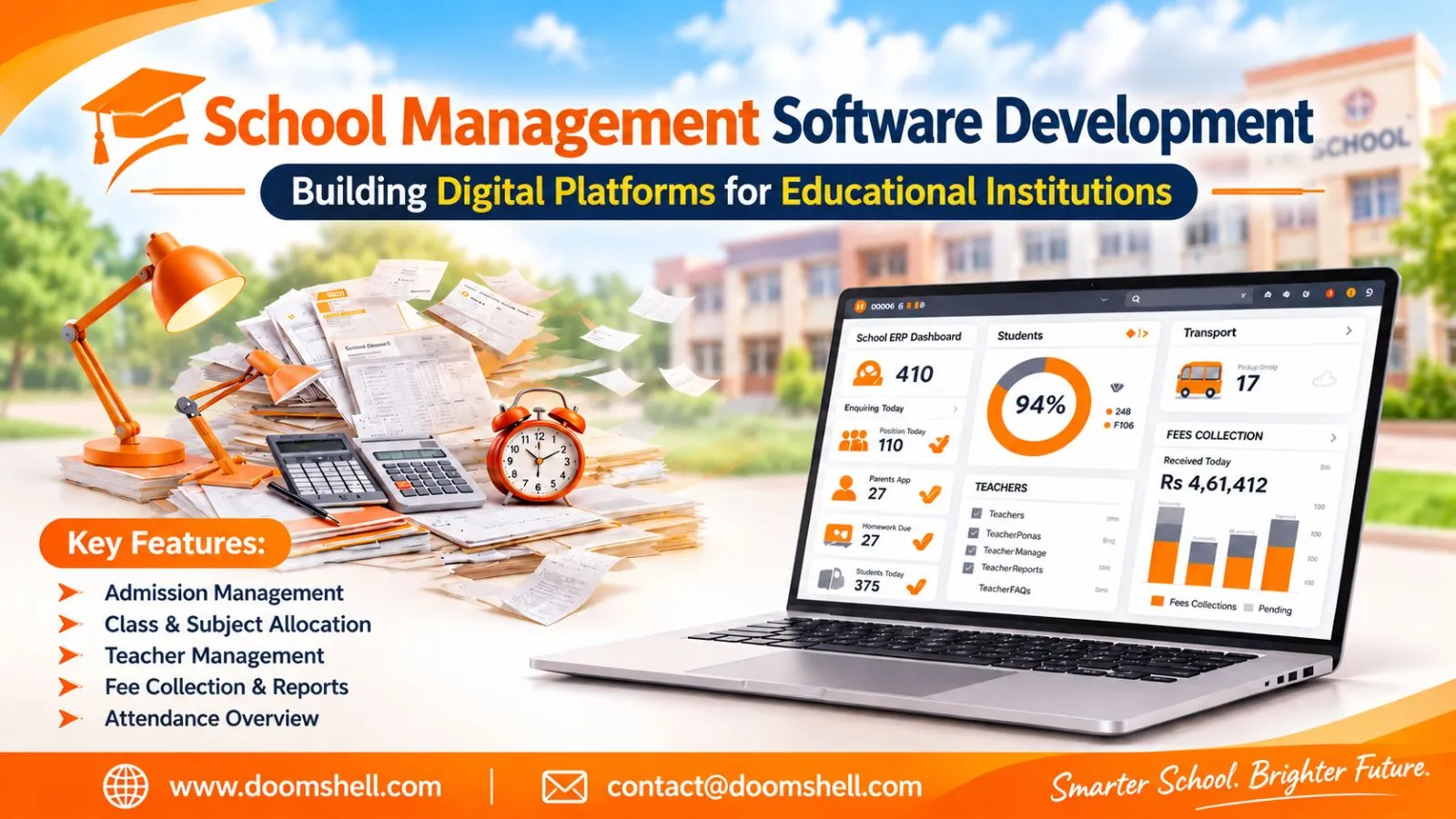
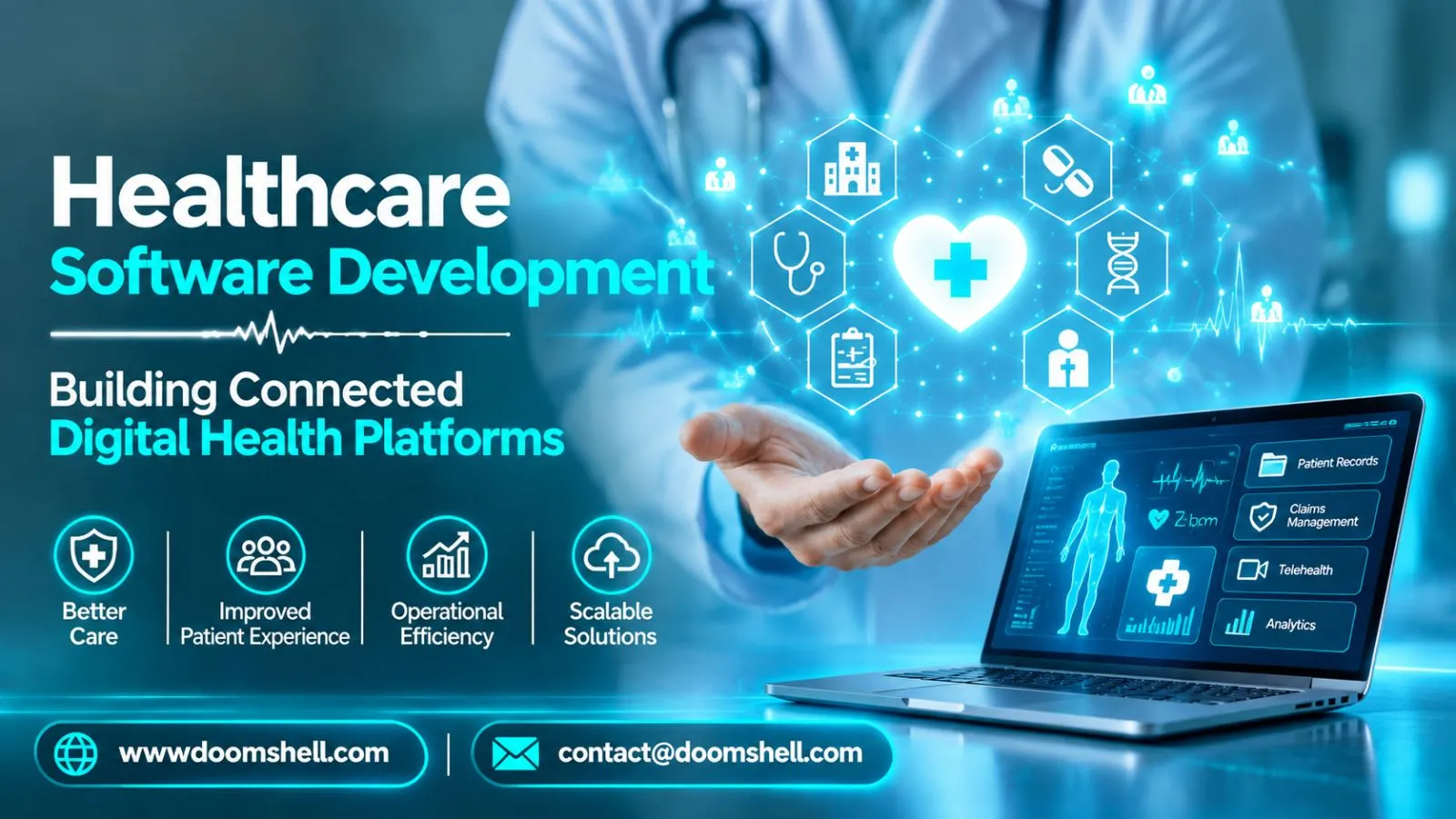
Healthcare is another area where Jaipur can benefit from custom software. Hospitals, clinics, diagnostic centres, pharmacies, medical businesses, and health-tech startups can use digital systems to streamline appointments, billing, patient communication, records, inventory, and reporting.
AI can extend these systems through intelligent search, document classification, operational forecasting, patient communication, and analytics. Software developers should nevertheless treat healthcare data carefully, using appropriate access controls, encryption, audit trails, secure APIs, and backup strategies.
For larger healthcare organisations, integration is particularly important. Hospital management, laboratory, pharmacy, billing, appointment, and patient-facing applications should be able to exchange information securely rather than operate as separate data silos.
Cybersecurity and Secure Application Architecture
As Jaipur businesses adopt cloud systems, AI, digital commerce, and connected applications, cybersecurity becomes an increasingly important part of software development. Rajasthan's Department of IT & Communication maintains current cybersecurity audit guidelines and other digital-governance policies, while the state's AI initiative explicitly emphasises responsible and secure AI adoption.
Secure application architecture should include authentication, authorisation, encryption, secure API design, logging, monitoring, dependency management, vulnerability testing, backup, and controlled administrative access.
For e-commerce and financial applications, payment and customer data require additional care. For enterprise software, role-based access and auditability help organisations understand who accessed or changed important information.
Mobile Application Development in Jaipur
Mobile applications are increasingly important for tourism, retail, healthcare, education, logistics, field services, and enterprise operations. A well-designed application can give users access to bookings, payments, services, notifications, dashboards, support, and real-time information from a smartphone.
Mobile architecture should account for performance, authentication, device permissions, API reliability, secure local storage, accessibility, notifications, and offline behaviour where appropriate. Tourism applications may also benefit from maps, multilingual content, digital tickets, location-based recommendations, and itinerary management.
Cross-platform development can be efficient when Android and iOS applications share most requirements. Native development may still be preferable when advanced hardware capabilities or platform-specific performance is central to the product.
What to Look for in a Software Development Agency
Choosing a software development agency in Jaipur should involve evaluating technical capability, business understanding, communication, security, testing, scalability, and long-term support.
Businesses should ask:
-
Can the team understand the complete business workflow?
-
Can it integrate ERP, CRM, payment, marketplace, or third-party systems?
-
How are security and data protection handled?
-
Can the architecture scale as customers and transactions increase?
-
What testing and quality-assurance processes are followed?
-
Can the team support cloud deployment and monitoring?
-
Who owns the source code and technical documentation?
-
What support is available after launch?
-
Can AI and analytics be added as the product evolves?
-
How are performance, uptime, and security monitored in production?
These questions are especially useful for Jaipur businesses that want software to become a long-term operational capability rather than a one-time technology project.
Current Software Development Trends in Jaipur
Several trends are particularly relevant to Jaipur's current technology landscape.
AI-native applications: Businesses are embedding AI into search, customer service, analytics, automation, recommendation systems, and operational workflows. Rajasthan's AI/ML Policy 2026 explicitly supports AI adoption, startups, skilling, research, and compute access.
GCC-driven enterprise engineering: The state's GCC Policy 2025 is creating a framework for high-value technology, analytics, R&D, and digital innovation functions.
Cloud and data infrastructure: Jaipur's data-centre ecosystem is creating stronger foundations for cloud applications, AI workloads, and enterprise systems.
Digital tourism: Hotels, travel companies, attractions, and destination businesses increasingly need integrated booking, CRM, mobile, payment, and customer-engagement systems.
E-commerce for traditional industries: Jewellery, handicrafts, textiles, and other businesses are using digital commerce to reach customers beyond physical markets.
Industry-specific SaaS: Businesses are increasingly looking for software designed around their particular workflows instead of generic tools that require extensive manual configuration.
Responsible AI: Data privacy, transparency, governance, security, and human oversight are becoming important components of production AI systems.
AEO, GEO and LLM SEO for Jaipur Software Businesses
Software companies also need to consider how potential customers discover technology services through traditional search, AI assistants, and conversational platforms. Clear service pages remain important, but modern digital visibility also depends on useful FAQs, structured information, industry-specific use cases, technical explanations, and credible local context.
A Jaipur software business can create content around AI development, SaaS platforms, tourism technology, jewellery software, e-commerce development, healthcare applications, cloud migration, cybersecurity, data analytics, GCC engineering, and enterprise modernization. Such content helps search systems understand the company's capabilities, location, industries, and use cases.
For AEO and GEO, content should answer practical questions directly. Pages should explain what a service does, who needs it, typical project stages, technology choices, security considerations, integrations, and expected business outcomes rather than relying only on promotional language.
Choosing the Right Software Development Service in Jaipur
The right software development service in Jaipur should start with a clear business objective. A hotel may need booking and guest-management software, while a jewellery manufacturer may need inventory and production tracking, and a startup may need a scalable SaaS MVP.
These projects have different technical requirements even though all of them involve software development. The architecture should therefore be based on users, workflows, data, integrations, security, expected scale, and future product plans.
A practical development roadmap can include discovery, requirements analysis, UX/UI design, technical architecture, development, testing, deployment, monitoring, and continuous improvement. Breaking a complex project into measurable phases can reduce risk and allow businesses to validate important assumptions before investing in additional features.
The Future of Software Development in Jaipur
Jaipur's technology ecosystem is moving toward a combination of IT/ITeS, AI, startups, GCCs, cloud infrastructure, tourism technology, e-commerce, and digital transformation across traditional industries. Rajasthan's current policy environment includes dedicated frameworks for AI, GCCs, data centres, semiconductors, aerospace and defence, logistics, textiles, and investment promotion.
For businesses, this means software development is increasingly about building connected digital capabilities. A modern platform may combine cloud infrastructure, APIs, analytics, AI, mobile applications, automation, cybersecurity, and industry-specific workflows into one technology strategy.
For organisations searching for a software development company in Jaipur, the important consideration is whether the development partner can understand both the technology and the local business environment. Software should be scalable, secure, maintainable, user-friendly, and flexible enough to evolve as the organisation grows.
Jaipur's combination of startup infrastructure, technology talent, traditional industries, tourism, AI initiatives, and enterprise investment provides opportunities for both new technology products and digital transformation of established businesses. The next phase of software development in the city is likely to involve deeper integration between AI, cloud infrastructure, data, commerce, and industry-specific applications.
Doomshell is a Jaipur-based technology company focused on practical digital solutions for businesses that need scalable software, web platforms, automation, and modern technology products. Its approach can help organisations turn complex business requirements into structured, user-focused digital experiences.
For businesses exploring software opportunities in Jaipur or expanding into other technology markets, understanding the local industry ecosystem can make technology planning more relevant. Doomshell can support organisations looking to convert those requirements into secure, scalable, and growth-ready technology solutions.