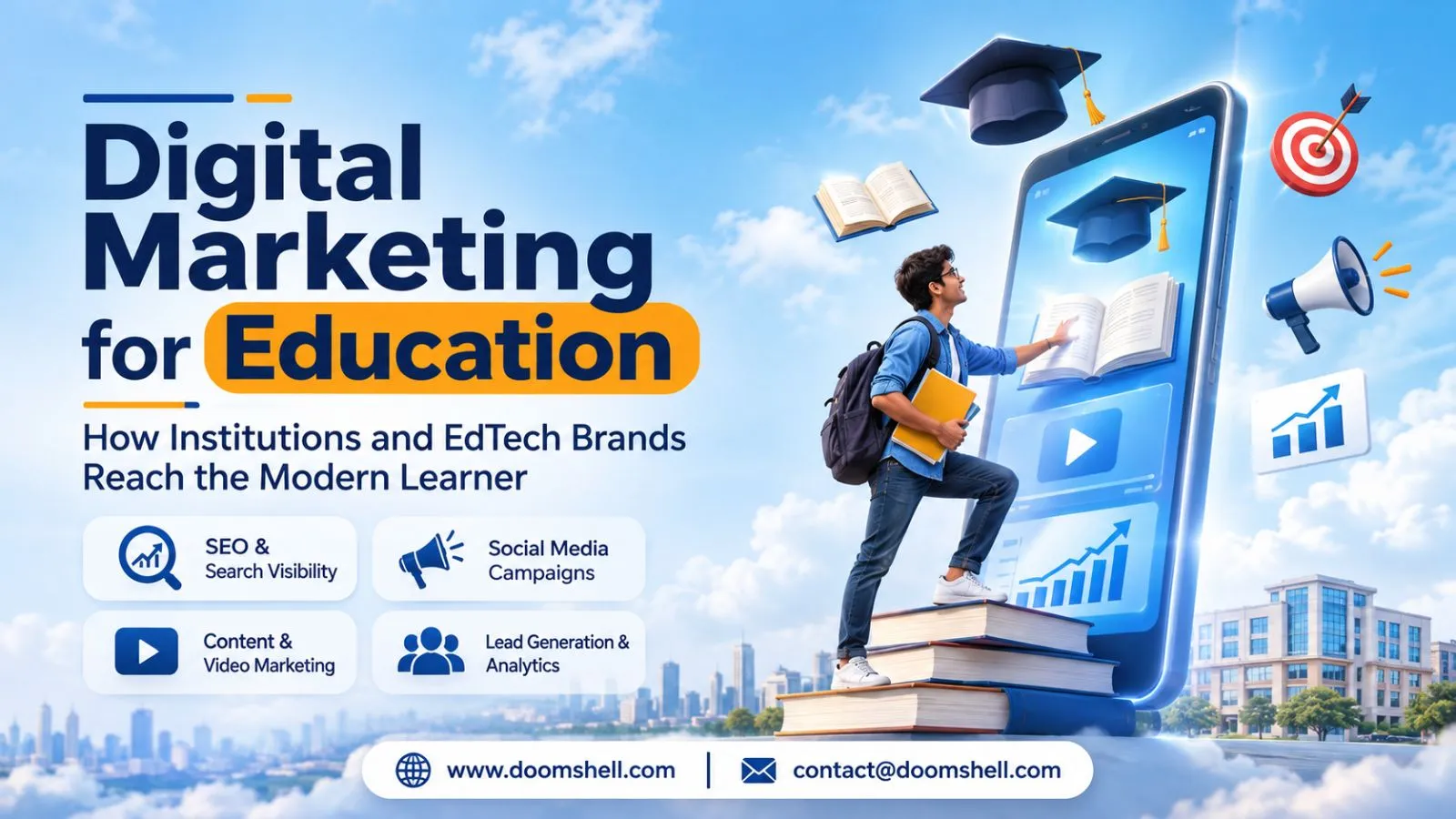
Digital marketing for education helps institutions and EdTech brands reach prospective students, communicate the value of their courses, and turn online interest into enrolments. Students now explore education options across search engines, social platforms, video channels, AI tools, and institutional websites before making decisions. As a result, institutions need a connected digital strategy that supports every stage of the student journey.
In India, competition among colleges, coaching institutes, universities, and online learning platforms makes digital visibility especially important. A reliable digital marketing agency in Jaipur or another education-focused marketing partner can help institutions improve search visibility, build trust, and generate relevant enquiries. However, effective campaigns require more than advertising. They must answer student questions, demonstrate educational value, and provide timely support.
In 2026, education marketing is becoming more search-led, video-driven, personalized, and measurable. Institutions that combine useful content with relevant campaigns and consistent follow-up can build stronger relationships with prospective learners.
Understanding How Students Research Education Online
Students rarely choose a course or institution after seeing one advertisement. They compare options, discuss decisions with parents and peers, review course details, and evaluate career opportunities. Understanding these behaviours helps institutions create education marketing strategies that match actual student needs.
Search Intent Across Courses and Career Paths
Search engines remain an important starting point for students exploring courses, qualifications, and career options. Their searches often reveal what they need at a particular stage. For example, a student searching for “best digital marketing course” may be comparing available programmes, while someone searching for “digital marketing course fees” is likely evaluating affordability.
Institutions should organize their websites around these different search intentions. Course pages can explain subjects, duration, eligibility, fees, learning formats, and career opportunities. Supporting articles can answer questions about entrance exams, certifications, skills, and career paths.
Education SEO should focus on relevant keywords rather than simply attracting large volumes of traffic. Search-focused content must also be accurate, updated, and easy to navigate. Clear course information helps students understand whether a programme matches their goals.
YouTube, Social Media and Peer Influence
Video and social platforms influence how students discover and evaluate educational opportunities. YouTube helps learners explore course explanations, campus tours, faculty introductions, demonstrations, and student experiences. Instagram and other social channels support discovery through short videos, stories, student activities, and community conversations.
Institutions should select platforms according to their audiences and content capabilities. A university may highlight campus life and academic programmes, while a professional training provider may publish skill demonstrations and career guidance. EdTech brands can use tutorials, instructor-led videos, and learner progress stories to communicate their value.
Peer influence also matters. Prospective students often look for genuine experiences before trusting promotional claims. Student testimonials, alumni stories, and authentic discussions can provide useful context. Content should be transparent and should not promise guaranteed jobs, salaries, or outcomes without verifiable evidence.
Comparing Institutions Through Digital Experiences
A website often becomes the place where students verify information gathered from other channels. They compare programmes, admission requirements, fees, faculty profiles, facilities, placement information, and available support.
A confusing website can weaken interest even when an institution has strong academic offerings. Important information should be accessible through clear navigation, readable course pages, mobile-friendly layouts, and visible enquiry options. Pages should load reliably and forms should request only necessary information.
Institutions should also maintain consistent details across search listings, social profiles, advertisements, and their own websites. In 2026, student discovery increasingly spans traditional search and AI-assisted platforms. Clear, structured information and consistent institutional details help both prospective learners and digital discovery systems understand what an institution offers.
Building Educational Authority Through Content
Useful content helps education brands demonstrate expertise before a student contacts the admissions team. Strong education content marketing answers common questions, explains learning opportunities, and gives prospective students reasons to trust an institution.
Course-Focused SEO Content
Every important course should have a dedicated page that explains its purpose, curriculum, eligibility, duration, teaching format, fees, and potential career pathways. Avoid relying on short descriptions that repeat generic promotional statements. Students need enough detail to compare programmes and decide whether to enquire.
Supporting SEO content can target questions related to course selection, industry skills, certifications, entrance preparation, and career development. For example, an institution offering data science programmes could publish content about essential skills, course prerequisites, practical projects, and career roles.
Use descriptive headings, concise explanations, relevant internal page structure, and clear calls to action. Keep course information current, particularly when admission dates, fees, curriculum, or eligibility requirements change. This approach makes educational websites more useful to visitors and strengthens their organic search foundations.
Student Stories and Outcome-Based Content
Students and parents want to understand what learning at an institution actually involves. Real student experiences can make educational content more relatable than broad promotional claims.
Institutions can publish interviews, alumni profiles, project showcases, internship experiences, and accounts of student progress. These stories should explain the learner's starting point, the support or learning experience they received, and the skills or achievements they developed.
Outcome-based content must be responsible. Placement figures, success rates, certifications, and salary information should be supported by reliable records and presented with appropriate context. A genuine story that explains both the learning process and its outcomes builds more trust than an exaggerated success claim.
Webinars, Videos and Interactive Learning Content
Webinars and interactive content give prospective students an opportunity to experience an institution's teaching approach before enrolling. Live sessions can cover course introductions, career guidance, admission processes, entrance preparation, and discussions with faculty or industry professionals.
Short videos can summarize key concepts and direct interested learners towards detailed resources. Recorded webinars can also become reusable content through highlights, articles, clips, and downloadable learning materials.
Interactive tools such as course comparison guides, eligibility checklists, sample lessons, and programme recommendation resources can help students explore their options. These formats are particularly useful when learners need guidance before speaking with an admissions counsellor.
Content should always have a clear purpose. Institutions should identify whether a resource is designed to increase awareness, answer a specific question, collect qualified enquiries, or help an interested student make a decision.
Converting Student Interest into Enrolments
Visibility is only one part of student acquisition. Institutions also need a conversion process that makes it easy for interested learners to request information, speak with counsellors, and complete admission steps.
Lead Magnets and Counselling Funnels
A lead magnet offers useful information in exchange for a student's contact details. Education brands can provide course brochures, admission checklists, career guides, sample lessons, scholarship information, or webinar registrations.
The information collected should help the admissions team understand the learner's interests. For example, a course enquiry form may ask about the preferred programme, learning mode, and expected admission period. Avoid requesting unnecessary personal information at the first stage.
After an enquiry, a structured counselling funnel can guide the student through relevant steps. The institution may share course details, answer eligibility questions, explain fees, arrange a counselling call, and provide application guidance. Each communication should address the learner's current concerns instead of sending the same generic message to everyone.
Paid Campaigns for Course Discovery
Paid advertising can help institutions reach students actively searching for programmes or exploring new learning opportunities. Search campaigns can target course-related queries, while social campaigns can introduce programmes through videos, testimonials, and educational content.
Campaigns should be organized around specific courses, locations, audience groups, and admission periods. A focused campaign for a postgraduate programme, for example, should direct users to a relevant landing page rather than a general homepage.
Paid advertising for courses requires regular monitoring. Institutions should review search terms, audience relevance, landing-page performance, enquiry quality, and campaign costs. A high number of form submissions does not necessarily mean a campaign is successful if most enquiries are irrelevant or unreachable.
Email and WhatsApp-Based Lead Nurturing
Many students need time before deciding where to study. Email and WhatsApp can help institutions maintain communication after the first enquiry, provided messages are relevant and sent with appropriate consent.
Email is useful for sharing detailed information such as course brochures, webinar invitations, admission timelines, and application instructions. WhatsApp can support timely reminders, counselling coordination, and short responses to student questions.
Communication should reflect the student's interests and stage in the decision process. Someone comparing programmes may need a course guide, while an applicant may need document instructions or an application deadline reminder.
Institutions should maintain clear communication preferences, respect opt-outs, protect student information, and avoid excessive messaging. Timely and helpful follow-up can improve the experience without making prospective learners feel pressured.
Data-Driven Marketing for Student Acquisition
Education marketing performs better when institutions understand which activities generate meaningful enrolments. Data-driven marketing connects campaign performance with the admissions process, helping teams improve decisions and allocate budgets more effectively.
Tracking Enquiry-to-Enrolment Journeys
Institutions should track how prospective students move from their first interaction to an admission decision. This journey may include an organic search visit, a course-page view, an advertisement click, a form submission, a counselling call, an application, and final enrolment.
A CRM system can help admissions teams manage enquiries, record interactions, assign follow-up tasks, and monitor application progress. Marketing analytics can connect campaign sources with these records, giving teams a clearer view of which channels contribute to qualified leads and enrolled students.
Tracking should use consistent source labels and campaign naming. Teams should also check for duplicate enquiries and incomplete records. Privacy, access controls, and applicable data-protection requirements must be considered when collecting and using student information.
Understanding Cost per Enrolment
Cost per enrolment measures the marketing and acquisition expense associated with each enrolled student. It provides a more meaningful view of campaign efficiency than cost per click or cost per lead alone.
For example, one campaign may generate many inexpensive enquiries but few applications. Another may produce fewer leads at a higher cost, yet convert a larger share into enrolled students. Comparing only lead costs could make the first campaign appear more successful than it really is.
Institutions should review cost per enrolment alongside lead quality, application rates, conversion rates, course revenue, and student retention where relevant. Results should be segmented by programme, location, campaign, and intake period. This makes it easier to identify where budgets are producing sustainable value.
Personalization and AI in Education Marketing
AI is creating new opportunities to understand student interests, support communication, and improve campaign planning. Education brands can use AI-assisted tools to group enquiries by course interest, summarize common questions, recommend relevant content, and support faster responses.
Chatbots and virtual assistants can answer routine questions about programmes, admission steps, and institutional services. However, they should provide accurate information, identify when a question needs human support, and avoid presenting uncertain answers as facts.
Personalized email journeys and website experiences can also reflect a learner's selected course or previous interactions. Institutions should use reliable data and clear consent practices when tailoring communications. Human review remains important for sensitive admission decisions and important academic guidance.
The wider shift towards AI-assisted discovery also means institutions should make their content clear, trustworthy, and easy to interpret. Search visibility now involves traditional SEO as well as preparing useful information for answer engines and generative search experiences.
Doomshell helps educational institutions and EdTech brands strengthen their online presence through digital marketing, SEO, content strategy, website development, and data-focused campaign support. As an IT company, Doomshell combines technology and marketing capabilities to help organizations improve digital visibility, attract relevant audiences, and create better online experiences for prospective learners. Its approach focuses on connecting business goals with practical digital solutions that support measurable growth.