The D2C eCommerce business model allows brands to sell products directly to customers without depending entirely on wholesalers, distributors, or traditional retail stores. By using their own websites, mobile applications, and digital marketing channels, businesses can build stronger customer relationships, manage their brand experience, and gain better insights into purchasing behaviour.
The growth of online shopping, digital payments, social commerce, and mobile technology has made direct-to-consumer selling more accessible. From fashion and beauty brands to electronics and food businesses, companies are adopting D2C strategies to reach customers directly and build sustainable online operations.
In this guide, we explore how the D2C model works, its benefits and challenges, the technology businesses need, and the strategies that can help brands grow in 2026.
What Is D2C eCommerce and How Does the Business Model Work?
Understanding the Direct-to-Consumer Business Model
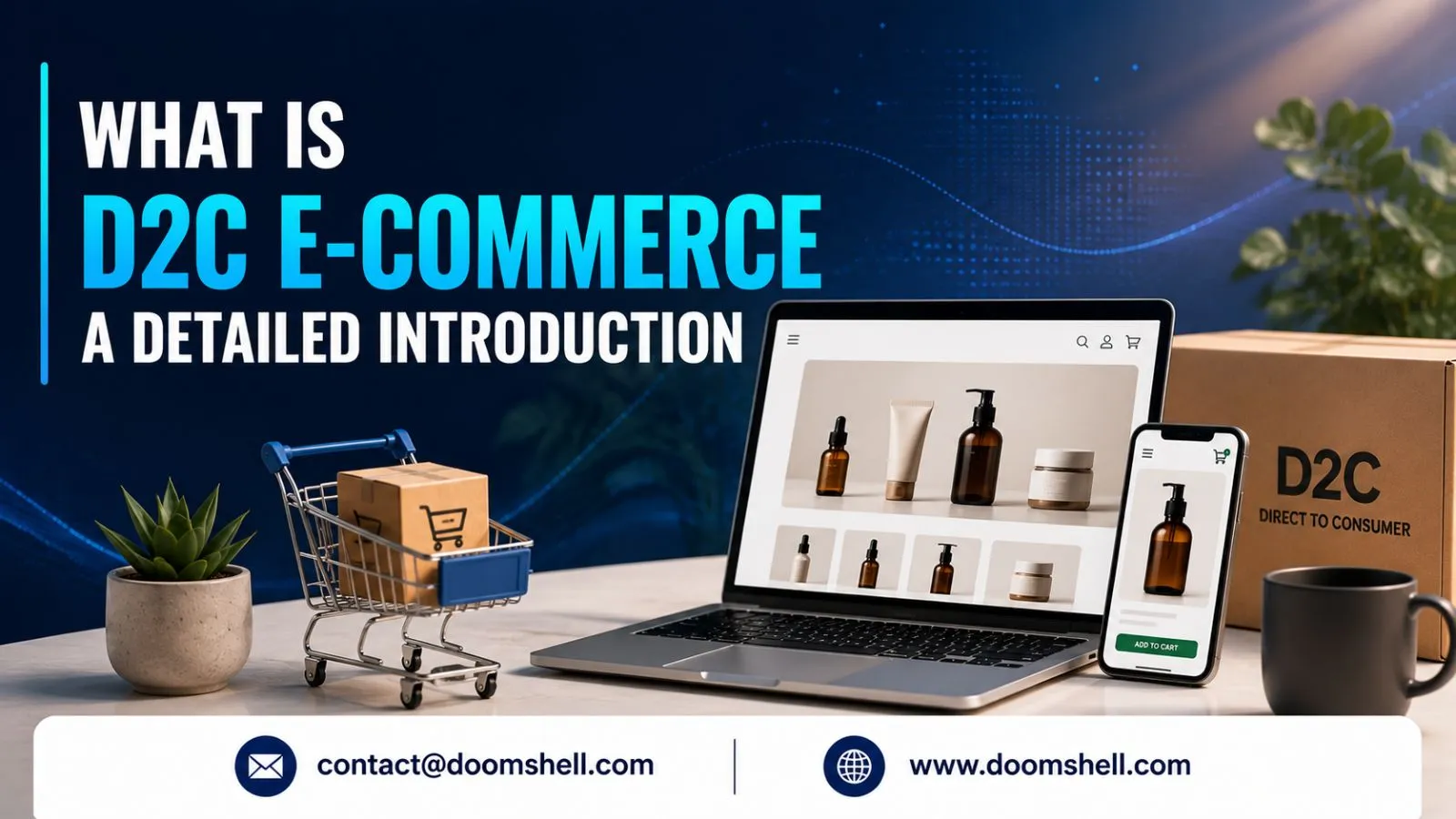
Direct-to-Consumer (D2C) eCommerce is a retail model in which a manufacturer or brand sells products directly to the end customer. Instead of relying exclusively on third-party retailers, the business manages its own sales channels and customer relationships.
For example, a skincare brand can sell products through its own online store rather than depending entirely on beauty retailers. The brand manages its product presentation, pricing, promotions, customer support, and post-purchase communication.
This approach provides greater control over the shopping experience. However, it also means the business must manage responsibilities that intermediaries traditionally handle, including order processing, customer service, and fulfilment.
D2C is different from marketplace selling. A brand selling through its own website has greater control over its storefront and customer journey, while a marketplace introduces its own rules, fees, and customer experience. Many successful businesses use both channels to reach different audiences.
How the D2C eCommerce Business Process Works
A typical D2C business connects product development, online sales, marketing, payments, inventory, and delivery through a coordinated process.
The customer journey generally includes:
-
Product discovery: Customers find products through search engines, social media, advertisements, or recommendations.
-
Online shopping: They explore product pages, compare options, and add items to their cart.
-
Secure checkout: The website processes payments and confirms orders.
-
Order fulfilment: The business manages inventory, packaging, shipping, and delivery.
-
Customer support: Buyers receive assistance with product questions, returns, or refunds.
-
Retention: Email updates, loyalty programmes, and relevant offers encourage repeat purchases.
A connected system helps businesses monitor orders, identify customer preferences, and improve the buying experience. It also makes it easier to identify problems, such as abandoned carts, delayed deliveries, or frequently returned products.
Benefits and Challenges of D2C eCommerce
Key Advantages of Selling Directly to Customers
One of the biggest benefits of the D2C model is greater control over branding and customer interactions. Businesses can shape product descriptions, website design, packaging, promotions, and customer communication according to their brand identity.
Other important advantages include:
-
Direct customer relationships: Brands can communicate with customers throughout the purchasing journey.
-
Customer insights: First-party data can reveal buying patterns, product preferences, and repeat-purchase behaviour.
-
Pricing flexibility: Businesses can test bundles, product offers, and promotional strategies.
-
Personalisation: Product recommendations and relevant messages can improve the shopping experience.
-
Faster feedback: Customer reviews and support conversations can inform product improvements.
-
Greater channel independence: An owned website gives a brand an additional sales channel beyond marketplaces and physical retailers.
D2C can also create opportunities for recurring revenue through subscriptions, replenishment programmes, and repeat-purchase incentives.
However, removing intermediaries does not automatically guarantee higher profits. Businesses must account for advertising, payment processing, warehousing, shipping, returns, technology, and customer support when calculating profitability.
Common Challenges D2C Businesses Must Overcome
Running a direct-to-consumer business requires more than launching an online store. Brands must coordinate technology, marketing, operations, and customer service while competing for attention in a crowded digital market.
Customer acquisition costs can rise when several brands target the same audience. Depending too heavily on paid advertising can also make growth unpredictable. Search engine optimisation, useful content, customer referrals, email marketing, and organic social media can help diversify customer acquisition.
Logistics create another challenge. Customers expect accurate delivery estimates, clear tracking, straightforward returns, and responsive support. Poor experiences can reduce trust and discourage future purchases.
Data management is equally important. Businesses should collect only the information they need, protect customer records, apply appropriate access controls, and follow applicable privacy and consumer protection requirements.
The best approach is to measure the entire customer journey rather than focusing only on website traffic or sales. Metrics such as customer acquisition cost, conversion rate, average order value, repeat-purchase rate, return rate, and contribution margin provide a clearer picture of business performance.
Essential Technologies and Strategies for D2C Growth
Technology Stack for a Modern D2C eCommerce Business
Technology connects the different parts of a D2C operation. A suitable platform should support customers from product discovery to checkout while giving the business visibility into inventory, orders, and customer service.
Essential technologies include:
-
eCommerce platform: Manages product catalogues, pricing, carts, checkout, and orders.
-
Customer relationship management (CRM): Organises customer interactions, sales information, and support history.
-
Inventory and order management: Tracks stock availability, fulfilment, and returns.
-
Payment gateways: Support secure transactions through relevant payment methods.
-
Analytics tools: Measure traffic, conversions, revenue, and customer behaviour.
-
Marketing automation: Coordinates email campaigns, customer segments, and retention activities.
-
Enterprise resource planning (ERP): Connects finance, inventory, purchasing, and other business operations.
Artificial intelligence is increasingly useful for product recommendations, conversational customer support, demand forecasting, and campaign analysis. These capabilities should solve specific business problems rather than being added simply because they are trending.
Mobile-first design is also essential. Product pages should load quickly, display clear images and pricing, provide transparent delivery information, and offer a simple checkout process. The fewer unnecessary steps customers encounter, the easier it becomes to complete a purchase.
Businesses planning a new store or upgrading an existing platform can work with an experienced D2C eCommerce development company in India to build a solution around their catalogue, integrations, customer journey, and expected growth.
Practical Strategies for Building a Successful D2C Brand
A strong D2C strategy begins with a clear understanding of the target audience. Businesses should identify customer needs, explain how their products solve specific problems, and communicate a consistent value proposition across their website and marketing channels.
The following practices can support sustainable growth:
-
Optimise product pages: Use clear descriptions, useful images, accurate specifications, and transparent pricing.
-
Improve search visibility: Publish helpful content and optimise category pages, product pages, and technical performance.
-
Simplify checkout: Minimise unnecessary fields and communicate shipping costs before customers pay.
-
Use first-party data responsibly: Personalise communication based on relevant customer preferences and permissions.
-
Strengthen retention: Offer useful post-purchase guidance, loyalty benefits, and timely replenishment reminders where appropriate.
-
Test marketing campaigns: Compare creative formats, audiences, offers, and landing pages before increasing spending.
-
Monitor profitability: Evaluate fulfilment costs, returns, discounts, and repeat purchases alongside revenue.
An experienced IT Company can also help businesses integrate their eCommerce platform with CRM, ERP, inventory, and analytics systems when disconnected tools create operational problems.
D2C Brand Examples, Emerging Trends, and the Road Ahead
Examples of Brands Using Direct-to-Consumer Strategies
Several well-known brands illustrate how direct sales can support a distinctive customer experience.
Tesla: Tesla has used direct sales channels and company-controlled customer experiences in several markets, although its sales and distribution arrangements vary by region.
boAt: The Indian consumer electronics brand has developed a strong digital presence through online sales, marketplace distribution, influencer partnerships, and brand-led marketing.
MVMT: The watch and accessories brand built recognition through digital marketing and online-first selling, demonstrating how focused branding can help a business reach customers directly.
These examples also show that D2C does not require a business to abandon every third-party channel. Brands can combine owned websites, marketplaces, retail partnerships, and other sales channels according to their products and customers.
D2C Trends Shaping Business Growth in 2026
The D2C landscape continues to evolve as customer expectations and digital technologies change.
AI-powered personalisation: Brands can use product recommendations and customer behaviour signals to make shopping more relevant. Personalisation should remain useful, transparent, and respectful of customer privacy.
Social commerce: Social platforms increasingly support product discovery and purchase journeys. Consistent branding and clear paths to checkout help turn engagement into sales.
Omnichannel experiences: Customers may discover a product on social media, research it on a website, and purchase through another channel. Connecting inventory, support, and customer information helps maintain consistency.
First-party data strategies: Brands are placing greater emphasis on information collected directly through their own customer interactions, with appropriate consent and safeguards.
Faster, more flexible fulfilment: Reliable delivery estimates, transparent returns, and convenient support can help build trust and encourage repeat business.
Ultimately, D2C eCommerce gives brands an opportunity to build direct customer relationships, develop distinctive experiences, and make better-informed decisions. Success depends on more than selling without intermediaries. Businesses need the right technology, efficient operations, responsible data practices, and a marketing strategy that balances customer acquisition with retention.
By starting with clear customer needs, measuring profitability, and improving the buying experience over time, brands can create a D2C business that is adaptable, customer-focused, and prepared for long-term growth.