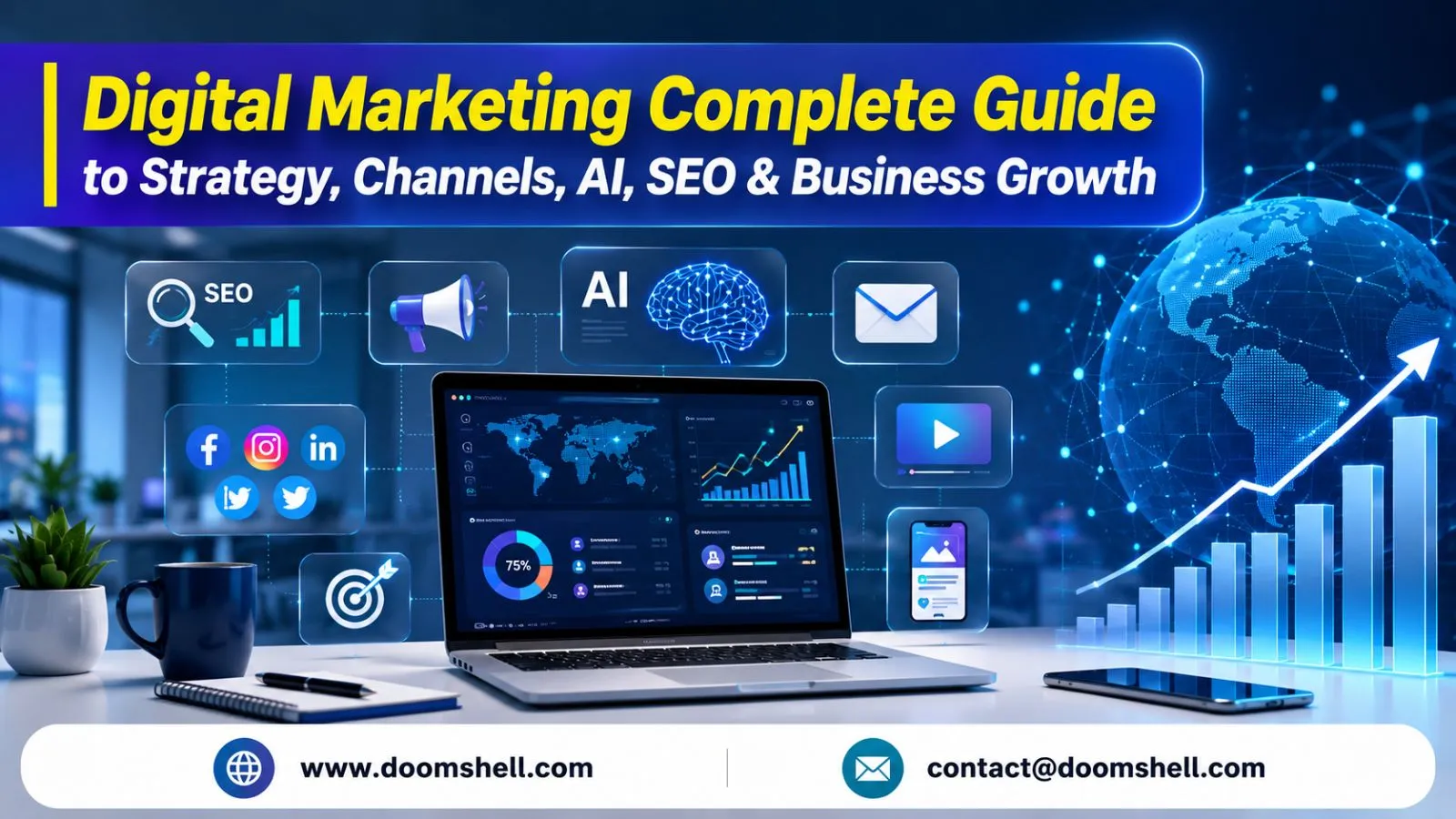
Digital marketing is the promotion of products, services, and brands through online channels such as search engines, websites, social media, email, and mobile applications. In 2026, it helps businesses reach relevant audiences, measure campaign performance, and build lasting customer relationships. For an IT Company, startup, local business, or established enterprise, a well-planned digital presence can support lead generation, brand awareness, and revenue growth.
Understanding what digital marketing involves is essential because customers increasingly research products online, compare alternatives, read reviews, and interact with brands before purchasing. Businesses can use digital channels to attract potential customers, improve engagement, track results, and strengthen customer retention. The key is to choose suitable channels and connect them to clear business objectives.
What Is Digital Marketing and Why Does It Matter in 2026?
Evolution from Traditional to Digital Marketing
Traditional marketing relies on channels such as newspapers, television, radio, and billboards. These methods remain useful for some audiences, but digital platforms offer additional opportunities to target specific groups and measure their responses.
Smartphones, high-speed internet, social media, and online shopping have changed how consumers discover brands. A local business can reach nearby customers through search results, while an online store can promote products to people based on their interests and previous interactions.
Digital marketing also enables businesses to test different messages, adjust campaigns, and review performance while campaigns are running. This flexibility helps teams make informed decisions instead of relying entirely on broad advertising estimates.
Key Benefits for Businesses of Every Size
The importance of digital marketing extends beyond online visibility. It helps organizations connect with potential customers throughout the buying journey, from initial discovery to repeat purchases.
Key benefits include:
-
Brand awareness: Introduce products and services to relevant audiences.
-
Lead generation: Attract prospects who are interested in a business's offerings.
-
Audience targeting: Reach people based on relevant interests, intent, and location.
-
Measurable performance: Monitor traffic, leads, conversions, and campaign costs.
-
Customer engagement: Maintain relationships through useful content and timely communication.
-
Business growth: Identify effective channels and improve marketing investments over time.
Results depend on the quality of the strategy, the competitiveness of the market, and the customer experience. Digital marketing is not an instant solution; consistent execution and regular optimization are essential for sustainable results.
Types of Digital Marketing Businesses Should Understand
SEO, AEO, and Content Marketing
Search engine optimization company improves a website's visibility in organic search results. It includes helpful content, relevant keyword targeting, technical performance, internal site structure, and a positive user experience.
In 2026, businesses should also consider Answer Engine Optimization (AEO) and Generative Engine Optimization (GEO). These approaches focus on making information clear, accurate, well-structured, and useful for answer engines and AI-powered search experiences.
Content marketing supports these efforts through educational articles, guides, case studies, videos, and other resources that address customer questions. Strong content should demonstrate practical knowledge, answer search intent directly, and provide genuine value rather than repeat keywords unnecessarily.
Social Media, Paid Advertising, and Email Marketing
Social media marketing company helps brands build communities and engage audiences on platforms such as Instagram, Facebook, LinkedIn, and YouTube. Effective campaigns combine useful information, short-form videos, creative storytelling, and relevant conversations instead of relying only on promotional posts.
Pay-per-click advertising, including search and social ads, can help businesses reach potential customers more quickly. However, campaigns need clear targeting, relevant landing pages, controlled budgets, and ongoing testing to avoid unnecessary spending.
Email marketing remains useful for nurturing leads and retaining existing customers. Newsletters, onboarding sequences, product updates, and personalized offers can keep audiences informed throughout the customer journey.
Other channels may include affiliate marketing, influencer collaborations, online reputation management, and mobile marketing. Businesses should select channels according to audience behavior and goals rather than attempting to use every platform at once.
How to Build a Digital Marketing Strategy with AI
Set Goals, Understand Customers, and Choose Channels
A successful digital marketing strategy starts with specific business objectives. These might include increasing qualified leads, generating online sales, improving brand awareness, or encouraging repeat purchases.
Next, identify the target audience, their challenges, their preferred platforms, and the questions they ask before buying. Customer research helps marketers create relevant messages and select channels that match the buying journey.
A practical strategy should include:
-
Clear objectives and measurable key performance indicators (KPIs)
-
Audience research and competitor analysis
-
Keyword and search-intent research
-
A content calendar and campaign schedule
-
A realistic budget and channel allocation
-
Regular performance reviews and improvements
For example, a service-based business may prioritize SEO, useful website content, and lead-generation campaigns. An e-commerce brand may focus on product pages, social advertising, email automation, and conversion optimization.
Use AI for Research, Personalization, and Automation
AI in digital marketing can help teams analyze information, organize research, develop content outlines, segment audiences, and automate repetitive tasks. Predictive analytics can also reveal patterns that help marketers plan campaigns and identify potential opportunities.
AI-powered tools may support personalized recommendations, automated email workflows, customer support, and campaign analysis. These capabilities can improve efficiency, but they still require human judgment.
Marketers should review AI-generated content for accuracy, originality, brand consistency, and usefulness. Publishing large amounts of unedited, repetitive content can weaken trust and fail to meet audience needs. Customer data must also be handled responsibly, with appropriate permissions and privacy safeguards.
Measure Performance and Improve Return on Investment
Campaign measurement connects marketing activities with business outcomes. Website traffic alone does not establish success; businesses should examine whether visitors take meaningful actions.
Useful KPIs include organic search traffic, qualified leads, conversion rate, cost per lead, customer acquisition cost, email engagement, and return on advertising spend.
Analytics tools and campaign reports can help teams identify which channels produce valuable results. If traffic increases but enquiries remain low, the website's messaging, landing page, offer, or conversion process may need improvement.
Regular testing makes optimization more practical. Businesses can compare headlines, creative formats, audience segments, and calls to action, then use the findings to improve future campaigns.
Digital Marketing Trends in 2026 and the Road to Business Growth
AI Search, Personalization, and Omnichannel Experiences
AI-powered search experiences are changing how users discover information. Businesses should create content that answers questions directly, uses descriptive headings, demonstrates expertise, and keeps important facts consistent across their digital presence.
Personalization is also becoming more important. Relevant product suggestions, tailored email messages, and useful customer experiences can improve engagement when based on appropriate data and genuine customer needs.
An omnichannel approach connects websites, social media, email, paid advertising, and other customer touchpoints. Consistent messaging helps customers move between platforms without experiencing disconnected interactions. Businesses should also build direct relationships through email subscriptions and other consent-based channels instead of depending entirely on third-party platforms.
Short-Form Video, First-Party Data, and Local Visibility
Short-form videos offer businesses a way to demonstrate products, explain services, answer common questions, and communicate their brand personality. Useful videos often perform better as part of a consistent content plan than as isolated promotional posts.
First-party data, collected directly through legitimate customer interactions, can support audience insights and more relevant communication. Clear consent practices and responsible data handling remain important.
Local visibility is valuable for businesses serving specific geographic areas. Accurate business information, genuine customer reviews, location-relevant content, and a well-maintained business profile can help potential customers discover nearby services.
These trends work best when they support a clear business objective rather than being adopted simply because they are popular.
Choosing the Right Marketing Partner for Sustainable Growth
Businesses that lack in-house expertise may benefit from professional support with strategy, SEO, paid advertising, social media, content creation, and analytics. A suitable digital marketing company in India can help align these activities with business goals, available resources, and the needs of the target audience.
Before choosing a provider, review its approach to reporting, campaign planning, communication, and performance measurement. Set realistic expectations and agree on meaningful KPIs instead of relying on guaranteed rankings or unsupported growth promises.
Ultimately, digital marketing in 2026 combines useful content, customer-focused communication, measurable campaigns, and responsible AI adoption. Businesses that understand their audiences, choose suitable channels, and improve their strategies using real performance data are better positioned to build trust and achieve sustainable growth.