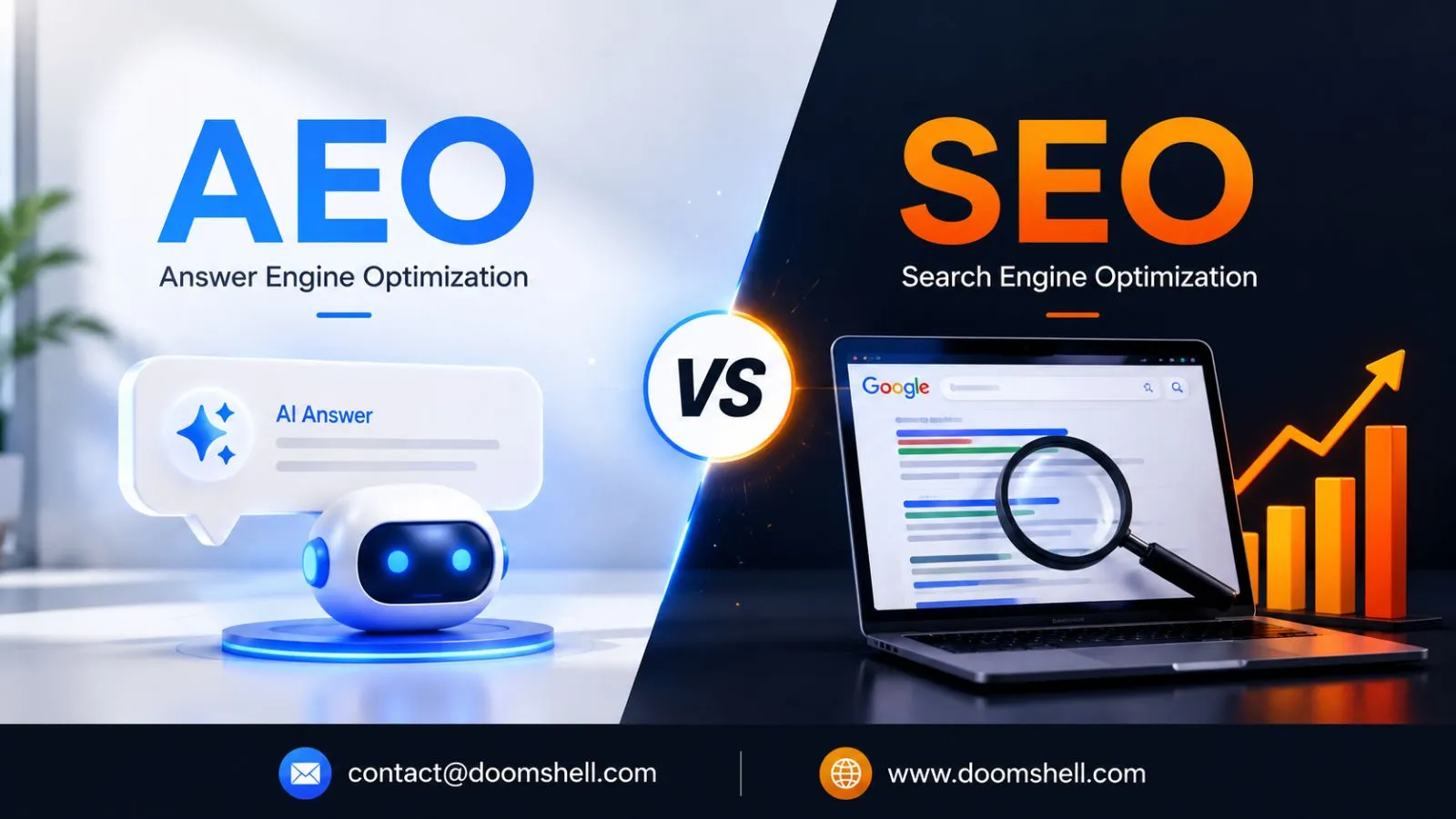
Search is no longer limited to traditional blue-link results. In 2026, users can ask complex questions, continue conversations, compare options, search with images, and receive AI-generated answers directly within search experiences. This makes AEO vs SEO an important discussion for businesses trying to maintain visibility across modern search.
Traditional SEO remains essential because websites still need to be crawlable, indexable, technically sound, authoritative, and useful. At the same time, businesses increasingly need content that can be understood, extracted, summarized, and cited by AI-powered search systems.
Google's current guidance makes an important point: the fundamental SEO practices that help websites appear in traditional Search also apply to AI features such as AI Overviews and AI Mode. There is no separate technical requirement that guarantees inclusion in these experiences.
For an IT Company, this means the strategy is no longer simply about ranking for keywords. The bigger goal is to become a reliable source that search engines and AI systems can understand and reference.
AEO vs SEO: What Has Changed in 2026?
The biggest change is not that SEO has disappeared. Instead, search has expanded from ranking webpages to understanding information, answering questions, and connecting users with relevant sources.
What SEO Means in 2026
Search Engine Optimization still focuses on improving a website's visibility in organic search. It includes technical SEO, content quality, internal linking, site architecture, page experience, structured data, authority, and search intent.
However, modern SEO is much less dependent on exact keyword repetition. Search engines increasingly understand relationships between entities, topics, questions, and concepts.
A strong SEO strategy in 2026 should therefore focus on:
-
Search intent rather than isolated keywords
-
Helpful, original and trustworthy content
-
Technical accessibility and crawlability
-
Mobile and page experience
-
Clear website architecture
-
Relevant internal and external links
-
Structured data where appropriate
-
Demonstrated expertise and first-hand value
-
Regular content maintenance and updates
Google also continues to emphasize people-first content and warns against publishing large volumes of AI-generated pages without meaningful added value.
What AEO Means in 2026
Answer Engine Optimization focuses on making information easy for answer-oriented systems to understand and use when responding to a user's question.
AEO can involve:
-
Clearly answering specific questions
-
Using descriptive headings
-
Providing concise definitions and explanations
-
Structuring information logically
-
Demonstrating expertise and evidence
-
Building topical depth
-
Making important facts easy to identify
-
Supporting claims with trustworthy sources
-
Maintaining accurate and current information
The important distinction is that AEO should not be treated as a completely separate replacement for SEO. Google explicitly states that existing SEO fundamentals remain relevant to AI Overviews and AI Mode.
SEO and AEO Work Together
Think of SEO as making your website discoverable, technically accessible and authoritative, while AEO focuses more strongly on how clearly your information can satisfy specific questions and be used in answer-based experiences.
| Area | SEO | AEO |
|---|---|---|
| Main objective | Search visibility | Answer visibility |
| Primary focus | Rankings and organic discovery | Inclusion and citation in answers |
| Content style | Comprehensive and intent-focused | Clear, direct and structured |
| Search behaviour | Keywords, queries and topics | Questions, conversations and follow-ups |
| Visibility | Organic search results | AI answers, summaries and conversational results |
| Success signals | Rankings, impressions, traffic, conversions | Citations, AI visibility, qualified discovery and conversions |
Neither approach should operate independently. A technically weak website can struggle with both, while thin or generic content may fail to establish enough value for either traditional or AI-powered search.
How Search Is Changing in 2026
Search engines are moving from simple query-and-results systems toward more conversational, multimodal and AI-assisted experiences. Google has continued expanding AI Overviews and AI Mode, while also introducing additional tools for website owners to understand visibility in these experiences.
AI Overviews and AI Mode
Google's AI search experiences are increasingly designed to help users understand complicated topics and explore multiple related questions without performing separate searches.
AI Mode is particularly relevant for complex comparisons, detailed research and follow-up questions. Google's documentation notes that AI features may use a query fan-out approach, where related searches are performed across different subtopics and sources before generating a response.
This changes how businesses should approach content.
A single page targeting one exact keyword may not be enough. Content should cover the broader topic, explain related concepts, answer realistic follow-up questions and provide original value.
Search Is Becoming Multimodal
Search is no longer purely text-based. Users can discover information through images, screenshots, cameras, Lens, Circle to Search and other visual interactions.
In September 2026, Google introduced multimodal search reporting in Search Console, allowing eligible site owners to see performance associated with visual search experiences such as Lens, Circle to Search and image-based queries.
This means visual SEO is becoming increasingly important.
Businesses should pay attention to:
-
Descriptive image filenames
-
Useful alt text
-
High-quality original images
-
Relevant surrounding page content
-
Structured data where applicable
-
Consistency between visual and textual information
AI Citations Are Becoming a New Visibility Layer
In 2026, visibility is increasingly about more than ranking positions.
Microsoft introduced AI Performance in Bing Webmaster Tools, providing insights into how websites are cited across Microsoft Copilot, AI-generated Bing experiences and selected integrations. The dashboard includes citation activity, cited pages and grounding queries.
This illustrates an important shift: businesses should increasingly ask not only “Where do we rank?”, but also “Where is our information being referenced?”
That does not make traditional analytics irrelevant. It expands the visibility picture.
Building a Search Strategy for 2026
The strongest approach is not to abandon SEO and replace it with AEO. Instead, businesses should build one integrated search strategy that supports rankings, AI discovery, citations and conversions.
Create Content That Demonstrates Real Expertise
AI systems have access to enormous amounts of generic information. Rewriting the same content found across hundreds of websites provides little competitive advantage.
Businesses should add information that demonstrates genuine expertise, such as:
-
Original research
-
First-hand experience
-
Real examples
-
Industry-specific explanations
-
Practical processes
-
Expert commentary
-
Updated statistics
-
Case studies
-
Clear comparisons
Google's current guidance specifically warns that generating many pages with AI without adding value can fall under its scaled content abuse policies.
AI can help with research, organization and drafting, but the finished content needs meaningful human value.
Optimize for Questions, Entities and Context
Keyword research still matters, but it should be combined with intent and topic analysis.
Instead of creating separate thin pages for every keyword variation, build useful topic clusters around the questions customers actually ask.
For example, a business targeting digital marketing could cover:
-
What digital marketing includes
-
How SEO and AEO work together
-
How AI search changes content strategy
-
How businesses measure AI visibility
-
How local businesses can improve search presence
-
What technical improvements support search visibility
This approach creates stronger topical relationships and gives search systems more context about the business.
A digital marketing company in India can therefore build authority by covering its services, industries, customer problems, processes and expertise instead of publishing repetitive keyword-focused pages.
Measure More Than Rankings
Rankings remain useful, but they should not be the only KPI.
In 2026, businesses should monitor a broader set of signals:
-
Organic impressions
-
Organic clicks
-
Search conversions
-
Branded search growth
-
AI citations where measurable
-
Pages appearing in AI experiences
-
Referral traffic
-
Engagement and assisted conversions
-
Visibility across different search surfaces
Google has started rolling out additional Search Console insights related to generative AI search visibility, while Bing's AI Performance reporting provides citation-focused information.
These developments make it easier for marketers to move from assumptions about AI visibility toward measurable data.
Keep Technical SEO Strong
AEO does not eliminate the technical foundations of search.
A page still needs to be accessible, indexable and eligible for search visibility before it can become a supporting source in Google's AI search features. Google states that there are no additional technical requirements specifically required for AI Overviews or AI Mode beyond the normal requirements for Search eligibility.
Businesses should continue improving:
-
Crawlability
-
Indexation
-
Internal linking
-
Page speed
-
Mobile usability
-
Structured data
-
Canonicalization
-
HTTPS security
-
Content organization
-
Core Web Vitals and overall page experience
The result is a more complete strategy: SEO builds the foundation, while answer-focused and entity-rich content helps information travel across increasingly diverse search experiences.
The Future of SEO, AEO and AI Search
Search in 2026 is becoming more conversational, multimodal and increasingly capable of handling complex tasks. Google's AI Mode is designed for deeper exploration, while Google's wider AI search ecosystem continues to introduce new ways for users to discover and interact with information.
The next stage of search is also moving toward agentic experiences, where AI systems can potentially help users move from finding information toward completing tasks.
For businesses, this means content quality, structured information, brand authority and trustworthy digital experiences will become increasingly important.
The terminology may continue to change. AEO, GEO, AI search optimization and other labels may describe different parts of the same broader shift. What matters most is not chasing every new acronym, but building a website that search systems can understand and users can trust.
Conclusion
The AEO vs SEO debate in 2026 is not really about choosing one over the other.
SEO remains the foundation for technical visibility, organic rankings, website authority and sustainable search traffic. AEO adds a stronger focus on answering questions clearly and making information useful for AI-powered search experiences.
At the same time, search is expanding beyond traditional text results. AI Overviews, AI Mode, multimodal search, conversational queries and AI citation reporting are creating new opportunities for businesses to be discovered.
The businesses most prepared for this change will not simply publish more content. They will publish better, more useful, more authoritative and more context-rich content, supported by a technically strong website.
In 2026, the goal is no longer just to rank.
The goal is to be discoverable, understandable, useful and trustworthy wherever your audience searches.